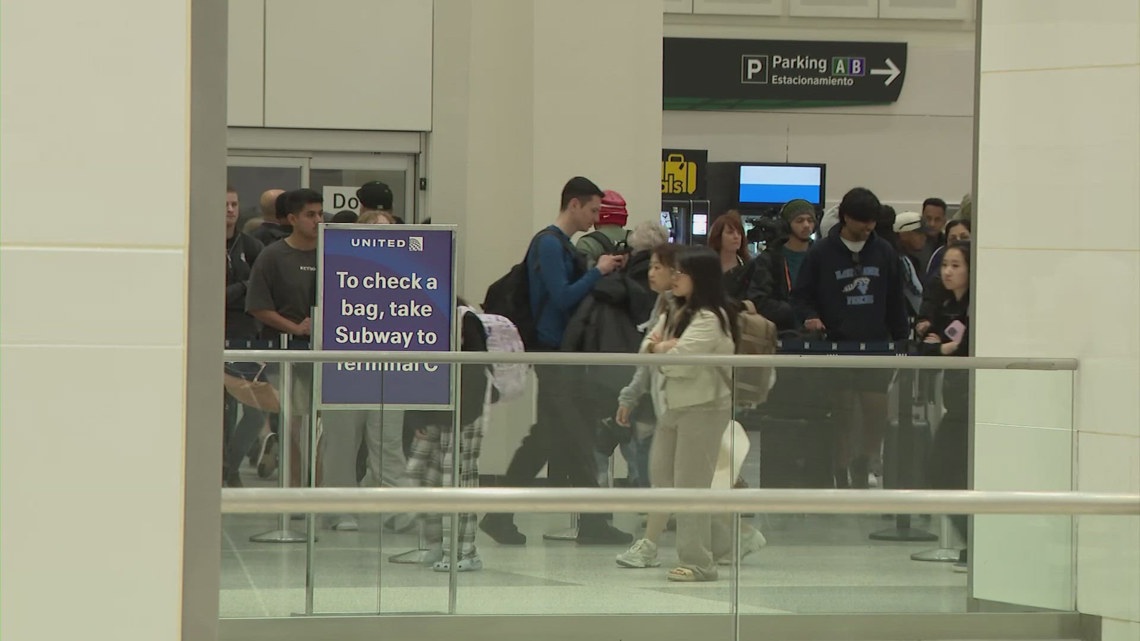
One-third of TSA agents called out at Houston's two major airports (IAH 33.1%, HOU 31.2%), forcing checkpoint closures and creating peak security wait times up to 3 hours at IAH Terminal E. The staffing shortage—driven by callouts and resignations amid the partial government shutdown—has prompted airports to advise arriving three hours early and is causing operational disruption for airlines and travelers, but is unlikely to move broad markets.
Hub-centric carriers with concentrated operations in affected metros face asymmetric operational risk: when checkpoints and crew duty windows are compressed, recovery is non-linear because cancellations remove spare aircraft/crew buffers and force larger re-accommodation costs per disrupted passenger. That favors national network carriers with diversified hubs and strong corporate contracts (more forgiving yields on rebooked passengers) and penalizes carriers whose margin is concentrated on short-haul, high-frequency routes where quick turnarounds are essential.
Near-term catalysts are binary and calendar-driven: a resolution within 7 days caps economic damage to disruptions and incremental opex (overtime/contracted screening), while a multi-week continuation converts schedule chaos into measurable revenue loss via cancellations, missed connections and reputation erosion—expect cascading crew-rest violations to produce outsized flight cancel rates after ~10 days. Political timelines (budget votes, bargaining postures tied to unrelated riders) make the probability of extension materially non-zero through quarter-end, so earnings guidance risk is front-loaded into the next 30–90 days.
Second-order winners include ride-hailing and car rental franchises that can capture on-the-margin demand from frustrated flyers, and smaller airlines or bus/rail providers positioned to sell seats quickly on short notice. The consensus trade (hedge or sell airlines outright) underestimates two things: fast operational elasticity of OTA/rebooking channels and the convexity of consumer choice—if disruption is short, pent-up demand and fare re-pricing produce outsized mean reversion. That makes short-dated, event-focused option strategies preferable to outright directional equity shorts for most market participants.
AI-powered research, real-time alerts, and portfolio analytics for institutional investors.
Request DemoOverall Sentiment
mildly negative
Sentiment Score
-0.25
