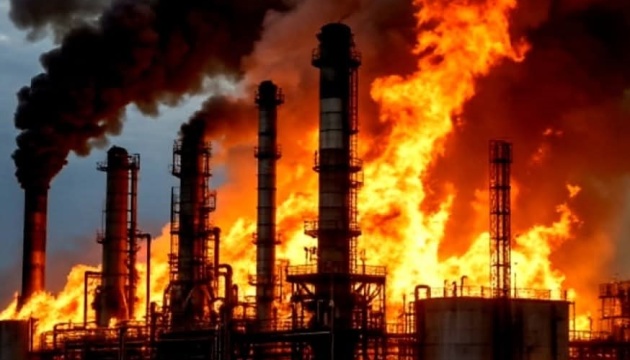
A drone attack reportedly hit the Volgograd oil refinery, causing a fire at Lukoil-Volgogradneftepererabotka, which processes more than 15 million tons of oil per year. The article also reports fires at an industrial zone in Yaroslavl and the seaport in Temryuk after separate drone attacks, underscoring repeated disruption to Russian energy and industrial infrastructure. While casualty reports remain limited, the repeated strikes raise concerns about regional fuel supply and logistics.
This is less a one-off headline than a compounding availability shock to the Russian product system: repeated hits on refining, storage, and port infrastructure raise the odds that offline capacity persists longer than headline damage suggests. The market should care most about diesel and middle distillates, where Russia is structurally more important than in crude, so localized outages can tighten regional product balances even if global Brent barely moves at first. The second-order effect is logistical: rerouting barrels through longer inland/rail pathways lowers realized netbacks and increases bottlenecks at nearby terminals.
The near-term winner is any non-Russian exporter of refined products or crude that can displace disrupted volumes into Black Sea, Mediterranean, and Baltic product flows. European refiners with export optionality get a modest margin tailwind if diesel cracks widen, while marine freight and storage operators can benefit from higher inventory demand and longer voyage distances. The losers are Russian producers, domestic consumers facing implicit rationing through price/availability rather than formal shortages, and any regional infrastructure tied to steady fuel throughput, including rail, port, and petrochemical chains.
Catalyst risk is asymmetric over days to weeks because each successful strike raises insurance, security, and downtime costs even absent catastrophic physical destruction. Over months, the bigger question is whether repeated disruptions force a more durable shift in trade routing and product exports; if so, the impact propagates into global cracks and freight rates. What could reverse the trade is a rapid improvement in air defense effectiveness, but the repeated pattern implies that operational defense remains imperfect and the tail risk is underpriced.
Consensus is likely overfocusing on crude and underestimating products: the first-order move in Brent may be muted, but diesel, jet, and freight-sensitive baskets can reprice more sharply. The more interesting contrarian is that persistent attacks may actually support some Russian crude output by constraining refining more than production, pushing more unrefined barrels onto export markets and capping crude upside while still tightening products. That argues for relative-value rather than outright energy beta.
AI-powered research, real-time alerts, and portfolio analytics for institutional investors.
Request DemoOverall Sentiment
strongly negative
Sentiment Score
-0.60
