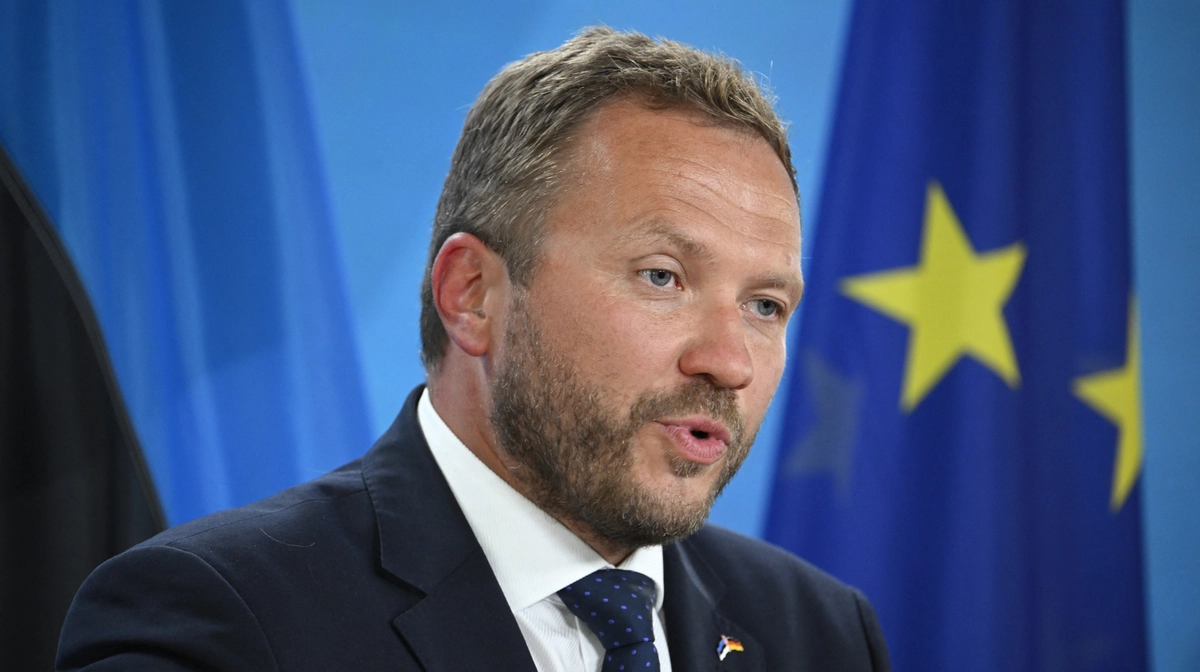
Estonian Foreign Minister Margus Tsahkna said Europe should avoid direct talks with Russia and instead increase pressure through tougher sanctions while Moscow is weakened by war, economic strain, and military setbacks. He argued now is not the time to negotiate, calling outreach to Russia "very dangerous." The piece suggests continued hardline EU policy on Russia, but it is more commentary than a direct market-moving event.
This is less a headline on diplomacy than on negotiating leverage, and the market implication is that the conflict is still in a phase where coercion remains the dominant path. If Europe hardens its stance while US attention stays diluted, the near-term effect is a higher probability of incremental sanctions, tighter enforcement, and more aggressive secondary-sanctions rhetoric rather than a breakthrough settlement. That tends to favor assets that benefit from persistent war-time procurement and energy insecurity, while pressuring any Russia-exposed credit or frontier risk premia that had been pricing a diplomatic off-ramp.
The second-order issue is that “pressure now” usually means sanctions expansion with lagged economic impact, not immediate battlefield change. That creates a 1-3 month window where headline risk rises faster than fundamentals, especially for European industrials with residual Russia/CIS revenues, Baltic logistics routes, and any transport or commodity names exposed to a retaliatory tightening of shipping, insurance, or customs friction. If Moscow’s outreach to Europe is rebuffed, the more probable response is asymmetric disruption rather than concession, which raises tail risk for regional infrastructure and cyber-sensitive sectors.
The contrarian read is that the market may be underpricing how much of Russia’s marginal weakness is already embedded in risk assets. If sanctions are merely reiterated without meaningful enforcement, the trade becomes a fade: geopolitical premium can decay quickly, especially if Washington refocuses elsewhere and Europe cannot translate rhetoric into actionable measures. The real catalyst to watch is whether Brussels pairs talk of pressure with concrete steps on export controls, shadow-fleet enforcement, or energy-related sanctions; without that, the impact is mostly sentiment-driven and likely short-lived.
AI-powered research, real-time alerts, and portfolio analytics for institutional investors.
Request DemoOverall Sentiment
mildly negative
Sentiment Score
-0.15
