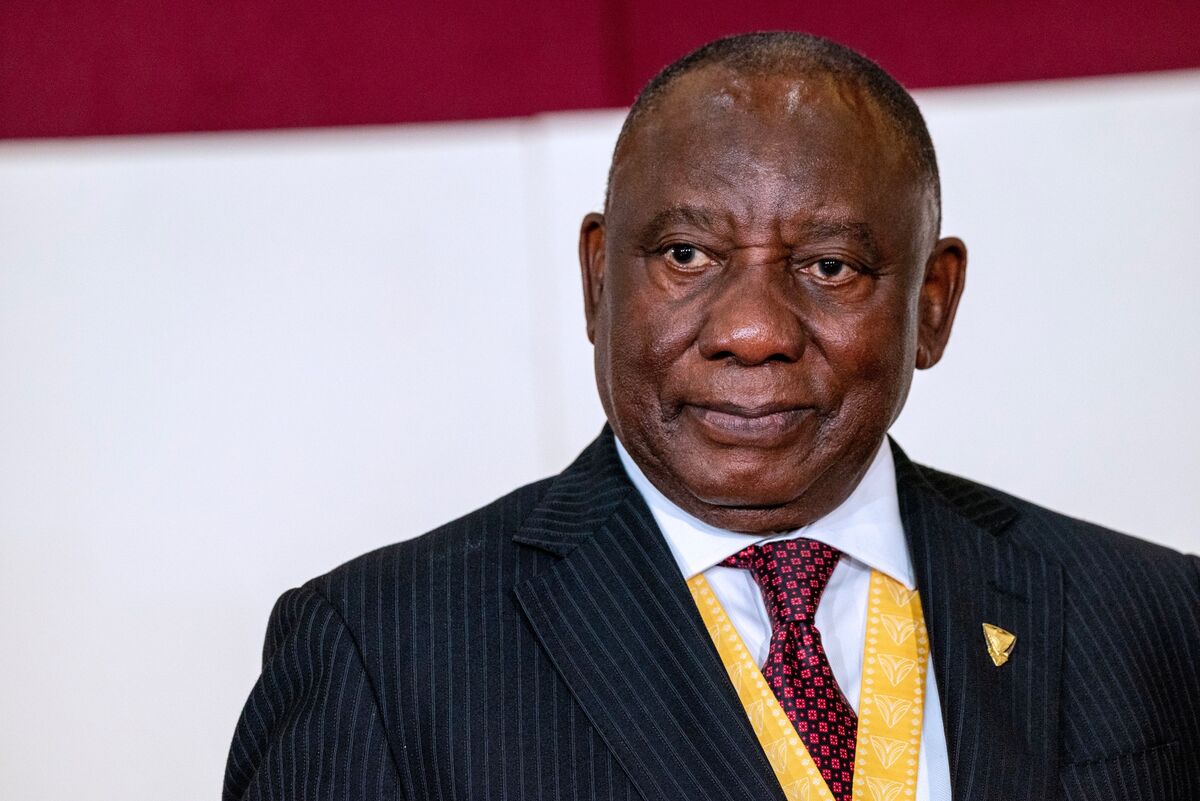
A South African parliamentary panel investigating whether President Cyril Ramaphosa should be impeached said it will oppose his bid to halt the inquiry. The committee also plans to ask the National Assembly speaker to join the legal fight, with the next meeting set for June 24 to review terms of reference and appoint evidence leaders. The development is politically notable but has limited immediate market impact.
This is less a market-moving political event than a governance overhang with asymmetric second-order effects. The key signal is institutional entrenchment: once an impeachment process becomes a procedural fight, the probability of a fast resolution falls sharply, extending uncertainty over executive bandwidth and policy execution for months rather than days. That tends to compress risk appetite for domestically exposed South African assets, especially those priced on stable regulatory throughput rather than near-term fundamentals.
The most vulnerable cohort is anything levered to policy continuity: banks, insurers, utilities, telecoms, and large-cap consumer names with local revenue concentration. Even if the president ultimately survives, a prolonged legal-political contest raises the implied probability of cabinet distraction, delayed appointments, and more defensive coalition behavior in the legislature. The second-order loser is the reform trade itself: investors often underappreciate how prolonged legal defense can slow anti-corruption and SOE restructuring efforts, which keeps the country's sovereign-risk premium sticky.
The contrarian view is that this may be more noise than regime change. South African institutions have repeatedly shown they can absorb political stress without immediate financial spillover, and the market may already be discounting a familiar pattern of headline volatility with little lasting consequence. If the speaker and committee can keep the process procedural rather than explosive, the event may actually reduce tail risk by clarifying that judicial and parliamentary channels, not street politics, remain the venue for dispute resolution.
For timing, the real catalyst window is the next 2-8 weeks: terms of reference, evidence-leader appointments, and any court response will tell us whether this is a disciplined inquiry or a prolonged constitutional fight. A credible legal setback for the president would likely widen sovereign spreads first, then hit equities; a quick procedural containment would reverse that move quickly. The best risk/reward is not to chase the headline, but to use it to hedge existing South Africa exposure until procedural clarity emerges.
AI-powered research, real-time alerts, and portfolio analytics for institutional investors.
Request DemoOverall Sentiment
neutral
Sentiment Score
-0.10
