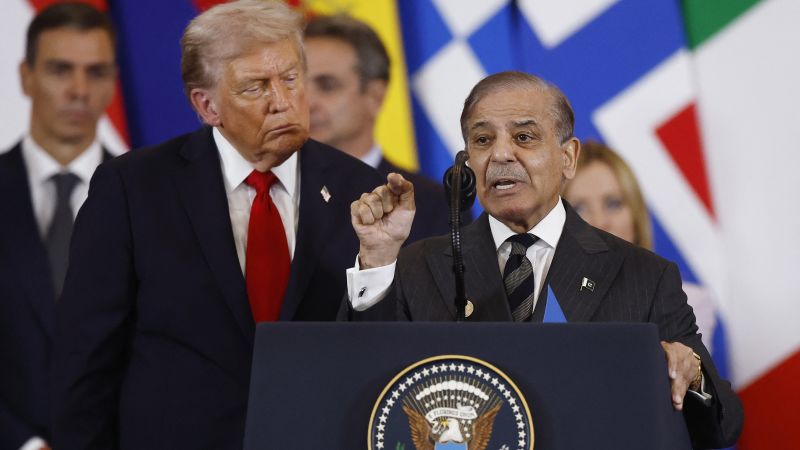
US-Pakistan relations have significantly warmed under a 'Trump 2.0' foreign policy, primarily driven by Pakistan's strategic offer of preferential access to critical rare earth minerals, exemplified by a $500 million partnership with US Strategic Metals. This move aims to diversify US supply chains away from China's near-monopoly on these essential materials. In exchange, Pakistan has secured reduced tariffs, military aid including Raytheon missiles, and diplomatic favor, largely facilitated by flattery towards Trump and the prominent role of its military leadership, Field Marshal Asim Munir. This geopolitical shift has implications for regional stability, particularly concerning India, and highlights the Pakistani military's continued influence in national policy and economic ventures.
The warming US-Pakistan relationship, driven by a potential Trump administration's foreign policy, centers on Pakistan's strategic offer of access to critical rare earth minerals. This aims to diversify US supply chains away from China's near-monopoly, evidenced by a $500 million partnership with US Strategic Metals for enriched rare earth elements, including neodymium and praseodymium. In return, Pakistan has secured diplomatic favor, reduced tariffs compared to India, and military aid, notably a new shipment of Raytheon (RTX) missiles.
Pakistan's military leadership, particularly Field Marshal Asim Munir, has been central to these negotiations, with the military-run Frontier Works Organization directly involved in the rare earth partnership. This highlights the military's continued outsized influence on Pakistan's political and economic landscape, ensuring it reaps financial and political benefits from the alliance. The US has also designated the Balochistan Liberation Army (BLA) as a terror organization, aligning with Pakistan's security interests.
This geopolitical realignment has created regional tensions, particularly with India, which faces higher tariffs and perceives itself as sidelined. While the current sentiment is "moderately positive" (0.55), the relationship's durability is highly dependent on specific political leadership and Pakistan's consistent delivery on rare earth commitments. Investors should monitor the political stability in Balochistan, where most rare earths are located, given the ongoing separatist insurgency.
AI-powered research, real-time alerts, and portfolio analytics for institutional investors.
Request DemoOverall Sentiment
moderately positive
Sentiment Score
0.55
Ticker Sentiment
