Andrej Babis's populist ANO party secured a victory in the Czech parliamentary election with just under 35% of the vote and 80 seats, falling short of an overall majority but positioning him to lead coalition formation. Babis is expected to align with eurosceptic parties, potentially signaling a more confrontational stance on EU climate policies, including emissions targets and the 2035 ban on new fossil fuel cars. Furthermore, his administration is poised to significantly alter Czech support for Ukraine by scrapping the current ammunition initiative, advocating for it to be managed under NATO, although he has ruled out referendums on EU or NATO membership.
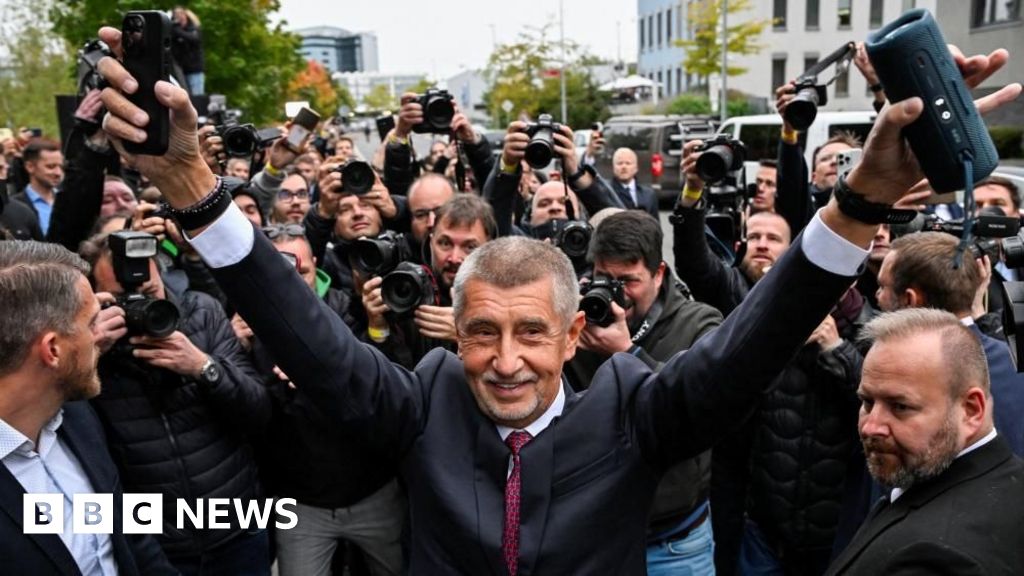
Billionaire populist Andrej Babis' party wins Czech parliamentary election Billionaire businessman Andrej Babis has won parliamentary elections in the Czech Republic, although his populist ANO party fell short of an overall majority. ANO received just under 35% of the vote, earning them 80 seats in the 200-seat lower house – up from 72 seats four years ago, according to preliminary results. Babis – who served as prime minister from 2017 to 2021 – is expected to be invited to lead talks on forming a new coalition. "This is a historic success," Andrej Babis announced to cheering supporters at the ANO headquarters in the suburbs of Prague. He'd entered the building holding aloft a Bluetooth speaker blasting a remix of the 1981 hit 'Sarà perché ti amo' by the Italian pop trio Ricchi e Poveri. The same song resounded across the stage as he accepted the applause. Some colleagues – including the former finance minister Alena Schillerova – danced along to the beat. "It's the pinnacle of my political career!" he said, adding that he and his team would now work to make the Czech Republic "the best place to live in the European Union". But while this election has thrown up no great surprises – few had any doubt he would emerge in first place - there are still plenty of questions. Babis has already begun talks with the two small right-wing eurosceptic parties that managed to pass the 5% threshold: the anti-Green Deal Motorists for Themselves, and the anti-immigrant Freedom and Direct Democracy (SPD) party, led by the Czech-Japanese entrepreneur Tomio Okamura. Parliamentary maths means he will need an alliance with both to form a government that enjoys a majority in parliament - none of the other parties are likely to work with him. After giving his acceptance speech he said he wanted ANO to govern alone, rather than create a formal coalition. ANO will have the most in common with the Motorists. The two already sit in the same European Parliament group – the "pro-sovereignty" Patriots for Europe, which Babis founded alongside Hungary's Viktor Orban and Austria's Herbert Kickl last year. ANO shares the Motorists' misgivings about the EU's emissions targets, and vows to modify or reject them outright. Both parties are firmly against Czech households carrying a greater financial burden for cleaner energy, and both oppose the EU's ban on the sale of new petrol and diesel cars after 2035. Relations with the SPD could be more fraught. For a start, SPD fought this election in a formal alliance with a number of fringe parties on the far-right, meaning they will have to yield some of their seats to them. Okamura may not have full control of the MPs in his caucus – always a recipe for disaster in coalition politics. Babis has also categorically ruled out allowing a referendum on either EU or NATO membership – a key policy priority for the SPD. The ANO leader might have leaned heavily into anti-Ukrainian rhetoric in the final days of the campaign, lambasting the centre-right government for giving "Czech mothers nothing, and Ukrainians everything". But Okamura's call for Ukrainian refugees to be deported en masse will likely fall on deaf ears. Czech military support for Ukraine's war effort however is likely to change significantly under a Babis administration. He has already vowed to scrap the successful Czech ammunition initiative – which has delivered 3.5 million shells to Ukraine since 2022. Babis claims it lacks transparency, but Czech government officials who created the scheme say it works precisely because it is not transparent. Under the initiative, Czech arms dealers use their international contacts to procure shells for Ukraine on the global market, with the bulk of the money coming from EU and NATO partners. Some of the producers are in countries that have relationships with Russia but as the deal is arranged with Czech dealers their involvement remains private. The ANO leader wants it moved under the umbrella of NATO instead, and again on Saturday accused Czech arms dealers of making enormous profits from the scheme. However, he said he would have no problem negotiating the matter with President Zelensky. Babis also laughed off claims Western allies were worried the Czech Republic would no longer be a reliable partner in the EU and NATO under his administration, and that was why he now appeared to be distancing himself from extremist parties. "Your problem is you just copy lies from Czech journalists," he replied, answering a reporter from the New York Times in English. "I spoke with Trump five times! I was in the Pentagon. I was in the FBI. I talked to the head of the CIA," Babis said, speaking of his first term, which overlapped with President Trump's first term in office. "We were a very reliable partner," he went on. "I have been prime minister. We have been in government before. And we had excellent results." The victory of Andrej Babis's populist ANO party, securing just under 35% of the vote and 80 of 200 parliamentary seats, introduces significant political and policy uncertainty into the Czech Republic. While falling short of a majority, Babis is positioned to form a government, likely requiring a coalition with right-wing, eurosceptic parties such as the anti-Green Deal 'Motorists for Themselves' and the anti-immigrant SPD. This potential alignment signals a pivot towards a more confrontational relationship with the European Union, specifically concerning climate policy. The incoming administration has explicitly vowed to modify or reject EU emissions targets and opposes the 2035 ban on new petrol and diesel cars, creating regulatory risk for the automotive and energy sectors. Furthermore, a significant shift in foreign and defense policy is anticipated, as Babis has pledged to scrap the existing Czech ammunition initiative for Ukraine, which has supplied 3.5 million shells since 2022, and move it under a NATO framework. While Babis has ruled out referendums on EU or NATO membership, his administration's trajectory points toward greater alignment with other nationalist governments like Hungary's, amplifying political fragmentation within the EU and increasing geopolitical risk in Central and Eastern Europe.
AI-powered research, real-time alerts, and portfolio analytics for institutional investors.
Request DemoOverall Sentiment
moderately negative
Sentiment Score
-0.45
Ticker Sentiment
