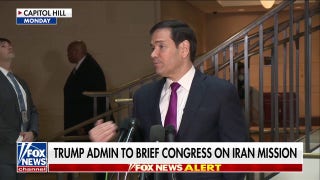
The U.S. State Department urged American citizens to depart immediately from more than a dozen Middle Eastern countries — including Bahrain, Egypt, Iran, Iraq, Israel, Jordan, Kuwait, Lebanon, Oman, Qatar, Saudi Arabia, the UAE, Syria, Yemen and the West Bank/Gaza — warning of "serious safety risks" as the Iran-related conflict intensifies. The advisory follows U.S. strikes under Operation Epic Fury and a cascade of embassy security alerts and shelter-in-place orders (at least nine missions), including the temporary closure of the Riyadh embassy after two Iranian drones struck the building, increasing the risk of travel disruptions, periodic airspace closures and potential region-driven risk-off flows for markets.
Market structure: Immediate winners are energy producers (XOM, CVX), defense primes (LMT, RTX, NOC) and sovereign-exporters of oil; losers are airlines (AAL, UAL, DAL), travel & leisure (BKNG, MAR) and regional EM assets (EEM) due to travel bans and evacuation orders. Pricing power shifts to oil producers and defense contractors—expect oil Brent moves of +/-10-20% to drive 80-150bps swings in sector P/Es near-term; commercial aviation ASK capacity could fall 5-15% on route closures. Cross-asset: expect classic risk-off — USD, gold (GLD) and U.S. 10y treasuries (TLT) bid; credit spreads widen 20–60bps for EM sovereigns and corporate IG/High Yield within 1–4 weeks.
Risk assessment: Tail scenarios include a broader Gulf-wide blockade or direct Iran strike on Gulf oil infrastructure causing Brent >$120 (+50% from $80 baseline) and global recession risk, or quick de-escalation limiting oil upside to <20%. Immediate horizon (days) is volatility in FX, oil and airline revenues; short-term (1–3 months) sees earnings downgrades for airlines and tourism; long-term (6–24 months) higher defense budgets and re‑shored energy/security capex. Hidden dependencies: insurance/reinsurance cost spikes, tanker rerouting raising freight rates, and central bank reaction to oil-driven CPI shocks.
Trade implications: Direct plays — size tactical longs in XOM/CVX (2–4% each) and LMT/NOC (1–2% each) funded by cuts to airline/travel (sell 2–3% positions in AAL, BKNG). Pair trades — long LMT vs short DAL to capture defense vs airline divergence; long GLD vs short EEM to hedge EM contagion. Options — buy 3–6 month call spreads on XOM/CVX if Brent breaches $90, and buy 1–3 month protective puts on top-10 travel names to cap downside.
Contrarian angles: Markets may overpay for immediate safety—EM sovereign bonds and select Gulf regional banks with strong oil-linked balance sheets may be oversold; selectively accumulate Qatari/Emirati bank exposure on >8% pullback. Historical parallels (2019 tanker attacks, 1990 Gulf war) show energy spikes often mean-revert within 3–6 months absent sustained supply loss; if conflict remains localized, short-duration energy longs and taking profits at +30–40% is prudent. Unintended consequence: accelerated Western defense procurement and energy diversification policies create multi-year structural winners in defense tech and alternative energy infrastructure.
AI-powered research, real-time alerts, and portfolio analytics for institutional investors.
Request TrialOverall Sentiment
strongly negative
Sentiment Score
-0.60
