

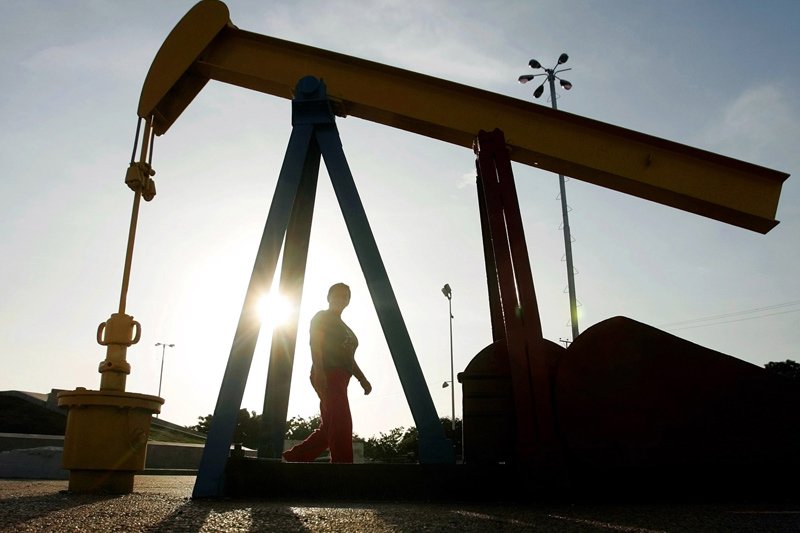
US petroleum inventories fell 14.5 million barrels last week, far larger than the 4.3 million barrel consensus draw, driven by a 5.1 million barrel decline in crude, a 6.3 million barrel drop in gasoline, and a 3.1 million barrel decline in distillates. Refinery utilization slipped to 89.6% from 92.0%, while total petroleum imports averaged 6.7 million barrels per day versus 8.2 million the prior week. The report is supportive for crude prices in the near term, with the 12-month futures strip at $79.33/bbl for WTI and $83.36/bbl for Brent.
The immediate read-through is not just tighter crude balances, but a sharper squeeze on near-term product availability because the draw was led by gasoline and distillates while refinery runs fell. That combination usually supports crack spreads before it meaningfully supports flat price, which means refiners with clean feedstock access and high utilization are better positioned than upstream beta at this stage. In other words, the first-order winner is not necessarily the most obvious oil producer; it is the segment that can convert lower input costs into margin expansion faster than the market can price in sustained demand.
The second-order risk is that inventories can look bullish even as underlying demand weakens, especially if the draw is being amplified by lower imports or temporary refinery outages rather than true consumption strength. That makes the setup more fragile over the next 2-6 weeks: if refinery utilization rebounds, some of the product tightness could unwind quickly, capping the upside in energy equities even if headline crude stays firm. The geopolitical overlay adds a convexity premium, but the market is still likely underpricing the probability that any easing in Iran-related risk removes a chunk of the risk premium before physical balances fully tighten.
The more interesting contrarian is that this kind of report can be bearish for inflation-sensitive cyclicals even if oil equities rally. Fuel-sensitive transport, chemicals, and discretionary names can underperform on a lag as input costs feed through faster than pricing power, while refiners may outperform unless crude spikes enough to compress margins. If the strip holds near current levels for several more weeks, the equity market’s reaction should rotate from "oil beta" to "margin winners vs margin losers," which is where the more durable trade lives.
AI-powered research, real-time alerts, and portfolio analytics for institutional investors.
Request TrialOverall Sentiment
neutral
Sentiment Score
0.15
Ticker Sentiment
