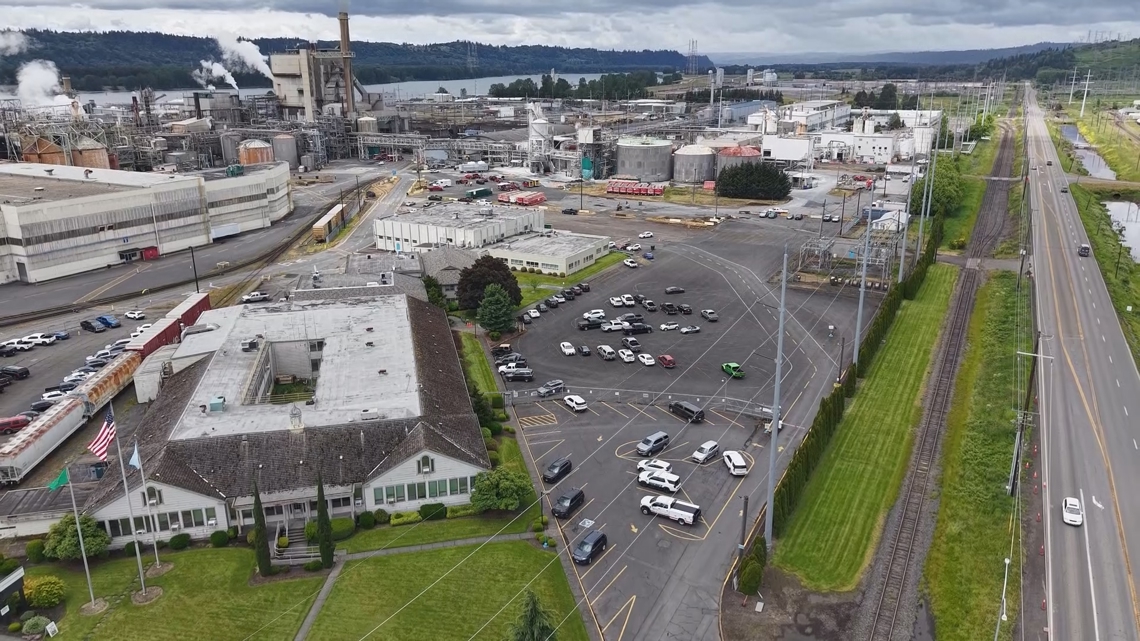
A tank rupture at Nippon Dynawave Packaging released about 25,000 gallons of caustic 'white liquor' into the Columbia River, with contamination confirmed and the extent still unknown. Officials said no drinking-water or air-quality impacts have been identified yet, but about a dozen dead carp were spotted and responders are monitoring water and air quality. The incident has left 2 people dead, several injured, and 9 missing and is being described by Washington's governor as potentially one of the deadliest industrial tragedies in modern state history.
This is a clean catalyst for a broader “license to operate” repricing across the industrial environmental-services complex. The immediate read-through is not just headline liability for the operator, but a higher probability of accelerated capex across adjacent pulp, paper, chemical, and river-adjacent manufacturing assets to harden containment, wastewater, and monitoring systems. That should be constructive for firms selling remediation, water treatment, instrumentation, and industrial safety controls, especially where the customer base is compliance-driven and capex is non-discretionary. The second-order risk is regulatory stacking: one fatal accident plus a confirmed waterway release increases the odds of state/federal enforcement, civil suits, and permit scrutiny that can drag on for quarters to years. Even if direct clean-up costs are manageable, the more important margin headwind is downtime plus recurring inspection burden for the broader local industrial cluster, which can force deferred maintenance and higher insurance premiums. Any company with high concentration in Columbia River logistics or Washington industrial corridors should see a small but real risk premium expansion until remediation scope is quantified. The contrarian angle is that the market may over-discount the operator if it prices in full-plant impairment before investigators establish actual contamination extent and operational continuity. In industrial accidents like this, the equity drawdown often peaks on uncertainty, while the larger, slower-moving economic transfer accrues to suppliers of compliance hardware and environmental remediation over 6-18 months. If monitoring shows the discharge is contained and water impacts are shallow, the headline risk fades faster than the capex repricing. From a portfolio construction standpoint, this is better expressed as a relative-value long in environmental remediation/safety vs. a short basket of exposed heavy industrials rather than a single-name disaster trade. The event also raises the chance of local permitting delays for other industrial projects, which can be a sneaky negative for contractors and logistics names tied to the region.
AI-powered research, real-time alerts, and portfolio analytics for institutional investors.
Request DemoOverall Sentiment
extremely negative
Sentiment Score
-0.88
