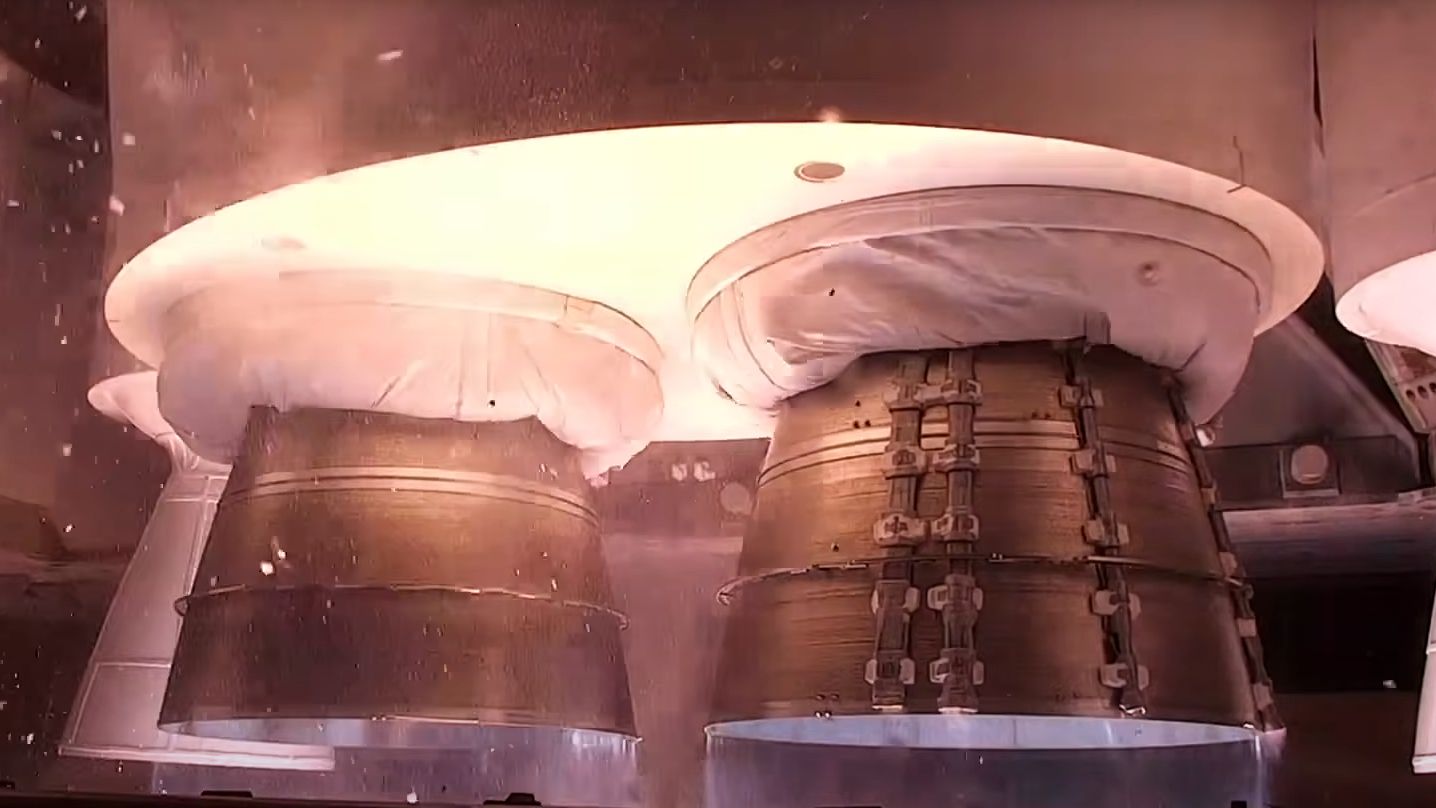
The U.S. Space Force has paused all national security launches on United Launch Alliance’s Vulcan Centaur after a recurring solid rocket booster anomaly on the Feb. 12 USSF-87 mission — a similar booster failure occurred in Oct. 2024 — and said the investigation and corrective actions will take many months. ULA’s Vulcan has four flights to date and carries a backlog of more than two dozen national security missions, creating schedule and execution risk for government contracts and suppliers; governance risk is heightened by the recent departure of longtime CEO Tory Bruno, who joined competitor Blue Origin. The pause risks revenue and backlog timing for ULA and could shift near-term national security launch demand and program awards across competitors and engine suppliers.
Market structure: The Vulcan grounding hands an immediate commercial advantage to alternative launch providers and defense primes that can absorb national-security manifests — expect increased demand for launch capacity over the next 3–9 months. Public beneficiaries include Rocket Lab (RKLB) for small/mid payloads and Northrop Grumman (NOC) as a defense prime that could be awarded contingency work; Boeing (BA) and Lockheed Martin (LMT) carry direct reputational and revenue risk as ULA owners. Pricing power will shift short-term toward providers with available GTO/SSO slots; if the pause lasts >90 days, rebooking pressure could push spot launch rates up 10–30% for scarce windows.
Risk assessment: Tail risks include a full mission failure with classified asset loss (high reputational and contract penalty risk), a prolonged grounding (>6 months) that forces Space Force contract reallocations, or regulatory scrutiny of single-source components (BE-4/solid boosters) that triggers supply-chain injunctions. Immediate horizon (days) brings slot rebookings and earnings misses; 1–6 months sees contract re-awards and backlog churn; 1–3 years could re-shape market share if certification is revoked. Hidden dependencies: single-source hardware (solid boosters/BE-4) and personnel transitions (leadership moves) amplify second-order operational risk.
Trade implications: Favor liquid long exposure to RKLB (revenue upside from rebooked small/mid launches) and NOC (defense budget reallocation), while protecting against ULA-parent downside in BA and LMT. Use short-dated hedges if the investigation extends past 90 days. Expect elevated implied vols in BA/LMT options and near-term tightening in the satellite-manufacturer supply chain, pressuring names like MAXR if launches slip beyond 6 months.
Contrarian / staging: Consensus assumes permanent share loss to SpaceX; that’s overstated — certification failures historically take months, not years, and a technical fix could restore Vulcan’s pipeline, creating a mean-reversion trade. If the investigation concludes within 60–120 days with targeted hardware fixes, ULA and parent equities should rebound sharply (20–40% of the immediate drawdown). The mispricing window is the 60–120 day investigation period where options decay and directional trades can be staged.
AI-powered research, real-time alerts, and portfolio analytics for institutional investors.
Request TrialOverall Sentiment
moderately negative
Sentiment Score
-0.45
