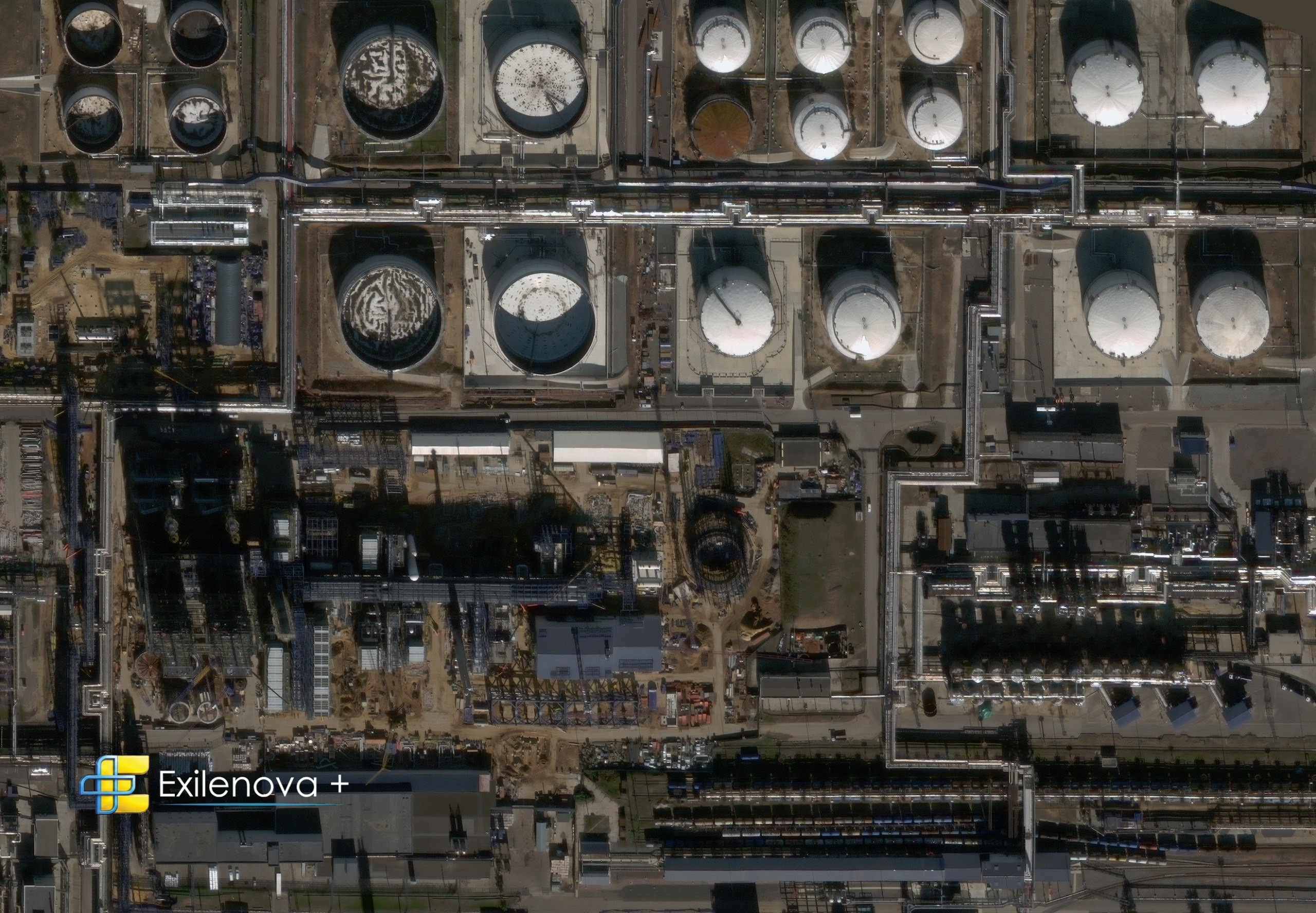
Two major Russian oil refineries, including Gazpromneft’s Moscow plant and the Ryazan refinery, suspended operations after Ukrainian drone strikes, with restarting the Moscow facility expected to take several days. The Moscow refinery processed 11.6 million metric tons of crude in 2024, while Ryazan has annual capacity of about 17 million tons, underscoring the potential disruption to Russian fuel supply and military logistics. Reuters also reported additional strikes on oil pumping infrastructure and storage tanks, adding to short-term supply-risk concerns.
The immediate market signal is not the physical damage; it is the forced insertion of downtime into a system that is usually optimized for just-in-time domestic fuel availability. When multiple refineries and transport nodes are taken offline at once, the first-order effect is local product tightness, but the second-order effect is that Russia has to re-route crude, draw on inventories, or prioritize military logistics over civilian supply — all of which compresses regional spreads and raises the probability of administered pricing or export throttling.
The more important setup is that these strikes are targeting the refinery-to-pipeline-to-storage chain, not just headline capacity. That matters because even brief outages can cascade through logistics: maintenance crews, power systems, loading racks, and pumping stations become chokepoints that lengthen restart times beyond the apparent repair bill. The vulnerable window is days to a few weeks now, but repeated strikes over a 1-3 month horizon can force a structural de-bottlenecking of exports and a higher security premium in Russian domestic refined products.
For energy markets, this is mildly bullish crude on the margin but potentially more bullish refined products than flat price. Diesel and gasoline cracks should outperform if exportable middle distillates tighten, while crude itself may react less if barrels are merely displaced rather than destroyed. The contrarian risk is that if repairs are quick and Russia offsets with inventory releases or reduced exports, the headline impact fades fast; the trade is therefore better expressed in crack spreads and European product exposures than in outright Brent duration.
The defense angle is also non-trivial: repeated successful drone strikes against energy infrastructure validate a low-cost, asymmetric interdiction model that is hard to defend with point defenses alone. That raises the probability of higher capex on Russian hardening, more convoying and redundancy in logistics, and a longer-run drag on throughput efficiency. Markets are likely underpricing the persistence of this campaign because each strike slightly lowers the operational reliability of a system built for scale, not resilience.
AI-powered research, real-time alerts, and portfolio analytics for institutional investors.
Request DemoOverall Sentiment
strongly negative
Sentiment Score
-0.55
