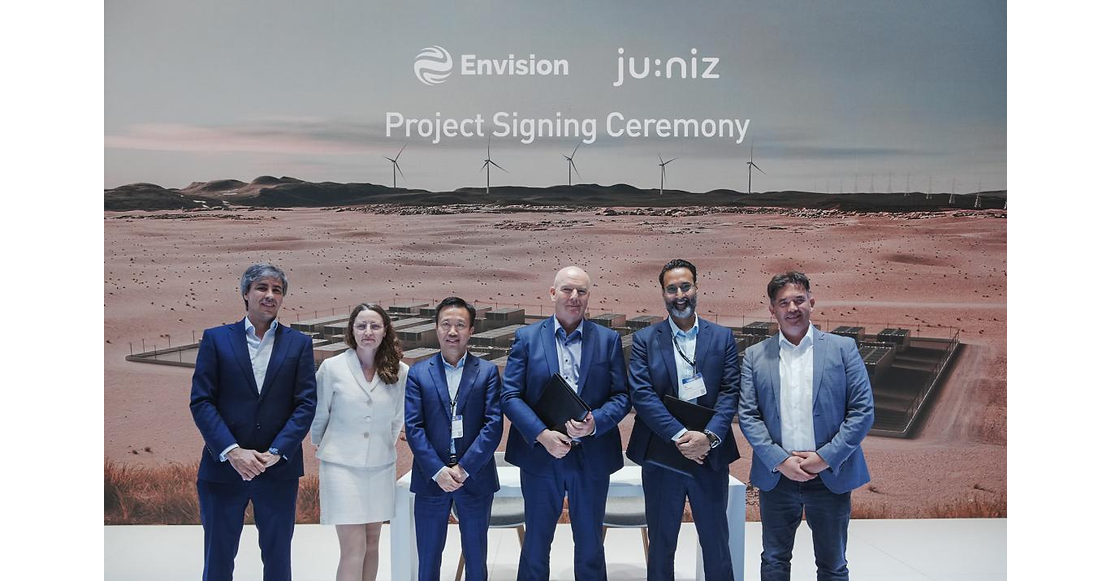
Envision Energy und ju:niz Energy starten ihre ersten Gen-8-BESS-Projekte in Deutschland mit insgesamt 140,6 MWh (S10: 88,4 MWh in Baindt; S15: 52,2 MWh in Schöningen). Die Gen-8-Lösung ist auf eine 4-Stunden-Speicherdauer sowie KI-gestützte „Future Energy Systems“ und netzbildende Fähigkeiten ausgelegt, um die Integration erneuerbarer Energien und die Netzflexibilität zu verbessern. Die Meldung ist strategisch positiv, dürfte aber kurzfristig eher einzelne Unternehmen als den Gesamtmarkt bewegen.
This is a better signal for the storage supply chain than for the project itself. The key read-through is that German procurement is still willing to adopt long-duration, grid-forming systems from non-domestic vendors, which should intensify pricing pressure on Western utility-scale storage integrators and shift value toward the balance-of-system names that control interconnection, switchgear, and power-quality hardware. If this is the first of a broader rollout, the competitive moat is likely execution, permitting, and financing rather than cell chemistry, which is structurally harder for pure-play storage vendors to defend.
Near term, the announcement is mostly sentiment-positive for clean-tech beta, but the actual revenue impact is too small to matter for fundamentals. Over 1-3 months, the bigger catalyst is whether additional German awards appear and whether grid-code acceptance of grid-forming capability becomes a de facto requirement; that would favor diversified electrical equipment suppliers over single-product battery assemblers. Over 6-18 months, the risk is that Europe’s policy response to Chinese hardware penetration adds local-content or subsidy scrutiny, slowing conversions and compressing returns for new entrants.
The contrarian point is that more storage capacity can eventually weaken merchant arbitrage economics by flattening peak spreads, so the market may be overestimating the long-term profitability of the sector even as it celebrates deployment growth. In other words, the first winners may be infrastructure and component suppliers, while later-stage economics for storage owners/integrators could deteriorate if adoption accelerates faster than ancillary-service pricing reforms.
AI-powered research, real-time alerts, and portfolio analytics for institutional investors.
Request DemoOverall Sentiment
mildly positive
Sentiment Score
0.25
