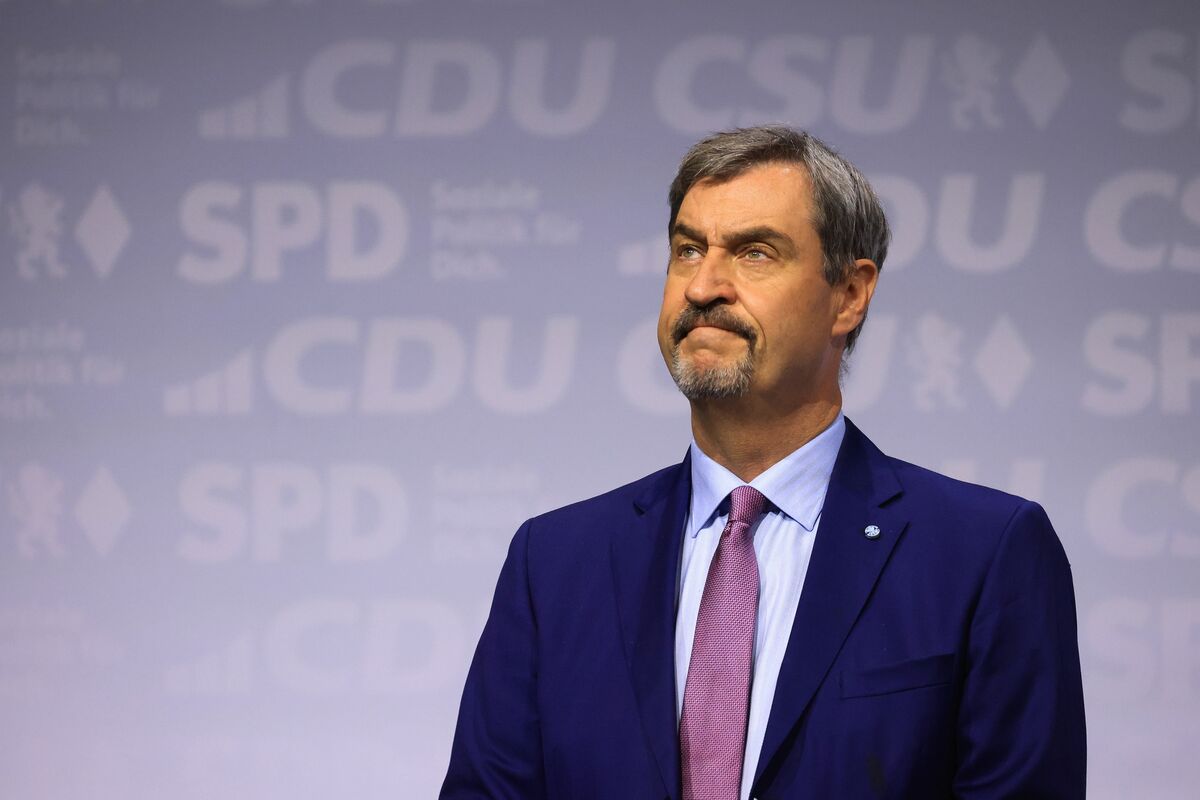
Markus Soeder, a prominent ally of German Chancellor Friedrich Merz and head of the Christian Social Union, has publicly rejected a European Union proposal to suspend Israel’s preferential trade benefits in response to the humanitarian situation in Gaza. Soeder stated that "Sanctions against Israel are fundamentally wrong" and would not be accepted by the CSU, indicating significant political resistance within Germany that could impede the EU's ability to implement such measures and impact future EU-Israel trade relations.
A key German political figure, Markus Soeder of the Christian Social Union (CSU), has publicly opposed a European Union proposal to suspend Israel's preferential trade benefits over the humanitarian situation in Gaza. Soeder's declaration that "Sanctions against Israel are fundamentally wrong" and would not be accepted by his party introduces significant political resistance within a core EU member state. This development suggests that achieving the necessary consensus within the EU to implement such trade measures will be challenging, thereby lowering the immediate probability of sanctions being enacted. The situation underscores the internal political divisions within the EU on foreign policy matters related to the Middle East, indicating that a unified punitive action against Israel faces substantial hurdles. This political pushback is likely the driver for the mildly positive sentiment signal, as it reduces the near-term risk of a negative trade disruption between the EU and Israel.
AI-powered research, real-time alerts, and portfolio analytics for institutional investors.
Request DemoOverall Sentiment
mildly positive
Sentiment Score
0.25
