
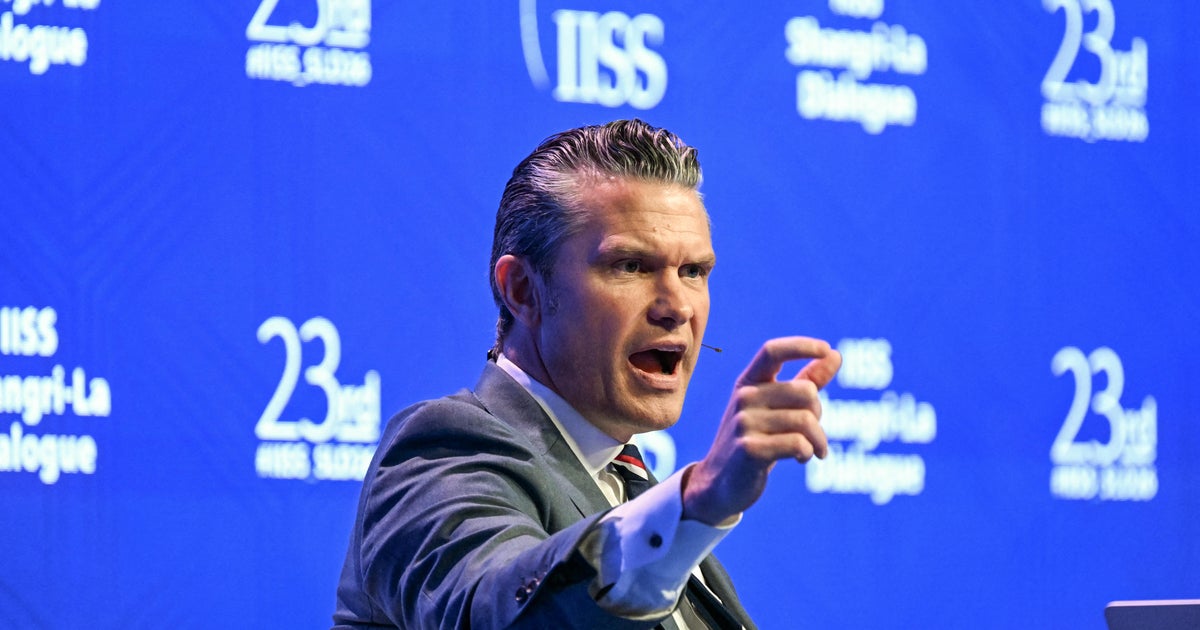
U.S. Defense Secretary Pete Hegseth softened his rhetoric on China at the Shangri-La Dialogue, saying Washington respects Beijing's ambitions while keeping its Taiwan position unchanged. He reiterated that the U.S. aims to prevent Chinese dominance in the Indo-Pacific and highlighted allied pressure for higher defense spending, while the U.S., UK and Australia announced a new AUKUS underwater drone initiative. The article also flagged continued uncertainty around a potential $14 billion Taiwan arms package and broader U.S.-China strategic stability talks.
The key market signal is not the softer rhetoric itself, but the widening gap between public de-escalation and private contingency planning. That usually lowers near-term headline risk premia in defense supply chains while increasing the odds of sustained, less visible budget reallocation toward undersea, ISR, missile defense, and dispersed logistics. The beneficiaries are not the obvious prime contractors alone; it is the niche layer of subcontractors tied to unmanned maritime systems, sonar, cable security, secure comms, and autonomous undersea sensors where spending can scale faster with less political friction.
The most important second-order effect is on alliance burden-sharing. Pushing partners to spend more does not just lift aggregate demand; it improves the conversion of geopolitical anxiety into funded procurement, especially in Australia, Japan, and the UK, where AUKUS-related work can create multi-year order visibility. That said, the softening on Taiwan likely reduces the probability of an immediate risk-off spike in semis and Taiwan-sensitive shipping, but it may also encourage Beijing to test the new boundary with incremental coercion rather than a dramatic move, which is harder for markets to price and more corrosive over months than days.
The contrarian read is that investors may overestimate how much a friendlier tone changes strategy. The U.S. still appears to be separating rhetoric from capability, and that combination usually supports defense capex rather than suppressing it. The bigger underappreciated risk is policy volatility from Washington: if Taiwan arms sales remain a negotiating chip, defense contractors with high exposure to Asian replenishment cycles could see timing risk even if ultimate demand remains intact.
For UK equities specifically, the message is mildly constructive because AUKUS-related undersea spending and broader European burden-sharing both favor UK defense and marine technology exposure. But the cleaner trade is not to buy broad defense indiscriminately; it is to own the companies with direct exposure to autonomous underwater systems and cable-protection budgets, where the incremental dollars are more likely to flow first.
AI-powered research, real-time alerts, and portfolio analytics for institutional investors.
Request TrialOverall Sentiment
neutral
Sentiment Score
0.00
Ticker Sentiment
