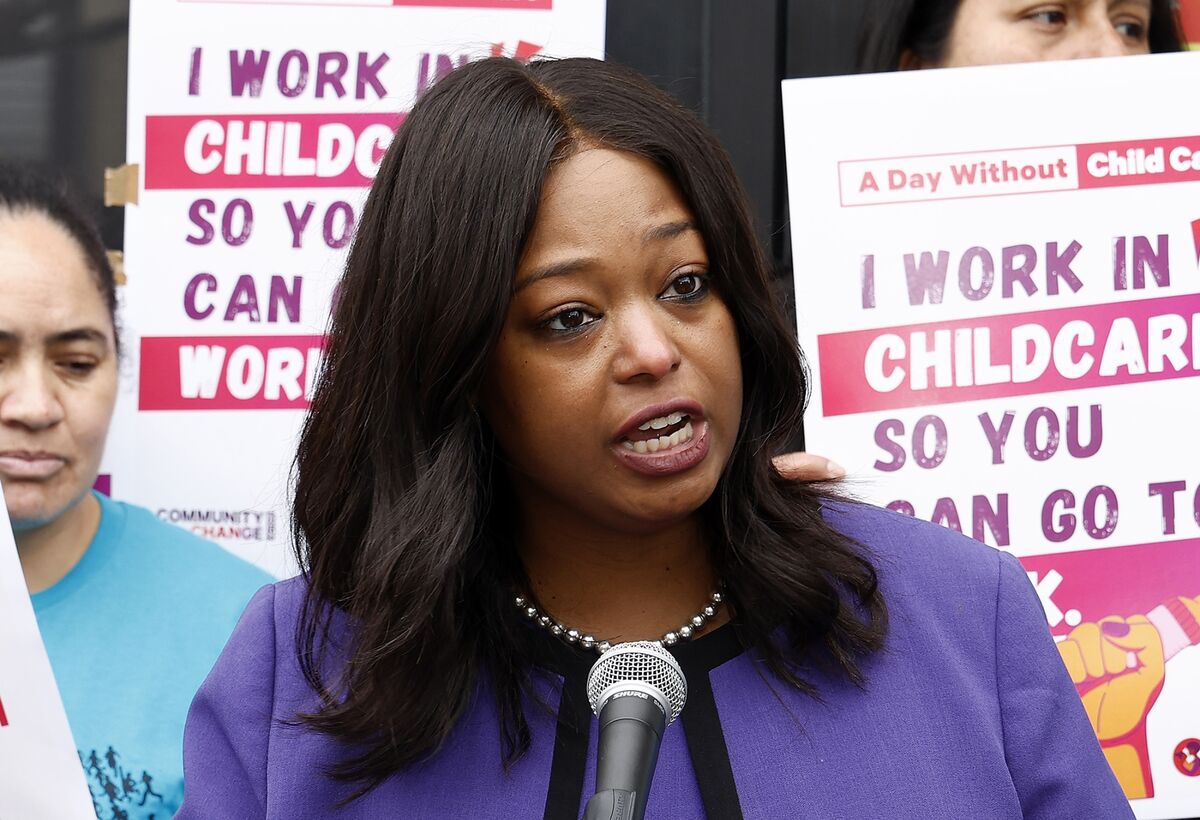
President Trump threatened a federal takeover of Washington, DC, if Janeese Lewis George wins the city’s Democratic mayoral primary. The remarks point to possible changes in municipal governance and federal oversight, but the article contains no immediate policy action or direct market-sensitive development. Impact is likely limited unless the rhetoric translates into concrete legislative or administrative steps.
The market is unlikely to price this as a DC-specific headline; the real asset is the implied regime shift in federal oversight, not the mayoral outcome itself. Any credible move toward direct federal administration of the capital would raise the probability of legal conflict, procurement delays, and a temporary re-pricing of the municipal/service ecosystem tied to federal spending flows. The first-order beneficiaries would be firms and sectors that gain from tighter security posture and centralized governance, while the losers are the local discretionary economy and any small-cap contractors exposed to permitting or local policy continuity.
The second-order effect is that this kind of rhetoric increases the odds of a binary policy shock around policing, sanitation, and infrastructure maintenance in DC over the next 1-3 months. That can create short-lived upside for defense/security-adjacent names if the discourse turns into actual budget reallocation, but it also risks depressing convention, hospitality, and office utilization if the city is perceived as more politically unstable. The key transmission channel is confidence: even absent action, headlines can slow booking decisions and push federal agencies to defer nonessential moves or leases.
The contrarian view is that the probability-weighted economic impact is probably smaller than the rhetoric suggests because federal takeover would be operationally messy and legally contested. If investors chase the headline, they may overpay for a low-conviction tail event; the better setup is to own volatility rather than direction. The cleaner expression is through event-driven options around DC-exposed local names or broad security contractors, not a macro thesis on the city itself.
Time horizon matters: in days, this is headline volatility; in months, it only matters if it becomes a credible policy agenda item with funding implications; in years, it could marginally alter DC governance risk premia. Reversal would come from the election result, rapid walk-back from federal officials, or polling that shows the issue does not resonate beyond a narrow base. Absent follow-through, the move should fade quickly, but the probability of recurring rhetoric into the next local and national political cycle stays elevated.
AI-powered research, real-time alerts, and portfolio analytics for institutional investors.
Request DemoOverall Sentiment
neutral
Sentiment Score
-0.05
