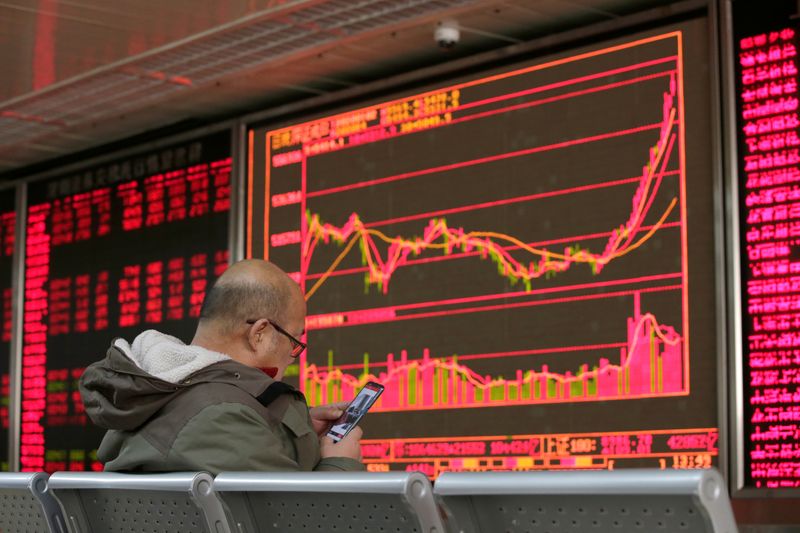
Asian equities broadly declined Wednesday, tracking Wall Street losses amid U.S. trade tariff uncertainty and widespread profit-taking after strong August rallies. Australia's ASX 200 led declines as robust Q2 GDP data dampened expectations for further RBA easing, while Chinese indexes fell despite positive PMI readings, as investors locked in stellar August gains. This market action suggests that broader macro concerns and recent positioning are currently outweighing positive domestic economic indicators in several key Asian markets.
Asian equity markets experienced a broad decline, influenced by overnight losses on Wall Street stemming from uncertainty over U.S. trade tariffs and significant profit-taking after strong August performance. Australia's ASX 200 was the region's worst performer, falling 1% in a 'good news is bad news' scenario, as stronger-than-expected second-quarter GDP growth diminished expectations for further interest rate cuts by the Reserve Bank of Australia. Similarly, Chinese markets, including the Shanghai Shenzhen CSI 300 and Shanghai Composite which fell 0.7% and 1% respectively, retreated from multi-year highs despite positive service sector PMI data. This downturn was primarily attributed to investors locking in substantial profits from August, where the CSI 300 rallied 10.3%. The weakness in major Chinese tech stocks, such as Cambricon Technologies (-4.1%), exemplifies this trend. Across the region, including in Japan, positive economic indicators were insufficient to counter the prevailing bearish sentiment, highlighting that macro concerns and market positioning are currently outweighing domestic fundamental strength.
AI-powered research, real-time alerts, and portfolio analytics for institutional investors.
Overall Sentiment
moderately negative
Sentiment Score
-0.40
Ticker Sentiment
