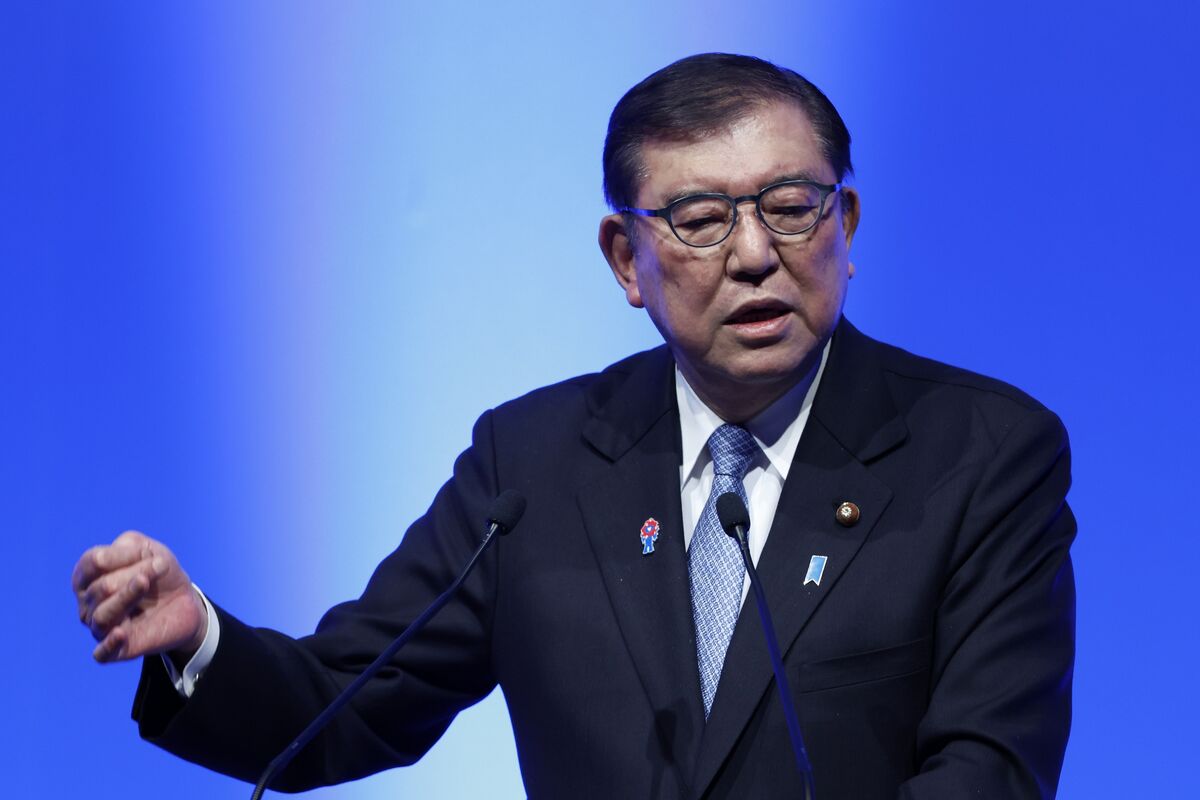
Japanese Prime Minister Shigeru Ishiba has announced a campaign pledge to increase average pay by 50% and reach a ¥1 quadrillion ($6.9 trillion) economy by 2040, ahead of this summer's upper house election. Ishiba instructed senior party officials to prioritize these goals as top election pledges, signaling a focus on economic growth and wage improvement to gain voter support.
Japanese Prime Minister Shigeru Ishiba has announced ambitious economic targets as key campaign pledges for the upcoming upper house election, aiming for a 50% increase in average pay from current levels and a nominal GDP of ¥1 quadrillion (approximately $6.9 trillion) by 2040. This strategic announcement signals a clear focus on economic revitalization and wage growth to garner voter support. While these long-term goals are substantial, their realization is contingent upon Ishiba's electoral success and the subsequent effective implementation of policies over nearly two decades. The accompanying signals indicate a 'mildly positive' sentiment and an 'optimistic' tone regarding the announcement, yet the very low market impact score of 0.1 suggests that investors are likely viewing these pledges with considerable circumspection, recognizing the significant timeline and inherent political execution risks. The themes of 'Elections & Domestic Politics', 'Economic Data', and 'Fiscal Policy & Budget' accurately categorize this news, highlighting its macroeconomic and political importance rather than immediate, direct corporate impact.
AI-powered research, real-time alerts, and portfolio analytics for institutional investors.
Request DemoOverall Sentiment
mildly positive
Sentiment Score
0.30
