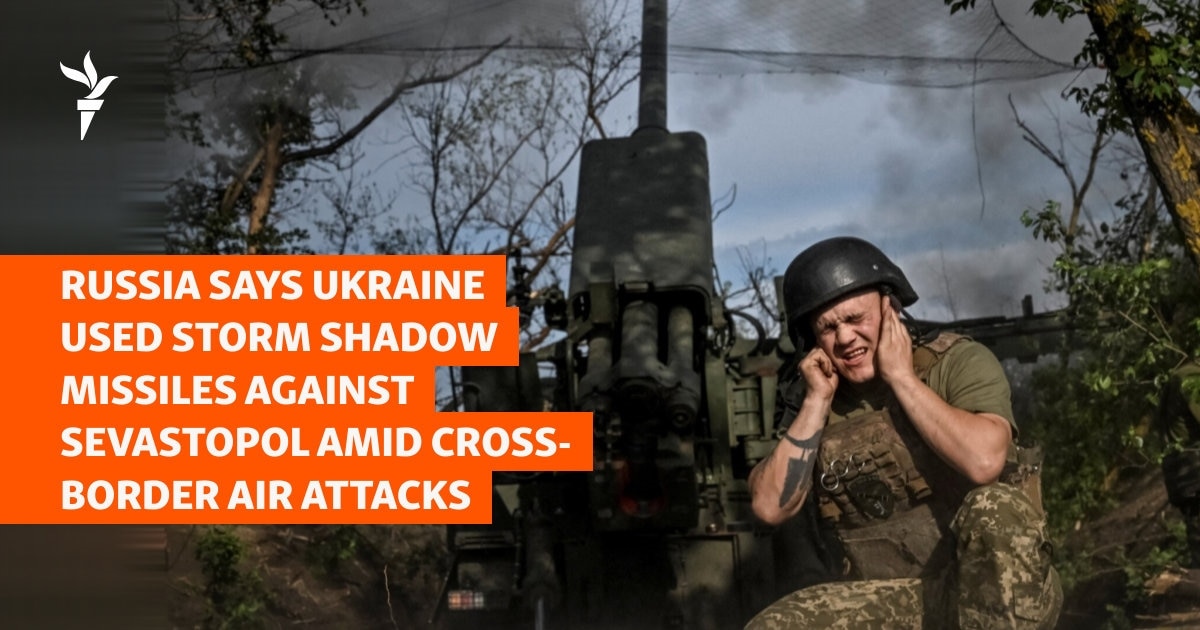
Russia and Ukraine exchanged overnight missile and drone attacks, with Sevastopol reportedly hit by Storm Shadow missiles and Russia reporting 163 strike drones launched across Ukraine. Damage and casualties were reported in Taganrog, Voronezh, Tuapse, Chernihiv, and Donetsk, including five deaths and two injuries in Donetsk. The attacks highlight elevated wartime risk for Black Sea infrastructure, military assets, and a Russian oil-related site in Tuapse.
This is less about battlefield theatrics and more about the market price of escalation risk. Repeated long-range strikes on Crimea, inland airfields, and energy-adjacent sites increase the probability that Russia reallocates air-defense inventory and maintenance capacity away from front-line logistics, which is a second-order drain on operational tempo over the next 1-3 months. The most important implication is not the immediate physical damage, but the need for Russia to spend more on dispersion, repair cycles, and point-defense coverage, raising the marginal cost of sustaining the war.
The energy angle is asymmetric: refinery and port-adjacent incidents in the Black Sea region can tighten regional product balances even if crude output is unchanged. That supports diesel and gasoline cracks more than headline Brent in the near term, because any disruption to refining, storage, or export handling hits middle distillates first and is harder to offset quickly than upstream production. For European consumers, this is a latent inflation input, but the bigger trade is in tanker routing, Russian product export optionality, and insurance/freight premia over the next several weeks.
The contrarian risk is that the market may be overpricing tactical damage and underpricing resilience. Russia has shown it can restore critical infrastructure quickly, and a few successful interceptions or a pause in Ukrainian deep strikes would deflate the escalation premium fast. The real tail risk is not a one-off strike cycle but an expanding pattern of attacks that forces sustained retaliation on energy and transport infrastructure, which would matter far more for commodity volatility and defense spending than any single incident.
AI-powered research, real-time alerts, and portfolio analytics for institutional investors.
Request DemoOverall Sentiment
strongly negative
Sentiment Score
-0.55
