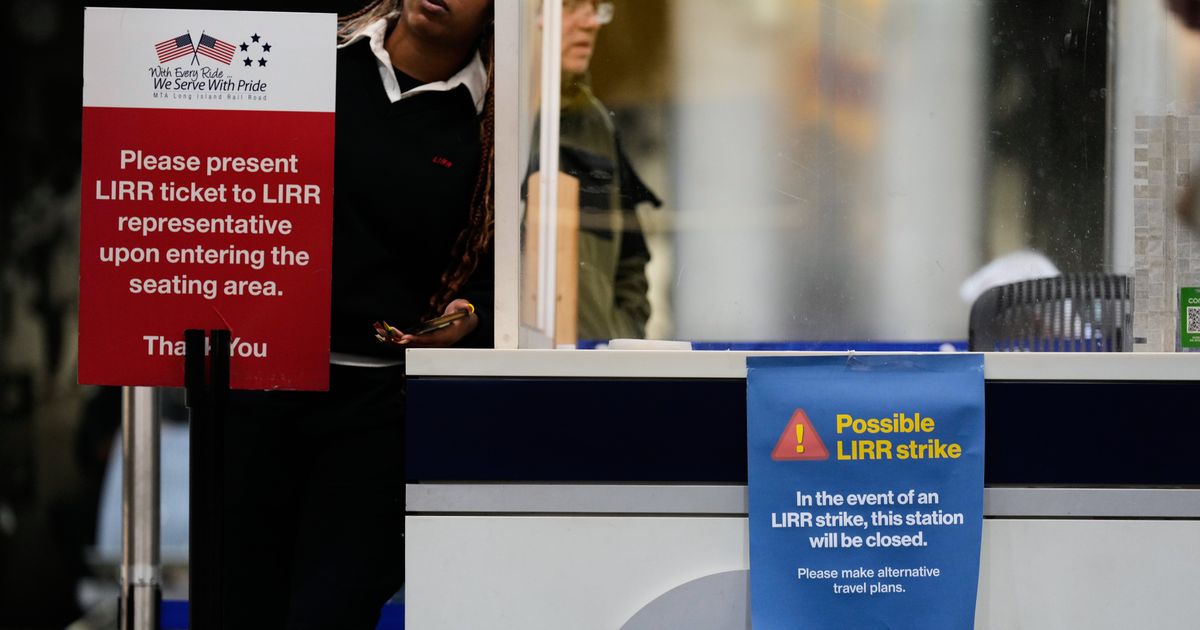
The Long Island Rail Road shut down after five unions representing about half its workforce went on strike, disrupting service for roughly 250,000 daily riders. The standoff centers on pay and health care premiums and could force commuters onto congested roads or limited shuttle buses, while raising the risk of higher fares if labor costs are passed through. The shutdown also carries political risk for Gov. Kathy Hochul ahead of reelection.
The immediate economic damage is less about the rail operator itself and more about forced substitution into already-fragile mobility channels: road congestion, subway crowding, and lost labor hours. The second-order pressure lands on Long Island employers with rigid start times—healthcare, construction, education, and service businesses—where absenteeism quickly becomes revenue leakage, overtime expense, or delayed project milestones. That makes this a near-term negative for regional small-cap cyclicals and a modest positive for bus operators, rideshare, and parking operators if the outage extends beyond a few days.
The market is likely underestimating how quickly a commuter disruption becomes a political pricing problem. If the shutdown persists into the next fare-setting cycle, the issue stops being a labor dispute and becomes a broader affordability narrative, raising the odds of a politically constrained settlement that sacrifices future fare flexibility and pushes costs into later years. That matters because a weaker ability to pass through costs can compress the public operator’s balance-sheet optionality and increase the probability of deferred maintenance or capex slippage, which is a slow-burn negative for service reliability.
For investors, the key catalyst window is days to weeks, not quarters: weekend event traffic is the first visible stress test, then Monday commuting behavior will determine whether the system becomes a headline national issue or a contained labor episode. The contrarian view is that the strike may be a better bargaining chip than a durable operational shock; if both sides recognize the political cost of prolonged disruption, a settlement could arrive abruptly, creating a sharp reversal in any congestion-trade. In that case, the best risk/reward is to own only tactical beneficiaries and avoid chasing a broad bearish thesis on the transit ecosystem.
AI-powered research, real-time alerts, and portfolio analytics for institutional investors.
Request DemoOverall Sentiment
moderately negative
Sentiment Score
-0.45
Ticker Sentiment
