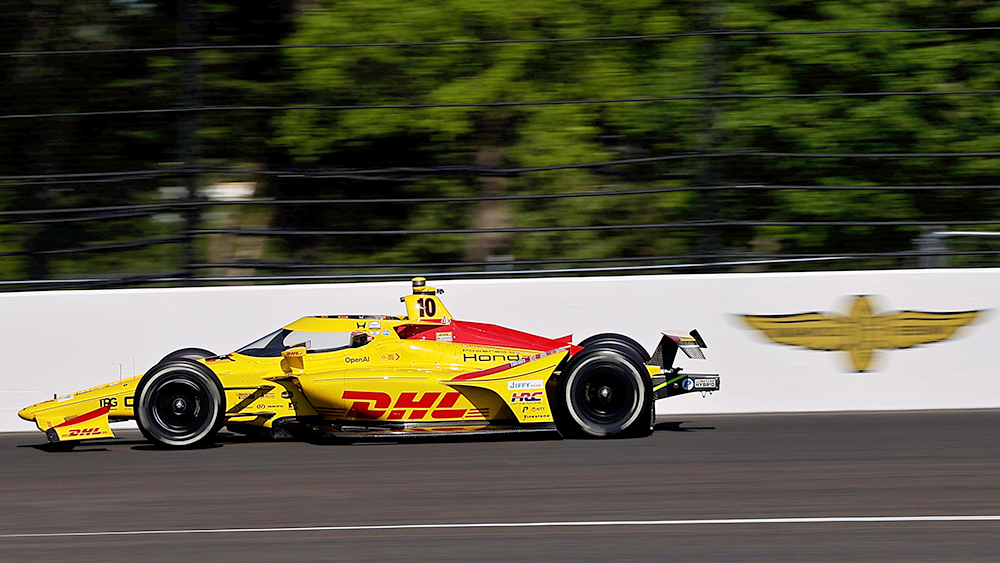
Alex Palou earned the pole for the 110th Indianapolis 500 with a four-lap average speed of 232.248 mph, collecting the NTT P1 Award and a $100,000 bonus. Alexander Rossi and David Malukas will join him on the front row. The article is a routine race update with limited direct market impact.
Pole position at Indianapolis is not a broad fundamental signal; it is a microstructure edge with asymmetric value because clean-air control is disproportionately important on a track where traffic management and pit sequencing dominate race outcome variance. The market implication is less about the driver’s brand and more about the ecosystem: teams with elite setup windows, pit execution, and tire degradation management get a convex payoff from starting up front, while midfield teams face a much steeper path to podium equity if cautions do not create reset opportunities.
From a second-order standpoint, this is a modest positive for Honda and the Ganassi performance stack, but the more interesting read is competitive pressure on Chevrolet-powered peers. If Honda continues to show superior qualifying trim and race balance, that can translate into reputational pull in a sport where OEMs care about visible proof points, which in turn influences sponsorship capture and future technical alliances over the next 1-3 seasons. For Penske, having another front-row presence reduces the chance of a narrative reset after recent scrutiny; if race pace matches grid position, it helps stabilize franchise value, but any strategic misstep would be amplified because expectations are now priced in.
The contrarian view is that the pole is often over-weighted by casual observers: Indy 500 outcomes still have high tail dependence on yellows, fuel windows, and a single caution timing mismatch, so the edge from starting first can decay quickly over 500 miles. In other words, the right trade is not a directional bet on one driver, but an expression of relative team execution probability into the race weekend and a short-duration view on sentiment around OEM performance. The catalyst window is days, not months; any mechanical issue, pit-road penalty, or early-race incident can fully reverse the setup advantage before half-distance.
AI-powered research, real-time alerts, and portfolio analytics for institutional investors.
Request DemoOverall Sentiment
neutral
Sentiment Score
0.15
