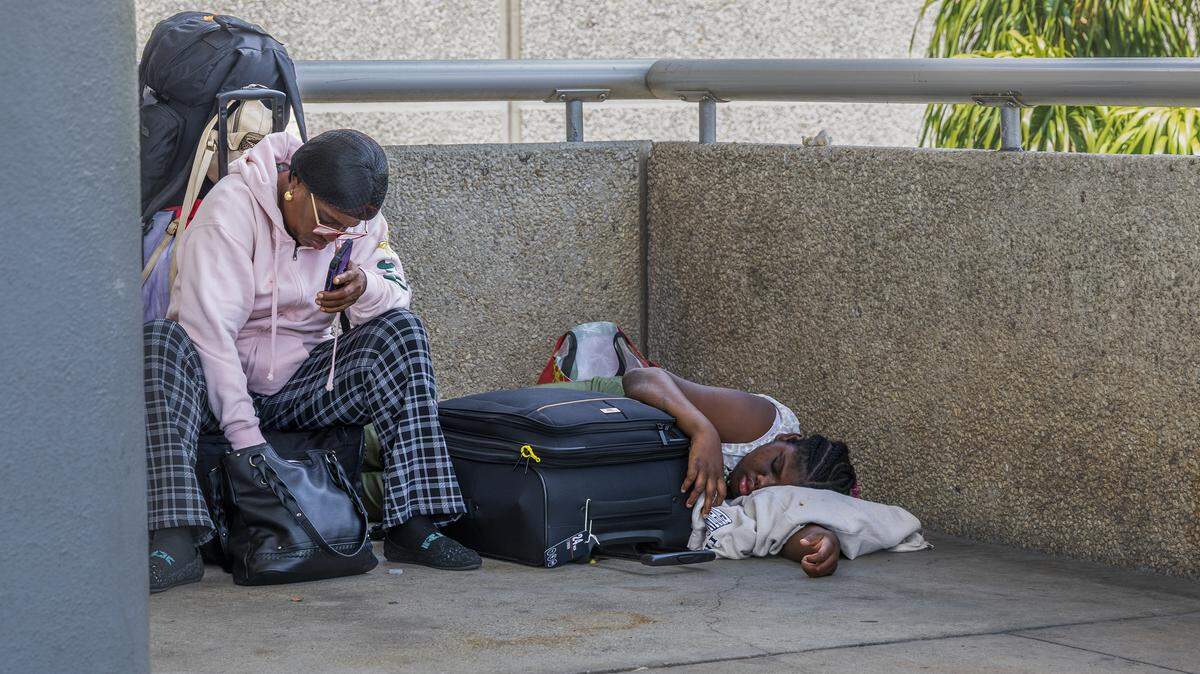
Spirit Airlines abruptly ceased all operations after a last-minute federal bailout failed to materialize, leaving passengers stranded at FLL and employees told not to report for shifts. Travelers faced canceled flights, no immediate rebooking options, and uncertainty over refunds, including one passenger seeking reimbursement for more than $600 in tickets. The shutdown follows two bankruptcy filings in a year and represents a severe credit and restructuring event for the carrier.
The immediate market read is not just a capacity shock; it is a forced redistribution of demand into a system that was already running tight on peak-day inventory. That means the first beneficiaries are not necessarily the obvious low-cost carriers alone, but the airlines with the strongest local dominance at FLL and the best same-day reaccommodation flexibility, because stranded travelers pay up for time-sensitive seats. Over the next 1-2 weeks, the highest margin uplift should accrue to network carriers and a subset of ULCC peers that can opportunistically monetize distress pricing without materially adding fixed cost.
The second-order effect is on airport economics and regional catchment behavior: when one base carrier exits abruptly, fare elasticity temporarily collapses and ancillary revenue at competing airlines rises as travelers accept bag fees, seat fees, and connection risk to preserve trip completion. However, this windfall is likely front-loaded and decays quickly as consumers reroute bookings through online agencies and alternate airports. The bigger medium-term loser may be the broader leisure travel complex in South Florida if the shutdown damages consumer confidence and reduces forward bookings from price-sensitive travelers who were the carrier’s core demand pool.
From a restructuring lens, this is a clean negative signal for the airline credit universe because it reinforces how little residual value sits beneath highly levered, low-margin business models once liquidity access closes. That matters beyond the sector: lessors, airport vendors, and certain receivables financiers can see short-dated working-capital stress if they were exposed to Spirit volumes or collections. The reversal catalyst would be rapid absorption of the displaced demand by rivals without price competition, but if capacity remains constrained into the next 30-60 days, the pricing tailwind could persist into summer booking season.
The consensus may be underestimating how little of the displaced traffic is fungible. Families, international leisure travelers, and irregular operations passengers are the least price-sensitive and most likely to buy up into higher-yield products, which is structurally favorable for legacy carriers. The overreaction risk is in assuming the whole event is purely a consumer tragedy; in capital markets terms it is a modest but real transfer of pricing power from the cheapest end of the market to the incumbents with balance-sheet stamina.
AI-powered research, real-time alerts, and portfolio analytics for institutional investors.
Request DemoOverall Sentiment
extremely negative
Sentiment Score
-0.95
