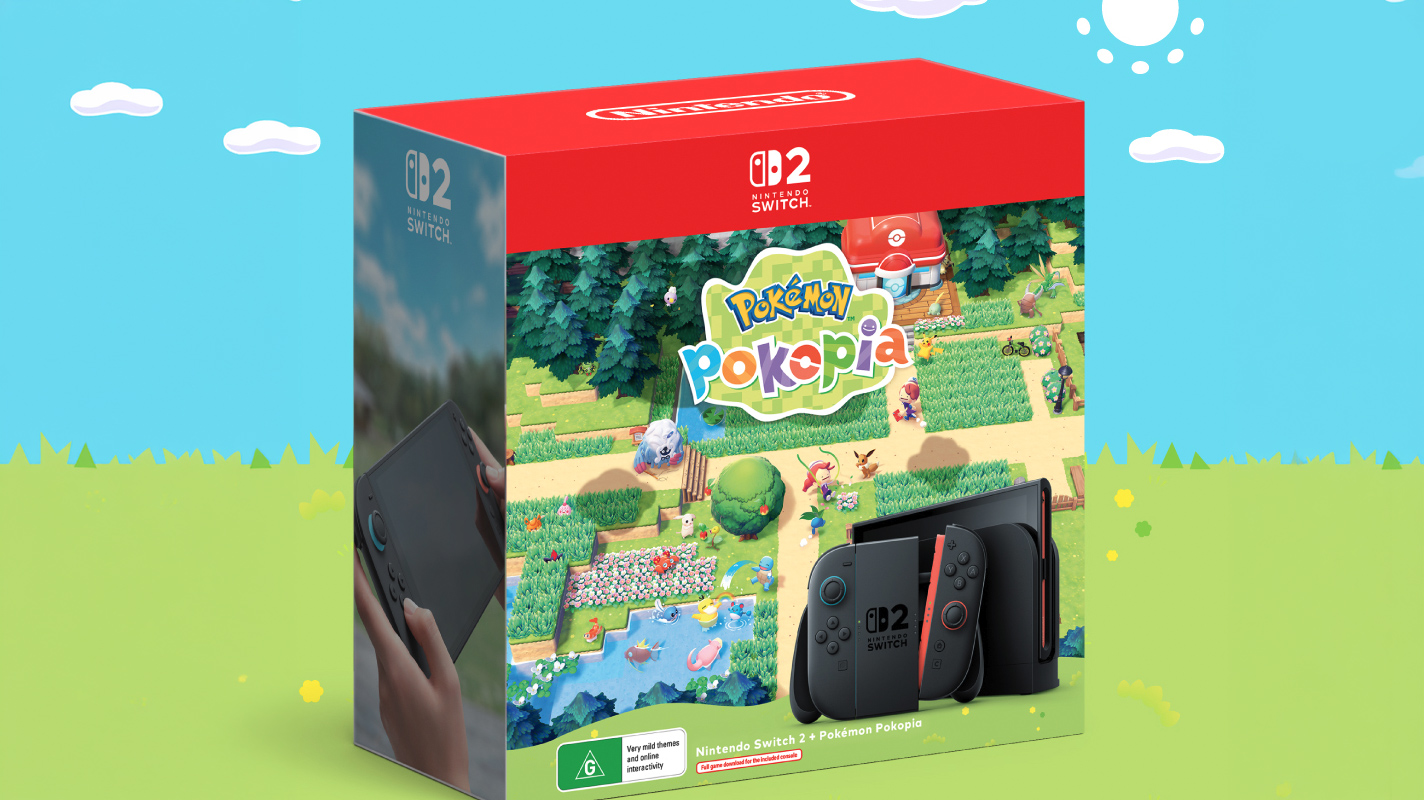
Nintendo announced a new Switch 2 bundle that includes a download code for Pokémon Pokopia and is set to release on June 5. The bundle will be sold through select retailers and the My Nintendo Store, though pricing has not yet been disclosed. The news is modestly positive for Switch 2-related demand but is unlikely to materially move the stock on its own.
This is less about one SKU and more about Nintendo continuing to use bundles as a demand-shaping tool at launch. A code-in-box first-party title effectively converts software attachment into hardware pull-through without the inventory and logistics friction of a physical cartridge, which should improve gross margin mix and reduce channel complexity. The fact that distribution is still selective suggests Nintendo is prioritizing scarcity management over pure volume, which supports sell-through but also keeps upside optionality if early demand exceeds allocations.
The second-order read-through is strongest for the broader premium console ecosystem: incremental launch content lowers the barrier for fence-sitters and may pull forward purchases that would otherwise wait for a later price cut or holiday bundle. That is most relevant for accessory makers and the retail channel, because higher attach rates typically lift controller, storage, and protection spending in the first 30-90 days after activation. It is also a subtle negative for competing family-oriented platforms and handheld substitutes if Nintendo can keep the software conversation concentrated around first-party exclusives rather than hardware specs.
The main risk is that bundle announcements can mask soft underlying hardware demand; if Nintendo needs to lean on software-rich packs repeatedly, it can imply that base console demand is less elastic than the bull case assumes. A second risk is execution timing: this is a June release, so the market may be tempted to extrapolate a holiday uplift too early, even though the biggest read-through window is likely the next 1-2 quarters of channel checks and unit data. If pricing comes in at parity with existing bundles, the move is probably a retention tactic rather than a true demand surprise, which could cap any near-term enthusiasm.
Consensus may be underestimating how much this favors retailers with strong gaming exposure over the hardware maker itself in the very near term. The bundle increases basket size and traffic without requiring a new industrial design, which is good for sell-through at the shelf and can temporarily improve share among mass merchants versus pure-play e-commerce. The contrarian view is that this is a low-risk, incremental positive, not a regime change; the best trade is on second-order beneficiaries and on volatility around launch reads, not on a large directional re-rating of Nintendo-equivalent exposure.
AI-powered research, real-time alerts, and portfolio analytics for institutional investors.
Request DemoOverall Sentiment
mildly positive
Sentiment Score
0.20
