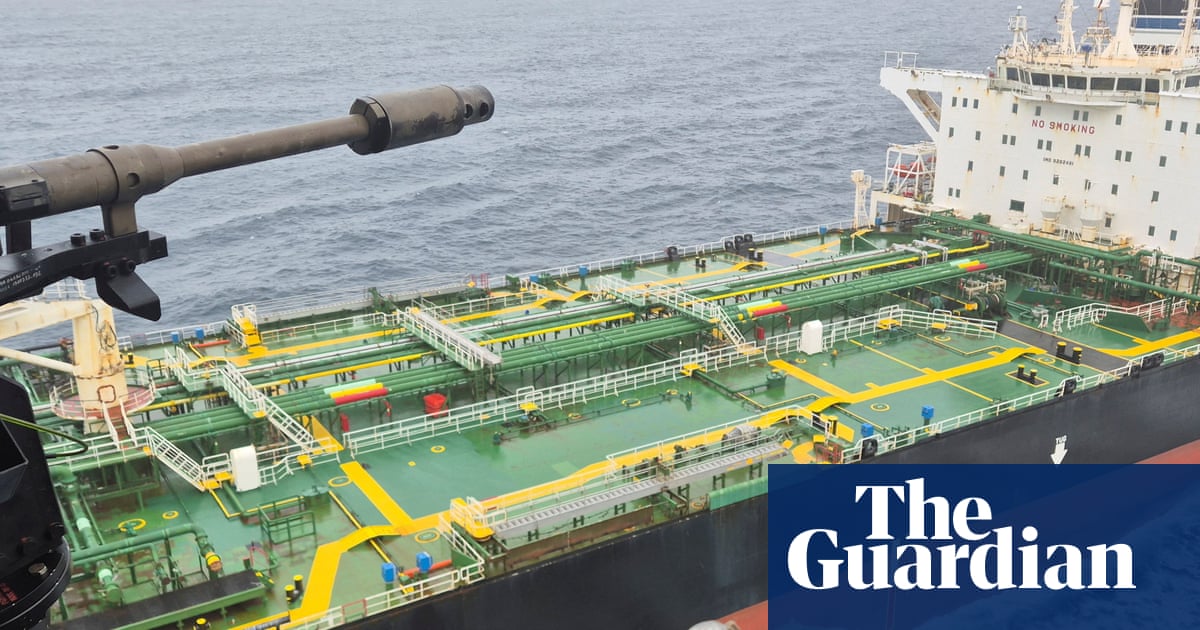
France boarded the sanctioned oil tanker Tagor more than 400 nautical miles west of Brittany after suspecting it was flying a false flag and sailing from Murmansk, Russia. The operation, supported by partners including the UK, reinforces enforcement against Russia’s shadow fleet and underscores tighter maritime sanctions pressure. The news is geopolitically significant but is unlikely to have broad immediate market impact beyond shipping and energy risk sentiment.
This is less about one tanker and more about the enforcement regime shifting from rhetoric to maritime interdiction. The second-order effect is an increase in friction costs for any Russia-linked crude flow transiting Atlantic routes: higher insurance premia, more AIS spoofing risk, slower voyage times, and greater reliance on opaque intermediaries. Even if physical volumes are only marginally disrupted, the market should expect a wider differential between sanctioned barrels and clean benchmarks as traders re-price legal risk and demurrage.
The immediate beneficiaries are non-Russian crude alternatives and firms exposed to legitimate ton-mile demand. Longer routes from the Middle East, West Africa, and the Americas become relatively more valuable if sanctioned cargoes face diversion or inspection delays, which supports shipping rates and incremental demand for compliant fleets. The losers are the shadow-fleet owners, ship managers, marine insurers, and any refiner or trader still blending or arbitraging discounted Russian molecules; these businesses face a higher probability of seizure, cargo delay, and counterparty blacklisting over the next 1-3 months.
The key risk is escalation asymmetry: a handful of boardings can have outsized deterrent value, but they can also trigger retaliatory enforcement or more sophisticated evasion, limiting the persistence of the disruption. If Europe broadens inspections and UK/French cooperation becomes systematic, expect the effect to compound over quarters rather than days. If enforcement stays episodic, the shadow fleet adapts quickly and the trade becomes a short-lived headline event.
Consensus may be underestimating how this interacts with freight and insurance rather than outright oil supply. The cleaner expression is not a straight long-oil bet, but a relative-value trade on shipping compliance and maritime risk premia, which can re-rate before any meaningful change in global crude balances shows up in inventories.
AI-powered research, real-time alerts, and portfolio analytics for institutional investors.
Request TrialOverall Sentiment
mildly negative
Sentiment Score
-0.15
