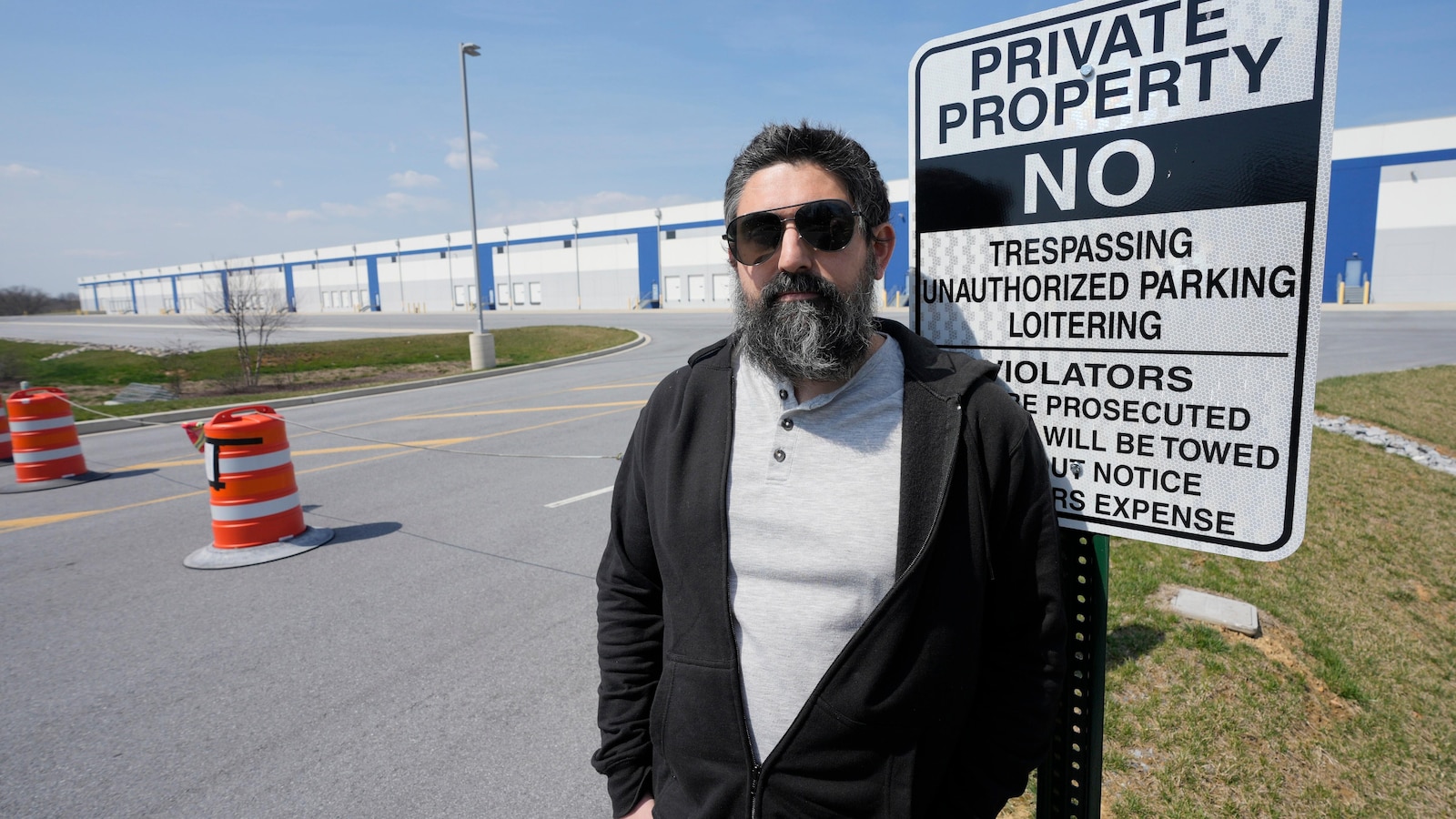
DHS purchased an 825,000 sq ft warehouse in Washington County as part of a $1.074B, 11-warehouse program; ICE signed a $113M renovation contract to house 500–1,500 detainees but work is paused after Maryland's attorney general sued and a hearing is scheduled for April 15. Secretary Markwayne Mullin is reviewing the warehouse-to-detention initiative, and intense local opposition, protests, and litigation have stalled the Maryland project and raised scrutiny over contract pricing and community engagement.
Converting large distribution warehouses into government detention or processing centers is a supply-side shock to the logistics real estate market that few are pricing cleanly: removing even a handful of mega-fulfillment nodes in tight coastal and mid-Atlantic markets can tighten usable industrial inventory by low-single-digit percentages and put 100–300bps upward pressure on local effective rents over 6–12 months. That creates asymmetric upside for owners of existing modern logistics stock (who can reprice leases) while increasing short-term unit economics for third-party carriers forced to pay higher space fees or deadhead longer between hubs.
On the supplier side, a program that moves forward creates a multi-year retrofit pipeline (security, HVAC, plumbing, telecom, medical services) concentrated in mid-cap federal contractors and specialty trades; however, the revenue stream is binary and front-loaded — court decisions and local politics can stop projects mid-conversion, leaving contractors exposed to change-order and idle-capacity risk. The largest tail risks are legal injunctions, municipal countermeasures (water cutoffs, permitting denial), and a political U-turn at the agency level — each could flip valuations within weeks but would likely take months to fully unwind operational footprints.
The market consensus frames this as purely reputational and regulatory headwinds for communities and certain REITs; it underestimates the ‘permanence premium’ in logistics where government ownership effectively sterilizes capacity from commercial use. That creates tradable dispersion between holder-of-record industrial REITs (able to capture rent repricing) and small/municipal-exposed contractors who either win outsized short-term work or face stop-work exposure. Key near-term catalysts to watch are legal rulings, formal procurement amendments, and DHS procurement statements over the next 1–3 months.
AI-powered research, real-time alerts, and portfolio analytics for institutional investors.
Request DemoOverall Sentiment
mildly negative
Sentiment Score
-0.25
