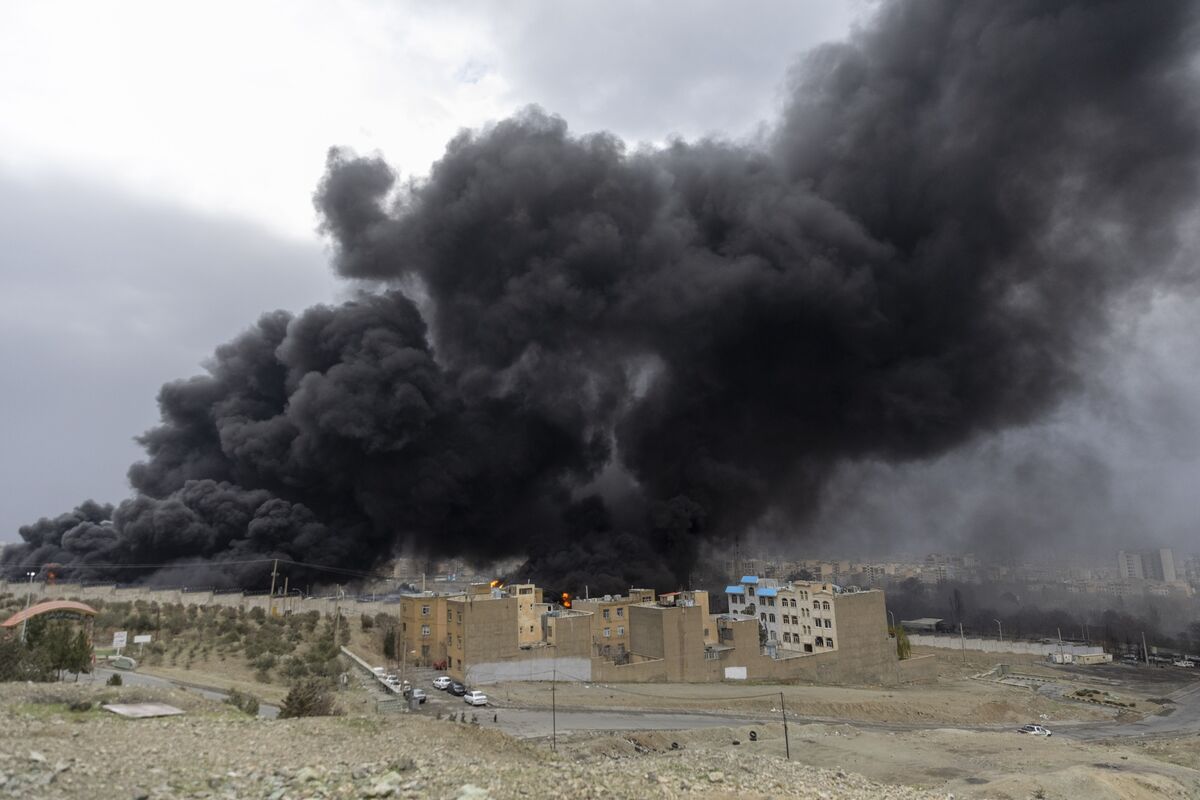
A 10-day Israel-Iran-related conflict has roiled oil markets and heightened political risk ahead of U.S. midterms. Israeli PM Netanyahu signals continued action while President Trump signaled de-escalation, saying military objectives were 'pretty well complete' and the conflict would end 'very soon', indicating divergent endgames. The split raises geopolitical uncertainty and oil-price volatility, creating a risk-off backdrop for markets and increased political risk for Republicans.
The divergence between US political calculus and Israeli operational aims creates two distinct oil/insurance regimes that can flip in days but persist for months. If US-led de‑escalation dominates in the next 1–3 weeks, expect the floating risk premium to compress quickly as speculative longs and cargo insurance surcharges unwind; a 10–20% unwind in price-volatility is plausible inside a single month as positions and freight premia normalize. Conversely, if Israeli operations continue absent a credible diplomatic dampener, the equilibrium shifts toward persistent asymmetric disruption: higher war-risk insurance, rerouted tankers, and elevated freight costs that can add $3–8/bbl to delivered crude economics for 3–12 months depending on chokepoint exposure.
Second-order winners/losers follow predictable but under-traded pathways: refiners with access to inland barrels and flexible feedstock sourcing (e.g., US Gulf refineries) can see crack spreads widen during short-term price drops because feedstock costs lag, while nimble US shale names with high decline rates suffer most from volatility and basis shocks if capex is deferred. Shipping and marine insurers capture most of the early-margin transfer; a sustained rise in war-risk insurance (200–400% on vulnerable routes) flows directly into higher freight and refined product prices even if crude itself oscillates. Defense contractors and logistics providers enjoy asymmetric upside on any sustained campaign extension, but that revenue realization is lumpy and materializes over 3–9 months as procurement and supplemental bills are approved.
Key catalysts and time horizons to watch: 1) political window around the midterms (days–weeks) — the highest-probability de‑escalation hinge; 2) operational escalators (weeks–months) such as proxy attacks on shipping, northern-front opening by Hezbollah, or direct strikes on infrastructure — these raise a multi-month premium; 3) policy offsets (SPR releases, coordinated insurance corridors) that can rapidly reverse price moves if implemented. Tail risks are asymmetric: a quick de‑risking produces fast mean reversion, but limited, sustained low‑intensity attacks keep premia elevated without a single headline event — a stealthy path that markets underprice.
The consensus appears to lean toward rapid US-driven de‑escalation and therefore lower energy volatility; that view underestimates operational inertia and proxy warfare as a persistent source of friction. Even with reduced US kinetic involvement, Israel’s unilateral operational timeline and Iran’s numerous low-cost asymmetric responses mean the upside tail for energy and insurance costs remains materially fatter than option prices imply. Positioning should therefore be two‑sided and convex: protect against a fast unwind while maintaining cheap asymmetric upside for the prolonged‑conflict scenario.
AI-powered research, real-time alerts, and portfolio analytics for institutional investors.
Request DemoOverall Sentiment
mildly negative
Sentiment Score
-0.15
