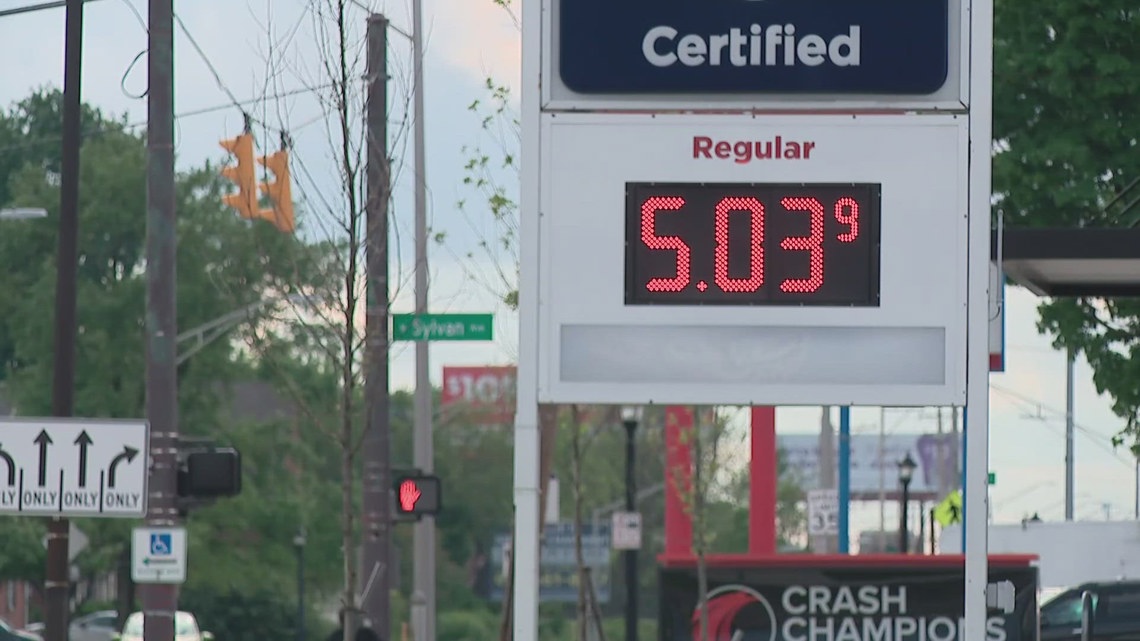
Gasoline prices in Ohio are surging toward 2022 highs, with the national average near $4.42 per gallon and diesel around $5.56, while some Ohio markets have jumped nearly $1 in a week. The spike is being driven by Midwest refinery disruptions and global oil market तनाव, raising risks for consumers, farmers, and supply chains as summer travel season approaches. Analysts warn Ohio could soon test new all-time records for gasoline and diesel if conditions do not improve.
This is a margin-transfer event, not a pure oil beta trade. The immediate winners are upstream producers, refiners with clean operations, rail/intermodal names, and c-stores with inventory mark-to-market lag; the losers are the demand aggregators that cannot reprice quickly enough — trucking, parcel, ag input-intensive producers, and discretionary retail tied to commuting/road-trip behavior. The second-order effect is that diesel is the more important signal than gasoline: sustained diesel inflation feeds through freight rates, food distribution, and industrial delivery schedules with a lag of weeks, which is where the broader inflation impulse can surprise consensus.
The key risk is duration. Refinery outages are usually a 1-4 week problem, but if crude volatility and Atlantic shipping concerns keep wholesale costs elevated into peak summer driving, the market can move from a local pump shock to a national margin squeeze. That matters because end-demand is already fragile: consumers can absorb one week of higher prices, but repeated fill-up shocks force behavioral changes, which show up first in miles driven, then in retail baskets, then in air travel and vacation plans.
The contrarian view is that the setup may be better for refiners than for crude itself. If the issue is regional capacity snarls rather than a global supply gap, crude can stabilize while crack spreads stay wide, making downstream assets the cleaner expression. The market may also be underpricing the deflationary offset later in the summer: higher pump prices eventually destroy discretionary demand, especially for lower-income households, which caps how far retail fuel can outrun crude before volumes roll over.
AI-powered research, real-time alerts, and portfolio analytics for institutional investors.
Overall Sentiment
moderately negative
Sentiment Score
-0.45
