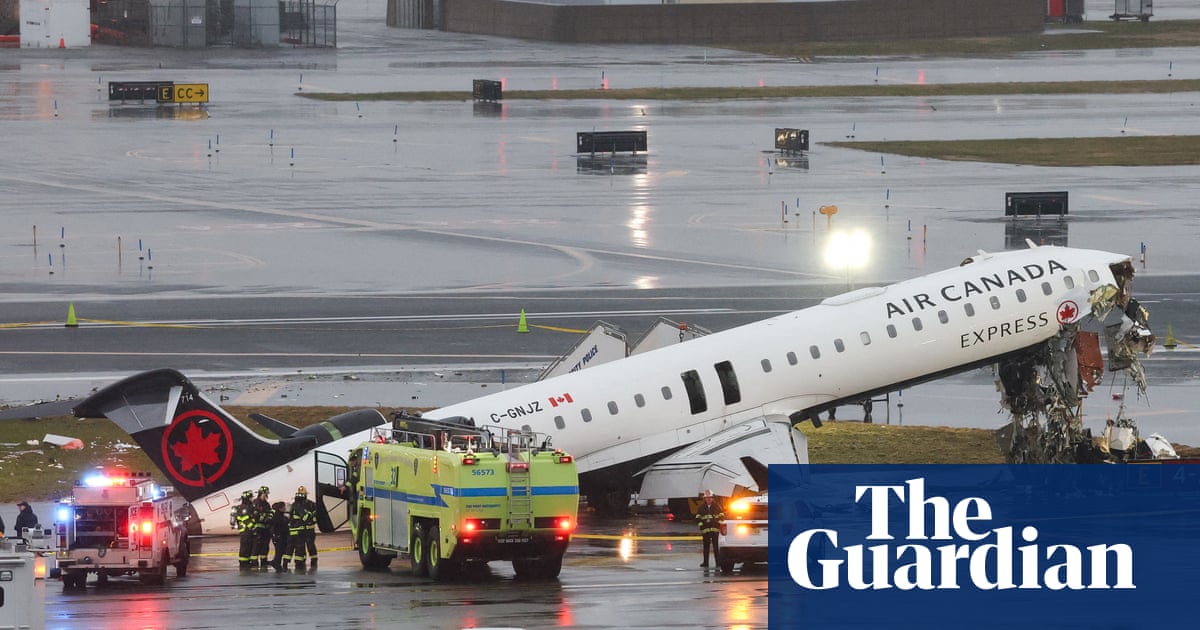
A runway collision at LaGuardia killed both pilots of Air Canada Express Flight 8646 and injured about 40 people, marking the first deadly crash at the airport in 34 years. NTSB investigators said the controller warning came seconds before impact, while the runway surveillance system did not generate an alert and the truck lacked a transponder, highlighting aviation safety and procedural failures. The report raises regulatory and operational scrutiny for airport ground safety systems and emergency response protocols.
This is less a single-incident headline than a system-level credibility event for airport safety automation. The near-term implication is a repricing of liability and remediation risk across airport operators, avionics vendors, and municipal/contract fire response fleets that rely on legacy surface-surveillance assumptions rather than fully instrumented vehicles. The market should expect a wave of accelerated capex scrutiny at large U.S. airports, with procurement favoring transponder-equipment, runway incursion detection, and procedural redundancy over discretionary expansion spending.
For airlines, the first-order earnings impact is immaterial, but the second-order risk is asymmetric: one high-profile runway event can force tougher FAA scrutiny, more conservative ATC protocols, and temporary operational throttling at congested hubs. That matters most for carriers with heavy slot concentration and tight turnaround economics, where even small increases in ground delay or missed connections can pressure unit revenue and disruption costs over multiple quarters. Air Canada’s equity should underperform the sector on legal overhang and brand damage, while UAL is more exposed to narrative contagion than direct financial exposure.
The contrarian angle is that this may be a buying opportunity for quality airline franchises if the investigation keeps the root cause in the category of process breakdown rather than fleet or propulsion defect. The real beneficiary over 6-18 months could be defense/infrastructure electronics names that sell surveillance, collision-avoidance, and airport digitization systems, because this kind of event tends to convert policy urgency into funded mandates. If regulators widen the lens to all major hubs, the upgrade cycle could become multi-year and relatively insulated from the macro travel cycle.
AI-powered research, real-time alerts, and portfolio analytics for institutional investors.
Request TrialOverall Sentiment
strongly negative
Sentiment Score
-0.60
Ticker Sentiment
