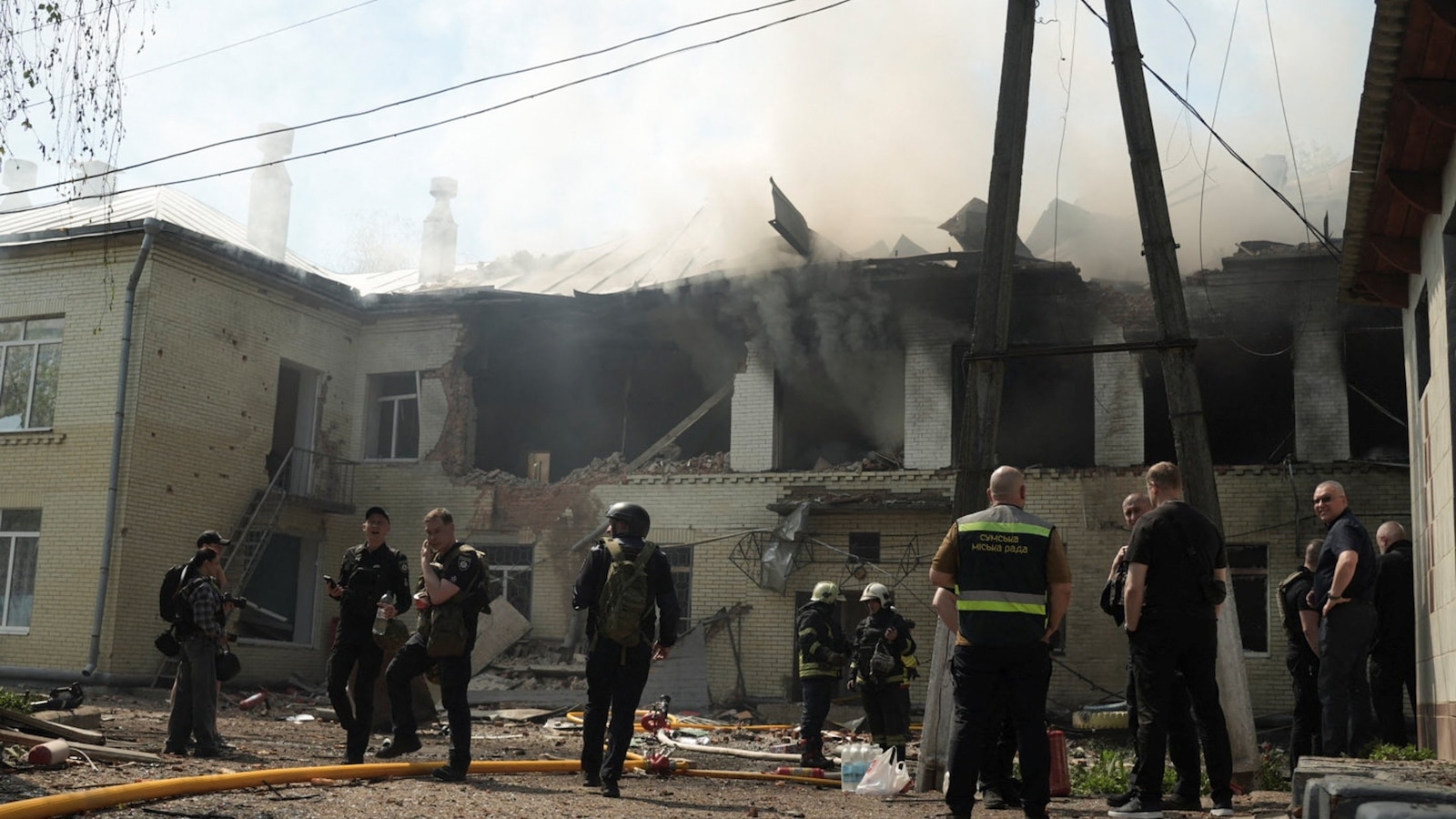
At least 1 person was killed and 2 injured in a Russian drone strike on a kindergarten in Ukraine's Sumy region, while Ukraine said overnight attacks across eight locations killed at least 4 more and injured 19 in Dnipropetrovsk. Ukraine's air force said Russia launched 108 drones and 3 missiles overnight, with 89 drones intercepted or suppressed, underscoring continued escalation despite Kyiv's unilateral 24-hour ceasefire declaration. The renewed strikes and counterstrike claims heighten geopolitical risk and could keep regional assets in a risk-off posture.
This is a negative shock to the market’s faintest hope for a negotiated pause: the signaling value matters more than the casualty count. Repeated violations of even a symbolic ceasefire increase the probability that Europe moves from “inventorying support” to “accelerating replenishment,” which is bullish for the full defense supply chain and bearish for any near-term de-escalation trades across Eastern Europe risk assets. The second-order effect is tighter air-defense and interceptor scarcity, which tends to benefit primes and munitions suppliers before it shows up in headlines.
The deeper market implication is that infrastructure damage in Ukraine becomes a slow-burn capex cycle, not a one-off event. If attacks continue into the next several weeks, the trade shifts from tactical battlefield exposure to reconstruction, grid hardening, and drone-defense procurement; that favors companies with bottleneck components rather than headline platform makers. Emerging-market risk premiums in the region should remain elevated, but the stronger expression is likely through higher commodity-risk hedging and wider European sovereign spread sensitivity if the conflict spills into energy or logistics nodes.
Contrarianly, the market may overestimate the probability that the latest escalation changes strategic direction. Unless there is a material change in external support or a broader strike campaign on border infrastructure, the path dependency remains one of attrition rather than regime-level escalation; that limits the upside of chasing broad geopolitical hedges after the first move. The cleaner opportunity is to wait for confirmation that this becomes a multi-week pattern, then lean into the beneficiaries of replacement demand and air-defense scarcity rather than directional war headlines.
AI-powered research, real-time alerts, and portfolio analytics for institutional investors.
Request DemoOverall Sentiment
strongly negative
Sentiment Score
-0.82
