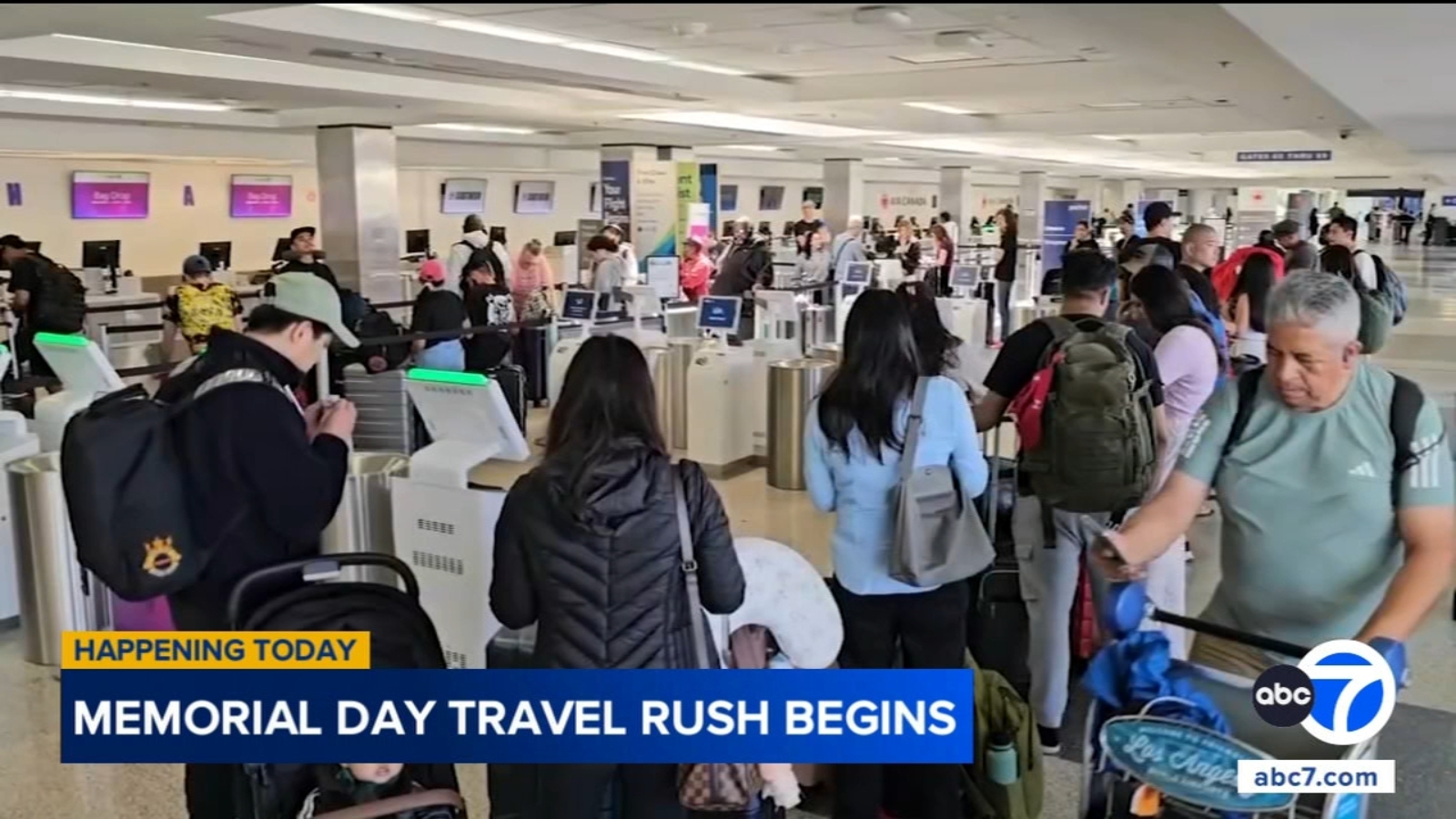
3.6 million Southern California residents are expected to travel for the Memorial Day weekend, up 1% year over year and 8.1% versus 2019, with 2.9 million driving, 388,000 flying and 279,000 using other modes. INRIX expects the heaviest congestion on Southern California roads between 3 and 6 p.m. Thursday, Friday and Monday, with the eastbound 10 Freeway toward Palm Springs and Phoenix forecast to be 88% more congested than normal on Friday. The article also notes higher gas prices tied to the continuing war with Iran, but the overall piece is primarily a travel-demand and traffic outlook update.
The immediate beneficiary is not simply hotels or airlines, but the entire short-duration mobility stack: fuel retailers, highway-side convenience, quick-service food, and toll-road operators should see a near-term volume lift as a larger share of travelers choose self-directed driving over airfare. The bigger second-order effect is margin pressure on discretionary spend farther from the origin market: higher fuel and longer drive times tend to shift trip budgets away from lodging upgrades and toward lower-ticket, road-adjacent purchases, which can favor value-oriented travel brands over premium leisure operators.
The key signal is that demand is holding despite materially worse input costs, which implies consumers are still willing to absorb higher all-in trip pricing for experiences and family visits. That supports a near-term read-through for gasoline demand and ancillary road travel spending, but it is also a warning that price elasticity may be showing up later in the summer via shorter trip lengths, more staycations, and trade-down behavior if fuel remains elevated for several weeks. In other words, this is bullish for volume in the next 3-7 days, but potentially bearish for per-trip spending over the next 1-2 months if household budgets re-optimize.
The contrarian angle is that congestion itself is a tax on travel consumption, and the market may be underestimating how much it cannibalizes incremental weekend travel value. If drive times stretch by 30-80%, some demand is likely to be deferred or compressed into lower-yield time windows, which means the headline travel count can overstate actual economic throughput. For transport names, the cleaner trade is on pricing power and throughput at the network edges, not on broad tourism beta.
AI-powered research, real-time alerts, and portfolio analytics for institutional investors.
Request DemoOverall Sentiment
neutral
Sentiment Score
-0.05
