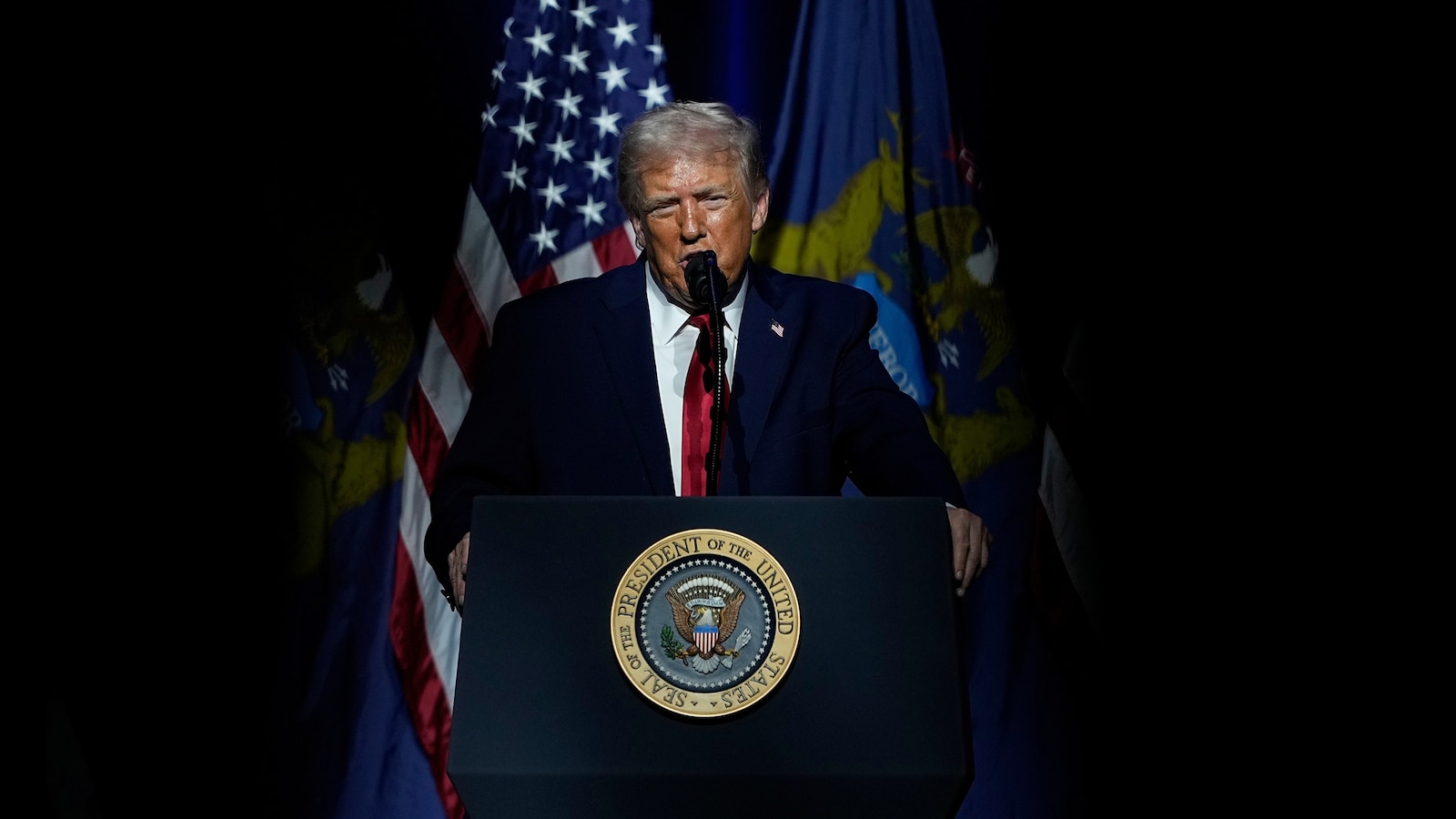
Trump 2024 voters are split on recent U.S. operations in Venezuela and potential action in Iran and Greenland: some praise the capture of Nicolás Maduro as enforcement of international law while others express concern about casualties, sovereignty and legalities. Polling cited shows broader public ambivalence — a Quinnipiac poll found 70% oppose U.S. involvement in Iran if protesters are killed and a roughly 47%/45% split on support for the Maduro capture (Republicans 85% support, Democrats 79% oppose) — and a Reuters/Ipsos survey found 66% worry U.S. efforts around Greenland could damage NATO ties, signaling elevated geopolitical risk but no immediate, direct market-moving financial data.
Market structure: Short-term winners are defense primes (LMT, RTX, GD) and cybersecurity vendors (PANW, CRWD, FTNT) from increased perceived geopolitical risk; losers include commercial travel (AAL, UAL) and EM FX/oil-sensitive sovereign bonds if Iran tensions spike. Pricing power for defense contractors improves only if US Congress authorizes incremental procurement (3–12 months); oil sensitivity will drive volatility in energy names and shipping insurers. Cross-asset: a moderate risk-off shock would bid US Treasuries and USD, push VIX >25 and lift gold (GLD) and Brent; sustained Middle East escalation could push Brent above $90/bbl and reprice insurance and freight.
Risk assessment: Tail risks include a limited regional war (low probability, high impact) pushing Brent >$120, a 10–15% equity drawdown, or US-EU diplomatic rift reducing NATO procurement cooperation; these would benefit safe havens and long-duration defense exposure but damage global cyclicals. Timing: immediate (days) for FX/volatility spikes, short-term (weeks–months) for option-driven moves and travel earnings downgrades, long-term (quarters–years) for sustained defense revenue growth. Hidden dependencies: procurement lags, congressional funding cycles, and sanctions/eta on Venezuela oil flows; technology/cyber responses may be fast and non-linear. Catalysts: official US strikes, Congressional emergency funding, Brent >$90, or public NATO strains within 30–90 days.
Trade implications: Favor tactical long defense and cyber exposure while hedging macro tail risk; use options to limit capital at risk and exploit implied vol. Consider pairing long defense names with short airline/travel and short selected EM sovereign debt via CDS/ETFs on material escalation signals. Monitor oil at $80–90 and VIX at 20–25 as actionable thresholds to increase hedges.
Contrarian angles: Consensus expects only short disruptions; but defense equities may be under-owned relative to potential multi-year procurement tail if NATO cohesion frays—this is underpriced if Congress approves emergency supplemental. Conversely, if operations remain surgical and diplomatic fallout is muted, energy and travel names could rebound quickly; avoid overpaying for long-dated defense exposure and prefer 3–12 month option structures to capture asymmetric payoffs.
AI-powered research, real-time alerts, and portfolio analytics for institutional investors.
Request DemoOverall Sentiment
neutral
Sentiment Score
0.00
