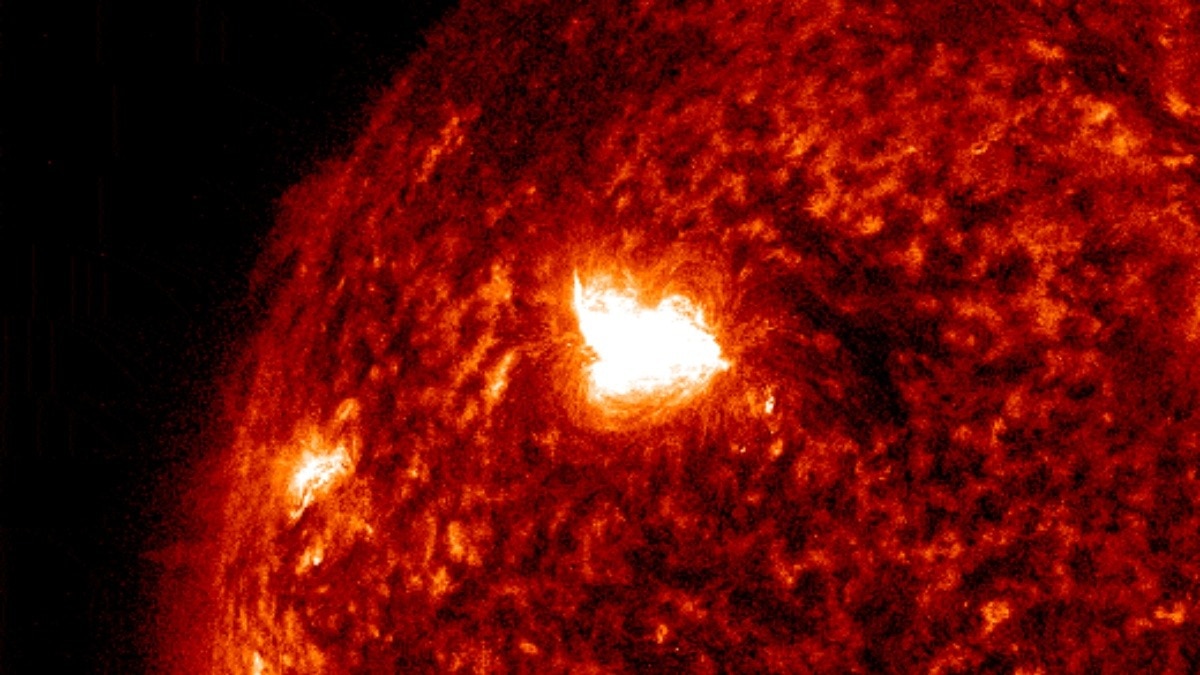
A massive sunspot (AR4366) produced 17 minor flares and three X-class blasts in under 24 hours, highlighted by an X8-class flare that peaked late on Feb. 1, 2026 and triggered widespread shortwave radio blackouts across the South Pacific, disrupting aviation and maritime communications and ham radio below 30 MHz. NOAA classified additional X-flares (including an X2.9) as R3 (strong) and is monitoring SOHO coronagraph data for Earth-directed CMEs; confirmed CMEs could produce auroras within 1–3 days and have historically caused geomagnetic storms that impact power grids and satellites. Market implications are sector-specific (satellite operators, grid infrastructure, aviation/transport comms and energy delivery), so investors should monitor NOAA alerts and space-weather updates for potential localized operational risks.
Market structure: Near-term beneficiaries are firms providing hardened space infrastructure, satellite operators and imagery/monitoring services (satcom operators, Maxar-type assets) and defense contractors that supply resilient comms and grid-protection tech; utilities and grid-equipment vendors (Eaton/Siemens/ABB) also gain pricing power if insurers pass through premiums. Losers are uninsured small-sat operators, regional airlines and maritime HF-dependent logistics players vulnerable to shortwave blackouts; consumer cyclicals see only transient impact. Cross-asset: expect a small flight-to-safety in Treasuries (yields down) and gold up 1–3% intra-week if CME confirmation occurs; USD to tick stronger versus EM FX with outage risk to GPS-dependent EM infra.
Risk assessment: Tail risk is a Carrington-class CME (probability <1% in any given cycle) that would produce multi-week satellite and large-transformer damage with insured losses >$10–50bn and systemic grid disruption — that would materially re-rate insurers and utilities. Immediate window is 1–3 days for radio blackouts/aurora, medium-term 1–6 months for satellite damage revenue/capex cycles, long-term 1–3 years for higher spending on hardening. Hidden dependencies: GPS-reliant supply chains, precision agriculture and high-frequency trading; a prolonged outage amplifies real economic loss beyond headline comms outages. Catalysts to act: NOAA CME direction confirmation, Kp index >6, or an official G4/G5 geomagnetic storm alert within 24–72 hours.
Trade implications: Direct plays — overweight defense (e.g., LMT, NOC, RTX) and select space-inspection/imagery (MAXR) for 1–2% portfolio allocations with 3–12 month holding periods; buy 6–12 month near-the-money calls as leverage. Pair trades — long ADI or MCHP (radiation-hardened components) vs short regional airlines (AAL, JBLU) 0.5–1% each for 1–3 months if HF disruptions persist >24 hours. Options — purchase a short-dated (2–6 week) GLD call spread or long-tail VIX calls if NOAA confirms Earth-directed CME (threshold: G-scale G4/G5 or Kp>8). Rotate modestly into utilities (ETN/NEE) and defense, trim travel/logistics exposure on any >10% decline in impacted small-caps.
Contrarian angles: The market may overprice permanent downside for satellite equities after a transient series of flares; historically most X-class flares create temporary disruptions, not structural revenue loss — look for buying opportunities on 15–30% pullbacks. Conversely, insurers may underprice the policy repricing cycle; a confirmed damaging CME should accelerate reinsurance rate increases for 12–24 months, benefiting incumbents with strong balance sheets. Watch for accelerated capex cycles in space hardware and radiation-hardened semiconductors that could produce durable multi-quarter revenue tailwinds, making some beaten-down suppliers attractive longer-term buys.
AI-powered research, real-time alerts, and portfolio analytics for institutional investors.
Request DemoOverall Sentiment
mildly negative
Sentiment Score
-0.25
