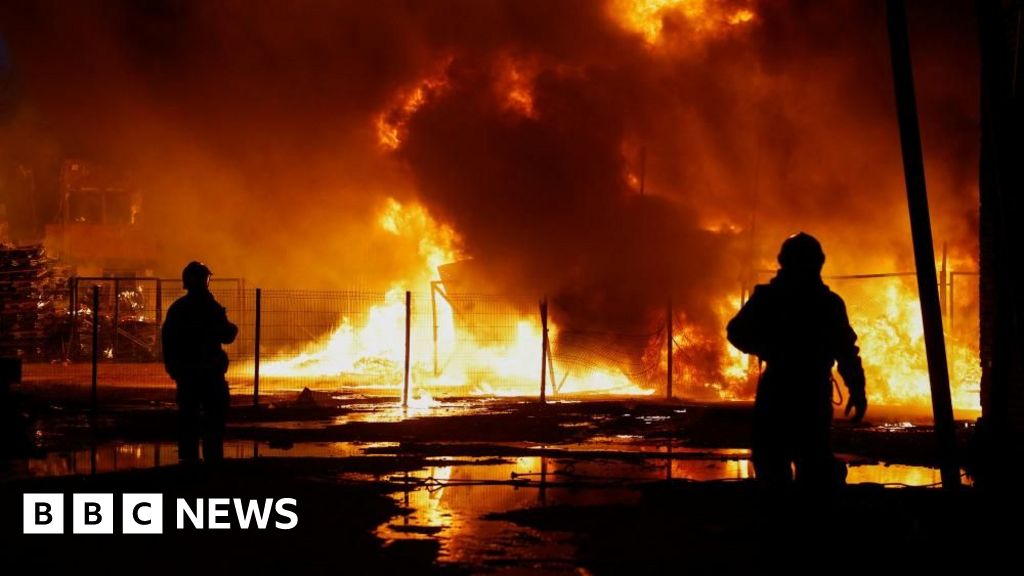
Russian drone and missile strikes across Ukraine killed at least three people, including a 12-year-old boy and a 35-year-old woman in Kyiv, while one person was killed in Dnipro and attacks were also reported in Kharkiv and Odesa. Ukrainian officials said at least 18 people were injured in Kyiv, with another 10 injured in Dnipro and five wounded in Odesa, underscoring a renewed escalation after a brief Easter ceasefire. The article also reports retaliatory Ukrainian drone strikes in Russia's Krasnodar Krai that killed two children.
The key market read is not the tactical damage but the escalation function: repeated strike cycles keep the conflict in a regime where insurers, shippers, and industrial planners have to price in intermittent infrastructure disruption rather than a one-off shock. That tends to sustain a risk premium in regional assets and FX even when front-line headlines fade, because the marginal cost of doing business in Ukraine, southern Russia, and Black Sea logistics rises with every successful retaliatory strike.
The second-order effect is on European and emerging-market sentiment, not just local assets. Every visible deterioration in the ceasefire/negotiation track pushes the market toward a longer war discount: higher defense spending assumptions, slower reconstruction expectations, and tighter credit availability for adjacent EM sovereigns and corporates exposed to Black Sea trade routes. The biggest losers are companies with high exposure to cross-border transport, agriculture exports, and utilities relying on uninterrupted grid stability; the more durable beneficiary is the defense supply chain, especially ammunition, air defense, drones, and electronic warfare.
The contrarian angle is that this kind of headline often overstates immediate macro spillover unless energy infrastructure is hit at scale. Without a sustained attack on export capacity, the broader market impact should remain concentrated in regional risk premia rather than a global risk-off regime. The real catalyst to watch is whether one side starts targeting logistics nodes, refineries, or power transmission in a way that forces a policy response from the U.S./Europe over the next 2-6 weeks; that would convert a tactical escalation into a more durable repricing.
For now, the setup favors owning volatility and defense beta over outright broad EM shorts. The asymmetry is that peace-talk headlines can compress premiums quickly, but a single large infrastructure strike can reprice the entire basket in one session, so timing matters more than direction.
AI-powered research, real-time alerts, and portfolio analytics for institutional investors.
Request DemoOverall Sentiment
strongly negative
Sentiment Score
-0.82
