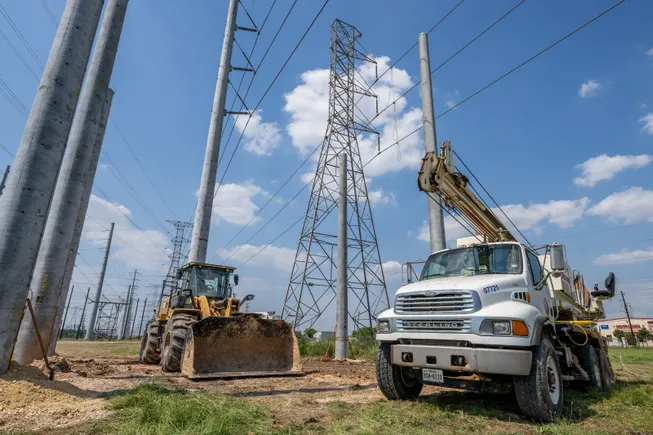
The U.S. Department of Energy announced a $1.9 billion SPARK funding opportunity to reconductor transmission lines and deploy advanced transmission technologies, with applications due in May and selections expected in August. SPARK rebrands the Biden-era GRIP program (GRIP had announced about $7.4B in awards of a $10.5B five-year program) and allocates up to $427M for grid resilience, $614M for smart grid, and $862M for grid innovation. This funding addresses affordability and capacity pressures—EIA projects a national residential price of $0.18/kWh in 2026 (+~37% vs 2020)—and is positive for transmission owners, advanced transmission technology providers, and grid modernization suppliers.
SPARK reallocates incremental federal firepower toward the fastest-to-deploy grid upgrades — reconductoring and ATTs — which structurally favors firms that can execute high-throughput retrofit work and supply specialty conductors and controls. Reconductoring/HTLS solutions can often lift local line ampacity by ~30–100% depending on thermal headroom, meaning a single awarded project can defer multi-year new-line timelines and the associated multi-hundred-million-dollar capital cycles for long-distance HVDC builds. That creates a near-term procurement and services boom (12–36 months) for EPCs, conductor producers and controls vendors while compressing near-term demand for large ROW-driven projects.
Second-order winners will be vertically integrated utilities with regulated rate-base recovery and incumbent ownership of transmission corridors — they can capture most of the value from faster deployments and use grants to accelerate rate-case spend, shortening payback to regulators. Conversely, independent developers of greenfield long-haul lines and companies that monetize new ROWs face a quieter pipeline and longer horizon; markets that price “build” vs “optimize” exposure will re-rate as award flows become visible in Aug–Dec. Supply-chain bottlenecks (copper/aluminum, transformer lead times, specialty conductor capacity) will materialize within 6–12 months, creating transitory margin pressure for smaller suppliers but also pricing power for large diversified vendors.
Key tail risks: political/legal delays in award disbursal, state PUC pushback on federal money fungibility, and the simple arithmetic limit of optimization — reconductoring displaces but does not eliminate the need for new transmission in high-renewable scenarios, so policy or macro shifts toward faster renewable siting could reverse the trade over 12–36 months. Watch award notices in August as the primary catalyst; the market will price winners quickly but fundamental realization of value requires 12–36 months of project execution and regulatory approvals.
AI-powered research, real-time alerts, and portfolio analytics for institutional investors.
Request DemoOverall Sentiment
mildly positive
Sentiment Score
0.25
