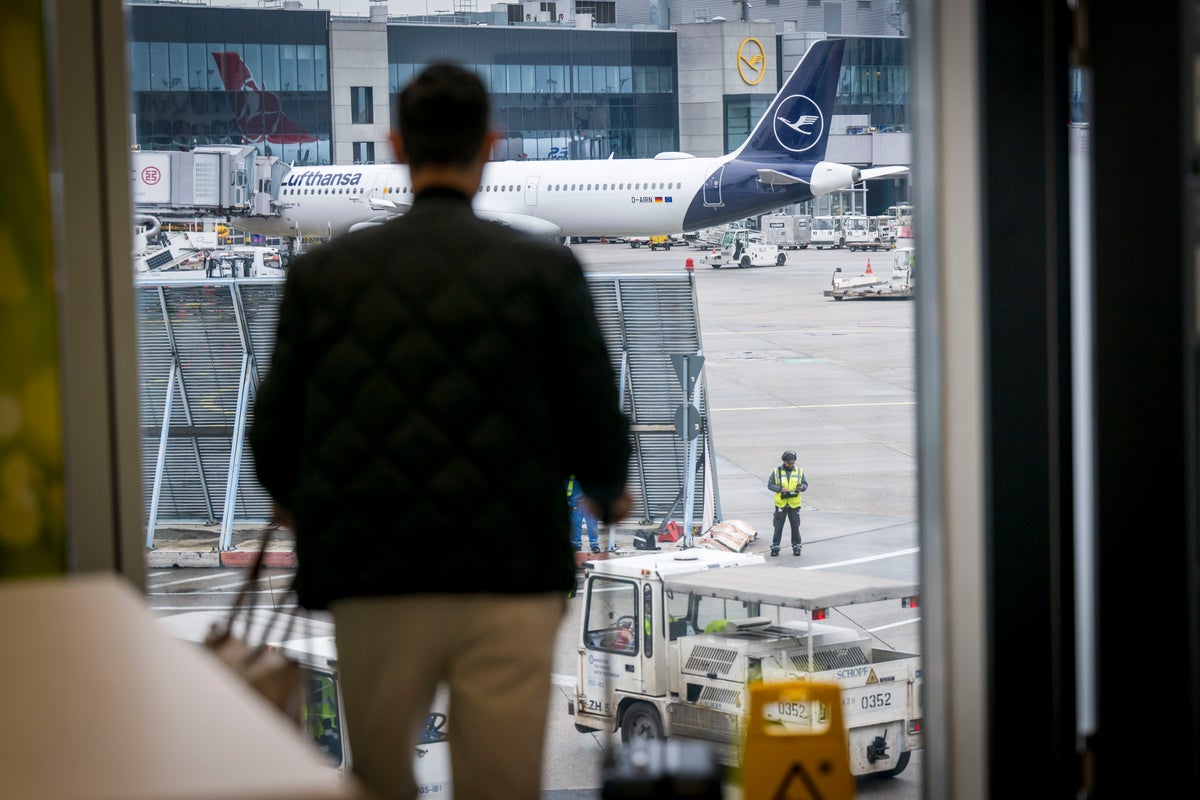
Lufthansa said kerosene will stay in short supply and more expensive for the rest of the year, with contingency plans to cut capacity by 2.5% to 5% and ground 20 to 40 older aircraft. The article ties the airline sector's stress to the Iran war and the Strait of Hormuz disruption, which have doubled jet fuel prices and tightened route availability. Airlines are also raising fares, adding fuel surcharges, and in some cases delaying buybacks, signaling broad margin pressure across the sector.
The immediate market effect is not just weaker airline margins; it is a redistribution of capacity across the network. When legacy carriers trim lift and retire older aircraft early, the spillover tends to benefit the most fuel-efficient operators and those with the cleanest balance sheets, while secondary airports, premium leisure routes, and Asia-heavy networks take the first hit. That should widen dispersion inside the sector over the next 1-3 quarters: airlines with newer fleets, more hedged fuel exposure, and stronger pricing power can preserve yield, while weaker carriers are forced into a worse mix of higher fares but lower utilization.
The second-order macro risk is that this acts like a tax on travel demand at the margin, but with a lag. The first reaction is pass-through via surcharges and fare increases; the more important effect shows up 2-6 months later as discretionary trips get deferred and corporate travel budgets get re-forecast. That dynamic is bearish not only for airlines, but also for hotels, online travel intermediaries, airport operators, and duty-free/airport retail, because lower flight frequency reduces captive spend even if ticket prices rise.
The contrarian point is that the market may be underestimating how much of the pain gets socialized into consumers rather than equities in the near term. Airlines can usually reprice faster than they can cut capacity, so earnings revisions may not collapse immediately if demand proves elastic below the top end of leisure travel. The real tail risk is geopolitical: if the disruption in energy transport persists into peak northern-hemisphere travel season, jet fuel inflation can become a persistent capacity constraint rather than a temporary margin shock, and that is when grounding aircraft becomes a signal of structural demand destruction rather than a tactical response.
AI-powered research, real-time alerts, and portfolio analytics for institutional investors.
Request TrialOverall Sentiment
strongly negative
Sentiment Score
-0.72
