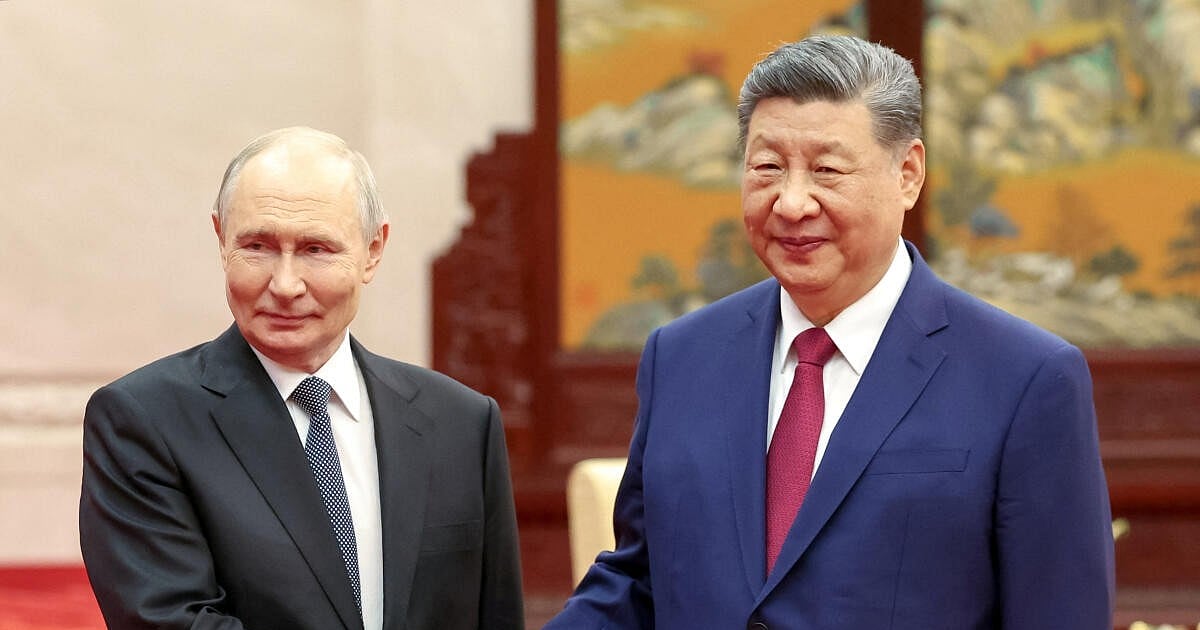
Xi Jinping and Vladimir Putin jointly condemned the US-Israeli strikes on Iran and warned that shipping restrictions by “individual states” threaten global trade, with the Strait of Hormuz crisis highlighted as a key risk. The leaders called for an immediate end to hostilities in West Asia, and said the conflict is disrupting energy supplies, industrial chains, and the international trade order. They also criticized Trump’s Golden Dome missile defense plan and signed 20 cooperation deals, underscoring tighter China-Russia coordination amid elevated geopolitical तनाव.
This is a regime-shift signal for freight, energy, and sanctions-sensitive supply chains rather than a simple headline about diplomacy. The market should treat the China-Russia-Iran alignment as a higher-probability catalyst for persistent “shadow routing” of commodities: longer voyage distances, more ship-to-ship transfers, higher insurance premia, and tighter availability of compliant tanker capacity. That combination tends to support spot rates and raises working-capital needs across importers, while simultaneously widening spreads for firms that can source via pipeline, rail, or domestic inventory.
The second-order winner is not just Russia/China energy trade, but any logistics asset with pricing power and geographic optionality. European and Asian manufacturers with just-in-time inventory are the most exposed because even a modest disruption in Hormuz flows can ripple through petrochemicals, fertilizers, and industrial gases within days; the real margin pain shows up over 1-2 quarters as replacement cargoes clear at higher landed cost. Defense-adjacent names also get a structural bid because the message is that security architecture is fracturing, which increases probability of incremental procurement and missile-defense spending over the next 12-24 months.
The underappreciated risk is policy escalation outside the Gulf: if China further accelerates yuan/ruble settlement and non-dollar energy routing, sanctions leakage becomes harder to police, but also easier for the US to counter through secondary-sanctions enforcement on banks, insurers, and shipping intermediaries. That creates asymmetric downside for firms with heavy exposure to Eurasian trade finance and upside for Western defense primes if the rhetoric turns into budget action. The key reversal trigger is any credible de-escalation in the Gulf or a reopening of the shipping lane; absent that, the risk premium can stay embedded for weeks, not days.
Consensus is probably underpricing persistence and overpricing a quick diplomatic off-ramp. Even if the military component cools, the re-routing and inventory-hoarding effects are sticky, meaning transportation and energy markets can remain tight after headlines fade. This is a better environment for relative-value than outright beta: long assets with direct pricing power and short those that eat input-cost inflation without being able to pass it through.
AI-powered research, real-time alerts, and portfolio analytics for institutional investors.
Request DemoOverall Sentiment
strongly negative
Sentiment Score
-0.50
