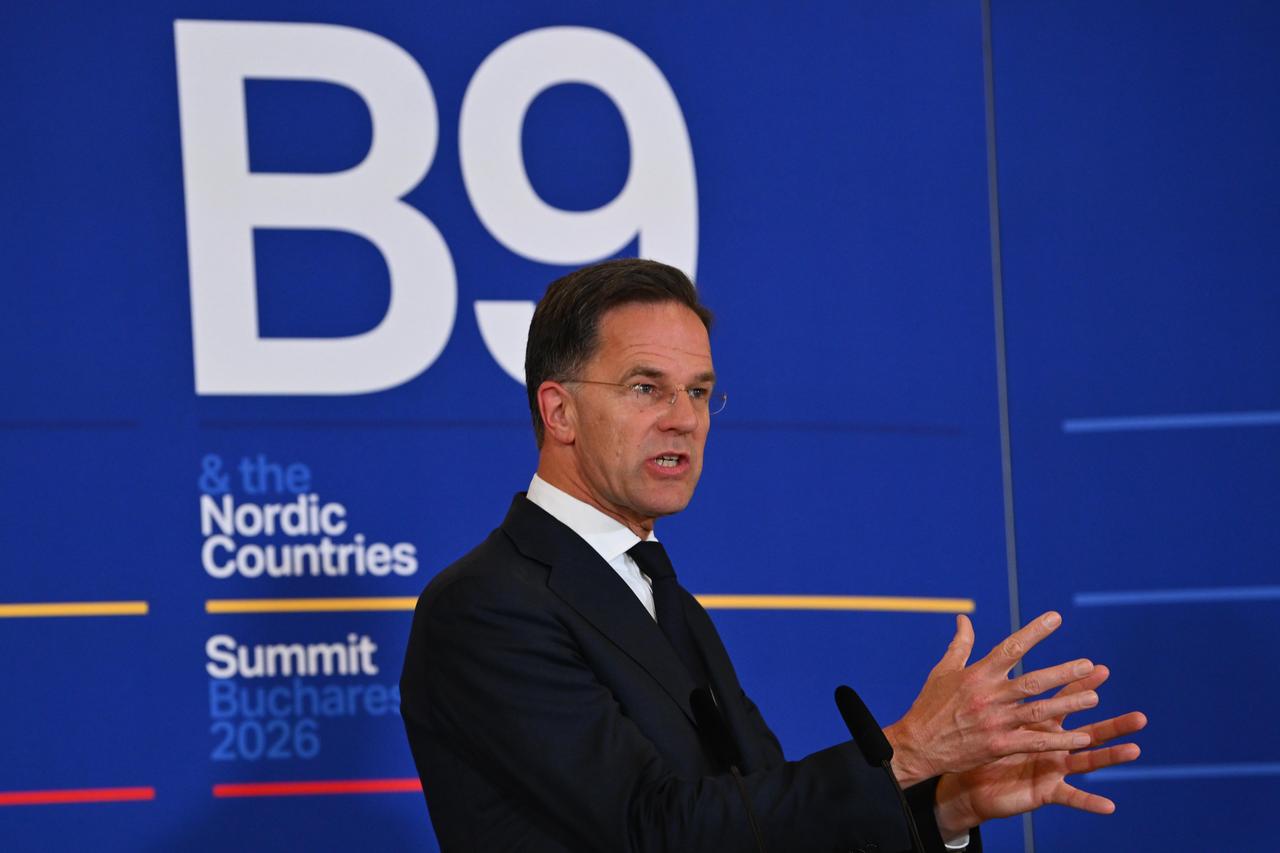
NATO Secretary-General Mark Rutte is set to press major European defense contractors to accelerate investment and production ahead of the July NATO summit in Ankara, with emphasis on air defense, long-range missiles, and intelligence/surveillance systems. The FT says NATO allies are working toward a 5% of GDP defense target, which could imply about $1 trillion of additional annual defense spending by 2035 versus 2024. The meeting also underscores efforts to reduce dependence on Chinese and Taiwanese components and to expand European production capacity through new factories, staffing, and raw material sourcing.
This is less about headline defense budgets and more about forcing the industrial base to re-rate from a cyclical procurement story to a multi-year capacity buildout. The key second-order effect is that the constraint is shifting from funding to throughput: firms with existing missile, radar, propulsion, energetics, and secure electronics capacity should gain pricing power, while pure-platform OEMs without critical subcomponent control may see margin dilution as they chase volume. The market is likely underappreciating how much of the incremental spending will leak into enabling bottlenecks—motors, seekers, chipsets, composites, and machine tools—rather than finished systems.
The biggest relative winners are companies with tight control over scarce inputs and dual-use manufacturing footprint in Europe, because re-shoring and supply-chain de-risking will favor shorter lead times over lowest cost. That creates a favorable setup for defense electronics, missile-adjacent subsystems, industrial automation, and specialty materials suppliers, while single-country suppliers dependent on Asia-sourced components face execution risk and working-capital drag. The mention of accelerated factory builds is also a medium-term positive for European capex beneficiaries: tooling, facility engineering, power infrastructure, and controlled-environment manufacturing names should see an order tailwind before revenue shows up in prime contractors.
Catalyst timing is uneven: near-term, the trade is on political signaling and order visibility into the July summit; over 6-18 months, the real upside comes from announced capacity expansion translating into multi-year backlog conversion. The main reversal risk is procurement slippage—if governments fail to place follow-on contracts, equities can fade despite the rhetoric, because balance sheets will have front-run capex. A second risk is political: any softening in U.S.-Europe security tensions or a ceasefire narrative could compress the urgency premium quickly, even if structural spending remains higher.
The contrarian view is that the market may still be too focused on top-line defense multiples and not enough on bottlenecks. If everyone rushes to add capacity simultaneously, the scarce assets are likely to be found in suppliers of subcomponents and manufacturing tooling, not the headline primes already trading on the theme. That suggests the better risk/reward is to own the enablers and fade crowded long positions in the most obvious aerospace/defense conglomerates where margin expansion may be capped by execution and input-cost inflation.
AI-powered research, real-time alerts, and portfolio analytics for institutional investors.
Request DemoOverall Sentiment
mildly positive
Sentiment Score
0.20
