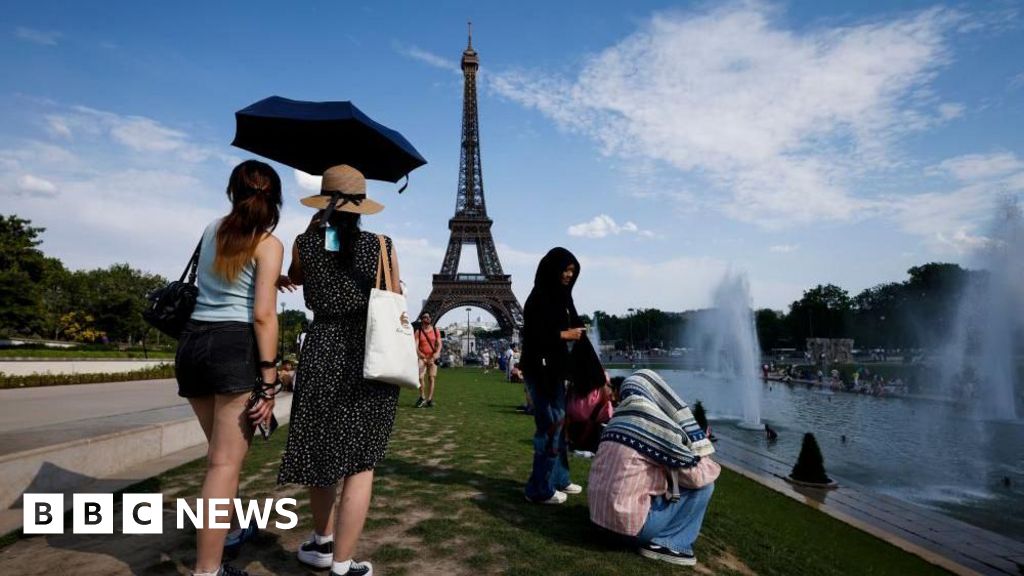
France has placed around half the country, including Paris, under red heat alerts as temperatures in Bordeaux reached 40C and authorities warned of possible historic highs on Monday. The heatwave has already disrupted services, canceling dozens of trains and suspending classes, while alcohol sales were restricted at the Fête de la Musique to reduce strain on emergency and healthcare services. The impact is regional but meaningful for transport, public services, and leisure activity across France and parts of southern Europe.
This is a short-duration demand shock that hits the wrong parts of the leisure stack first: outdoor events, urban hospitality, rail, and last-mile tourism. The second-order effect is not just fewer discretionary outings, but a compression in same-day spending intensity because heat changes behavior faster than travel plans — people still show up, but they spend less on alcohol, food, and nonessential transit, which tends to hit high-frequency consumer data before it shows up in quarterly results.
The transportation angle is more interesting than the headline suggests. Heat-related rail cancellations and schedule unreliability create a temporary modal shift toward private cars, ride-hail, and indoor substitution, but that benefit is uneven and mostly captured by incumbents with flexible capacity. For airlines and hotels, the near-term effect is usually noise unless the heat persists for multiple weeks; the more durable risk is reputational and operational, as repeated service disruptions can pull forward booking caution for domestic leisure and short-haul city breaks into the next 1-2 months.
The contrarian view is that the market may be underestimating how quickly a European heat event becomes an earnings issue for insurers, utilities, and infrastructure-adjacent names through claims, outage costs, and peak-load pricing, while simultaneously overestimating the impact on broad travel equities. If temperatures normalize within days, the trade becomes a fade; if the pattern extends into July, the bigger loser is not the festival economy but the operating leverage of businesses reliant on predictable foot traffic and timetable integrity.
For risk management, the key catalyst is duration: a 3-5 day spike is transitory, but anything approaching 2-3 weeks starts to affect tourism bookings, local retail comp trends, and municipal service costs. Watch for secondary headlines on power demand, rail network interruptions, and public-health strain — those are the signals that convert a weather event into a broader macro earnings headwind.
AI-powered research, real-time alerts, and portfolio analytics for institutional investors.
Request DemoOverall Sentiment
mildly negative
Sentiment Score
-0.25
