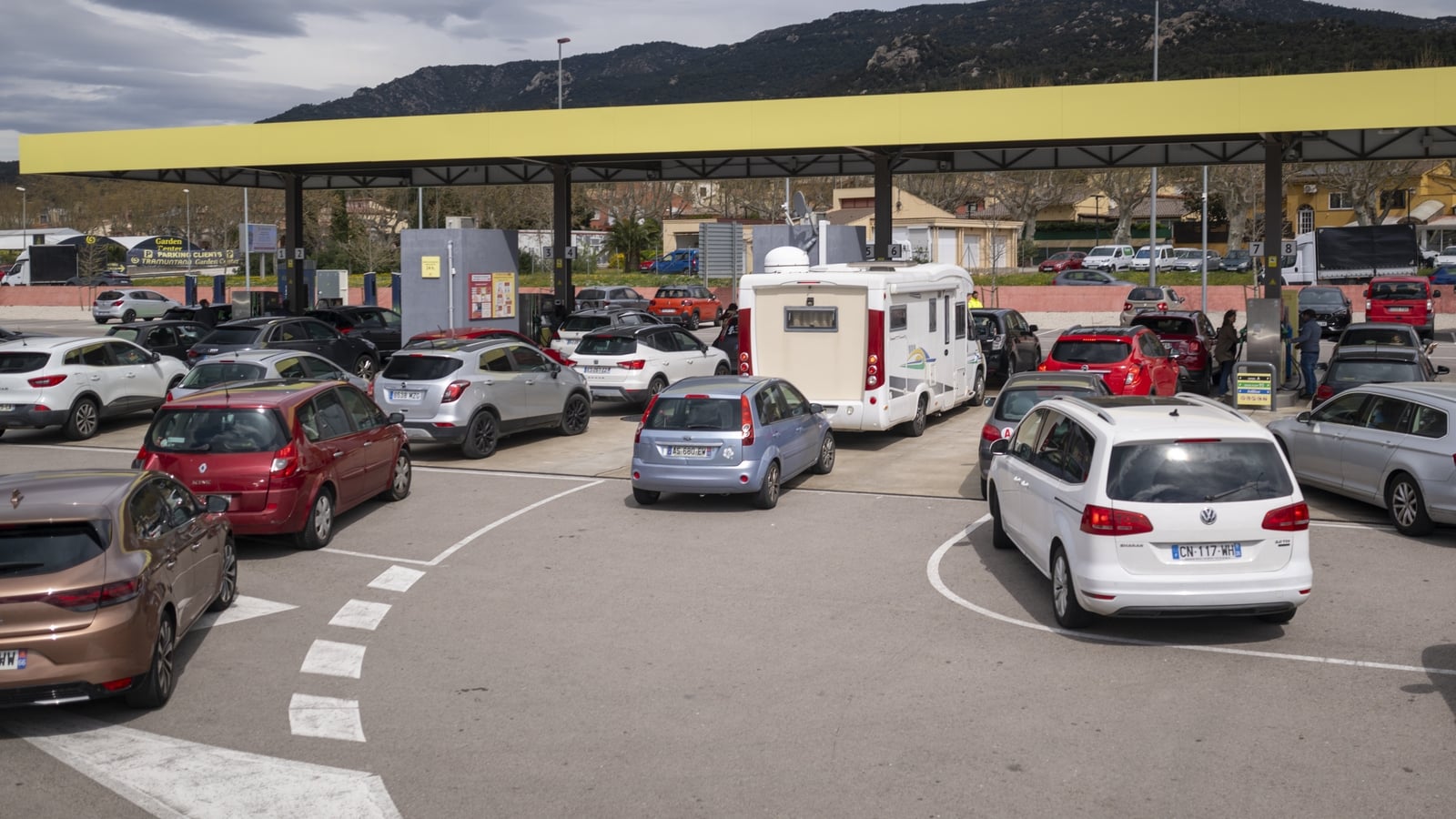
EU officials urged governments to use narrowly targeted, time-limited relief for high energy prices, warning that broad tax cuts and prolonged subsidies would worsen fiscal costs and boost fossil-fuel demand. Dombrovskis said higher debt, deficits and interest rates make the response more expensive than during the 2022 energy crisis. Germany announced €1.6 billion of fuel-price relief for two months, while France said support will be limited to the most affected sectors and renewed monthly.
The key market signal is not the energy shock itself, but the policy reaction function: Europe is already signaling that fiscal support will be narrower, shorter, and politically harder to scale. That means the marginal offset to household and industrial margin compression is weaker than in 2022, so the transmission from higher oil/gas prices into Eurozone inflation should be faster and more visible in rates, not just energy equities. For asset allocation, this is mildly bearish for EU cyclicals and rate-sensitive domestic consumption, while supportive for duration only if the shock is brief; if not, the ECB is boxed in with a stagflationary impulse.
The second-order effect is that broad-based relief is now less likely to rescue the most energy-intensive end markets. That hurts European chemicals, paper, glass, cement, and transport names with limited pass-through, while improving relative positioning for firms with contractual indexing or non-European revenue mixes. The political preference for monthly renewals and sunset clauses also raises policy uncertainty, which tends to compress multiples in domestic utilities and retailers more than the underlying commodity move would suggest.
The contrarian angle is that a smaller, more disciplined fiscal response could be market-positive for sovereign spreads versus a 2022-style blanket subsidy regime. Investors may be too focused on headline energy inflation and not enough on the fiscal credibility benefit of restraint, especially for higher-debt peripheral issuers. The main tail risk is that if the energy shock persists for several months, “temporary” measures become de facto permanent, reviving the deficit/inflation loop and forcing the ECB into a worse trade-off than the market currently discounts.
AI-powered research, real-time alerts, and portfolio analytics for institutional investors.
Request TrialOverall Sentiment
mildly negative
Sentiment Score
-0.15
