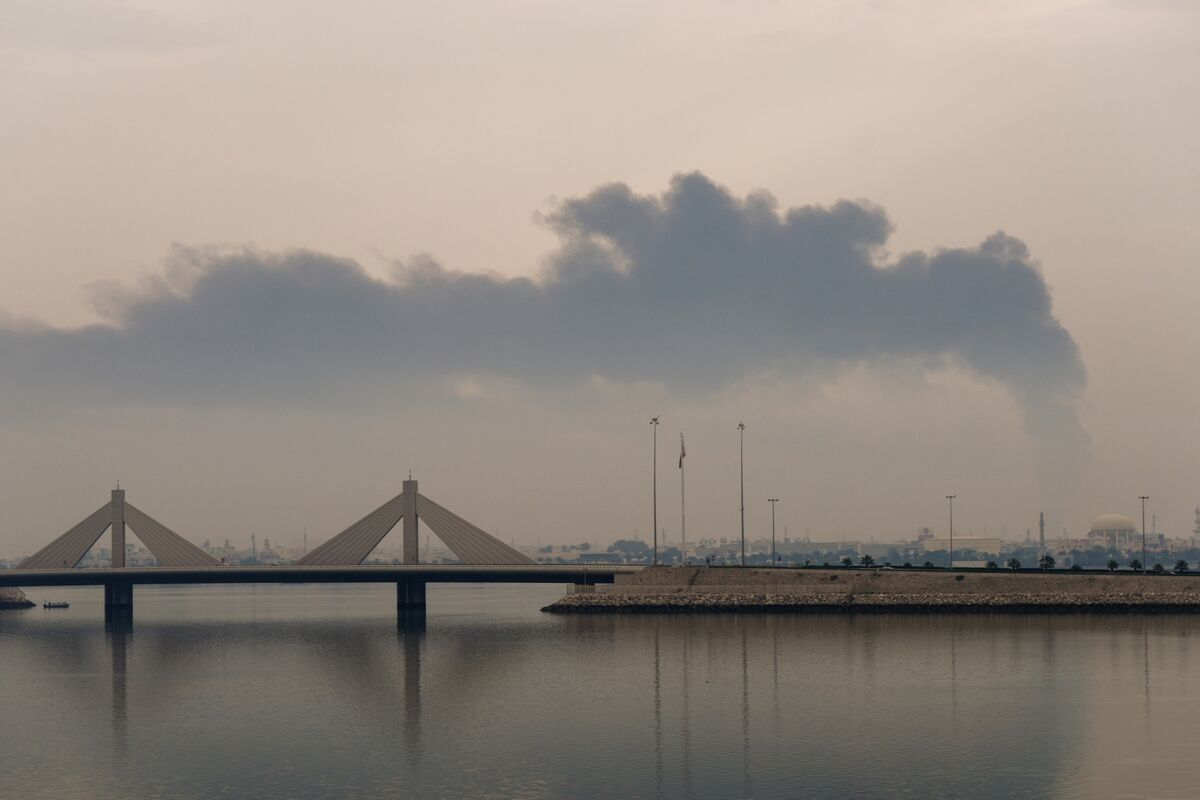
Bahrain entered the Iran war with debt already around 140% of GDP and limited reserves, leaving the sovereign vulnerable to external shocks. Missile and drone attacks, plus near-closure of the Strait of Hormuz and flight disruptions, amplified economic stress, although Bahraini bonds have since bounced back. The story points to elevated geopolitical risk for Gulf credit and regional transport flows.
Bahrain is a classic fragile-sovereign stress case where the market initially prices default risk, then rapidly reassesses once the immediate military shock does not translate into an outright payments event. That bounce is less about fundamentals improving and more about positioning: in thin sovereign credit, any sign that reserves, external support, or regional stabilization will hold can trigger a sharp rally as distressed holders cover. The key second-order effect is that Bahrain’s paper is a proxy trade for wider Gulf frontier risk, so the move can spill over into other low-quality GCC credit even if their balance sheets are stronger.
The bigger issue is the financing channel, not the headline war damage. A sovereign already running with a heavy debt load and limited reserves becomes more dependent on refinancing windows, bank appetite, and implicit regional support; that means the most dangerous phase is often 1-3 months after the shock, when immediate panic fades but rollover needs remain. If shipping disruptions or air traffic weakness persist, the economic hit compounds through tourism, logistics, and domestic bank asset quality, creating a lagged deterioration that can surface in CDS before bonds reprice again.
The market may be underestimating the asymmetry between tactical relief and strategic solvency. Even if the fighting de-escalates, a higher regional risk premium can keep funding costs elevated long enough to pressure the fiscal path, while any renewed incident around Hormuz would immediately reopen the liquidity question. Conversely, the rally likely overshoots if investors extrapolate a normalization that requires either a durable security umbrella or new external financing, neither of which is guaranteed.
For risk assets, the relevant read-through is to avoid treating this as a one-off country event: frontier sovereigns with thin reserves, bank-heavy funding structures, and logistics exposure can all see delayed repricing. The best trades are either to fade overstretched rebounds in the weakest credits or to express the view through relative-value longs in stronger Gulf names with similar geopolitical beta but better balance sheets. Timing matters: the first move is often wrong, but the second move usually follows refinancing reality.
AI-powered research, real-time alerts, and portfolio analytics for institutional investors.
Request DemoOverall Sentiment
moderately negative
Sentiment Score
-0.45
