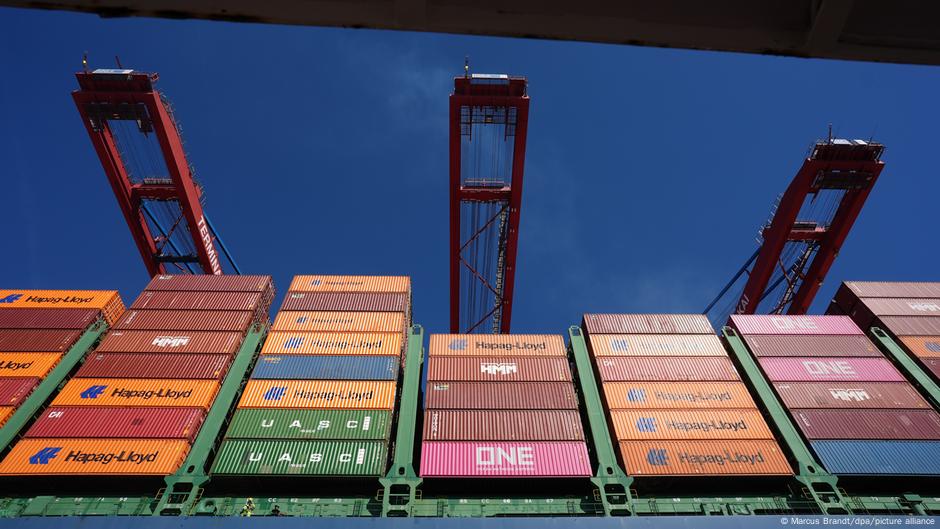
Germany's economy contracted by a sharper-than-expected 0.3% in Q2 2025, marking two years of stagnation and raising concerns about a potential third consecutive year of decline, a post-war first for a G7 economy. The downturn, driven by falling exports and weak output in manufacturing and construction, has prompted Economy Minister Katherina Reiche to urge rapid, bold structural reforms, including labor flexibility and lower energy costs, to enhance competitiveness and avoid tax increases, as reviving growth becomes a top government priority amidst escalating trade tensions.
Germany's economy has entered a more pronounced downturn than initially estimated, with Q2 2025 GDP contracting by 0.3%, a 0.2-point downward revision. The weakness is broad-based, driven by deteriorating external and internal factors. A key concern is the trade balance, as goods exports fell 0.6% while imports rose a strong 1.6%, signaling a direct hit to the country's export-oriented model, which is further threatened by newly imposed 10% US tariffs. Domestically, the slump is evident across key sectors, with construction contracting by a sharp 3.7%, manufacturing falling 0.3%, and private consumption being revised lower. This data places Germany, the only G7 economy to stagnate for the past two years, on a path toward a potential third consecutive year of contraction, a postwar first. In response, the government has made reviving growth a top priority, with the Economy Minister advocating for urgent structural reforms—including labor flexibility and lower energy prices—while explicitly ruling out tax increases, highlighting the fiscal constraints and policy challenges ahead.
AI-powered research, real-time alerts, and portfolio analytics for institutional investors.
Request DemoOverall Sentiment
strongly negative
Sentiment Score
-0.60
