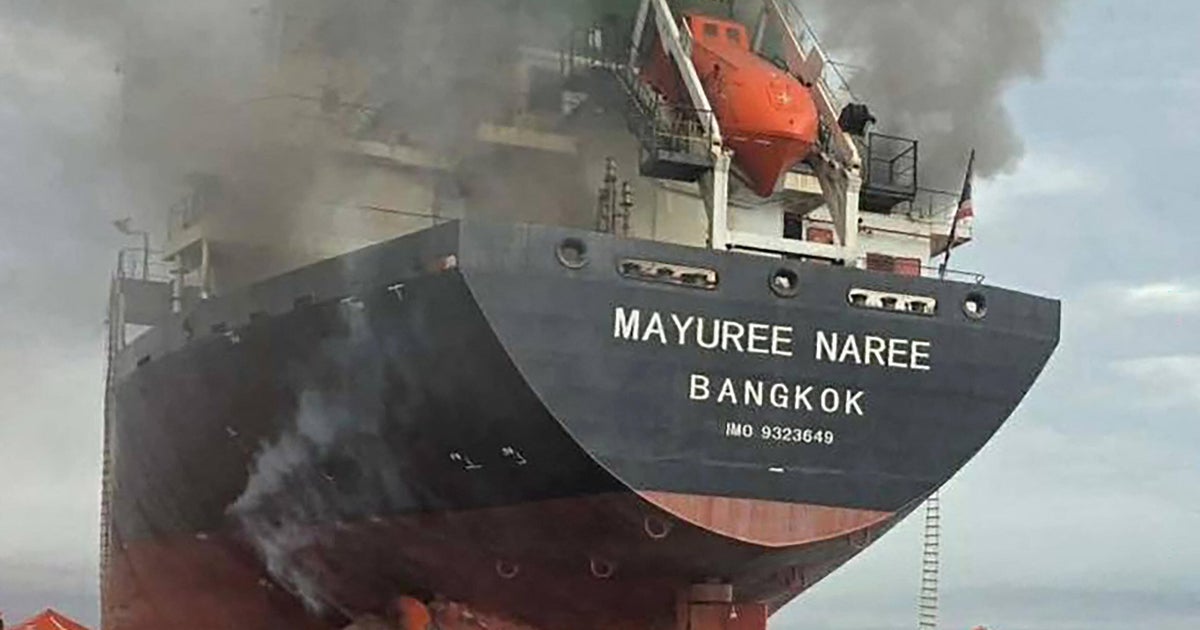
A Thai-flagged tanker was struck in the Strait of Hormuz—likely by a C-802 Noor missile—causing an engine-room fire and trapping three crew while 20 others were rescued; a Liberian-flagged vessel was also hit. About 20% of global oil supply transits the strait; oil rallied above $100/barrel and major maritime insurers warned they would suspend coverage, contributing to broad market losses. The attack underscores Iran and proxy capabilities (missiles, drones, mines), keeps U.S. warships from escorting transits, and implies sustained volatility and higher risk premia for energy and shipping exposures until safe passage is demonstrably restored.
Market pricing will increasingly embed a persistent “chokepoint risk premium” rather than a one-off spike. That premium shows up as wider oil forward curves (higher near-term contango/backwardation dynamics), accelerated drawdowns of floating and onshore inventories, and a structural rise in short-duration volatility for energy and transport sectors over the next 1–3 months.
Higher transit risk will re-shape logistics cost curves: rerouting around longer paths and higher-security transits raise unit shipping costs and bunker fuel consumption by a low-single-digit percent per voyage, creating margin pressure for low-margin shippers and positive pass-through for well-capitalized integrated carriers over quarters. Expect freight rate dispersion — spot rates surge while term charters and large carriers with hedges lag.
Defense and marine security demand is the non-linear beneficiary: accelerated procurement, urgent aftermarket services, and private maritime security spend can lift order visibility for prime contractors and niche coastal-defense suppliers over 6–24 months; budget reallocation and replenishment cycles create multi-quarter revenue upside with lumpy delivery risk. Conversely, insurers and reinsurers will reprice country/route premiums immediately, improving top-line rates but exposing them to tail loss if escalation occurs.
Key catalysts that would unwind the repricing are rapid, credible safe-passage corridors brokered by neutral states or a demonstrable, scalable military escort strategy that materially lowers vessel loss probabilities; those would compress insurance spreads and depress the energy risk premium within 2–8 weeks. The opposite — sustained asymmetric attacks or rapid proliferation of long-range anti-ship systems to proxy groups — shifts this from a months problem to a structural supply-chain rerouting decision lasting years.
AI-powered research, real-time alerts, and portfolio analytics for institutional investors.
Request DemoOverall Sentiment
strongly negative
Sentiment Score
-0.70
