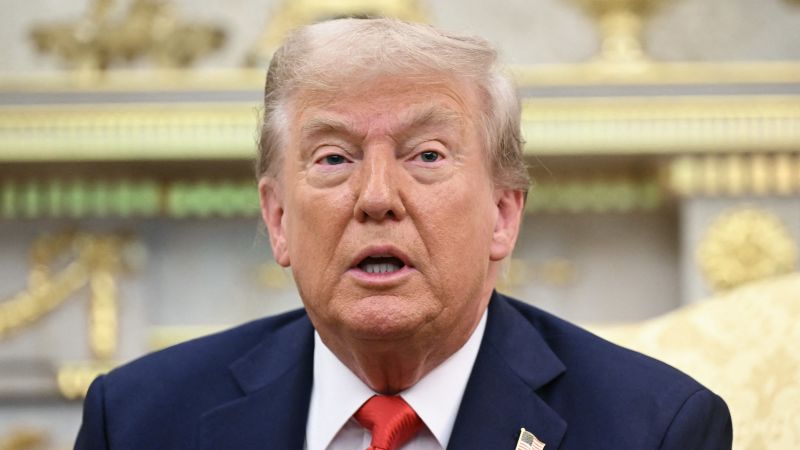
At the UN General Assembly, President Trump delivered a confrontational speech, criticizing the UN's efficacy and its role in migration, while dismissing climate change as a 'scam' and advocating tariffs as a defense of US sovereignty. He also framed growing support for a Palestinian state as a 'reward' for Hamas and admonished European nations for Russian energy purchases, signaling a potential shift towards more protectionist trade, fossil fuel-centric energy, and isolationist foreign policies that could impact global markets and geopolitical stability.
President Trump's address at the UN General Assembly outlines a hawkish and protectionist policy framework with significant implications for global markets. His characterization of tariffs as a primary tool for defending national "sovereignty and security," exemplified by the 50% tariff on Brazil, signals a heightened risk of trade disruptions for multinational corporations and emerging markets. Geopolitically, the speech creates friction with key allies by criticizing European nations for their Russian energy purchases and diverges from international consensus by framing the recognition of a Palestinian state as a "reward" for Hamas. This rhetoric, combined with reports of reckless Russian military behavior near NATO airspace, contributes to an environment of elevated geopolitical uncertainty.
On the domestic and sector-specific front, the speech's dismissal of climate change as the "greatest con job ever" and renewable energy as a "green energy scam" marks a clear and aggressive pivot toward fossil fuels. This stance directly contradicts the article's cited analysis that renewables are the most cost-effective new energy sources and that Trump's policies could increase energy costs by 13-14% in some states by 2035. This policy divergence presents a significant potential disruption for the energy sector, favoring traditional energy producers over the renewable industry. Finally, the announcement of a US-led initiative to enforce the Biological Weapons Convention using an AI verification system suggests a strategic focus on leveraging artificial intelligence for national security, indicating potential growth for defense and technology firms in that niche.
AI-powered research, real-time alerts, and portfolio analytics for institutional investors.
Overall Sentiment
moderately negative
Sentiment Score
-0.50
Ticker Sentiment
