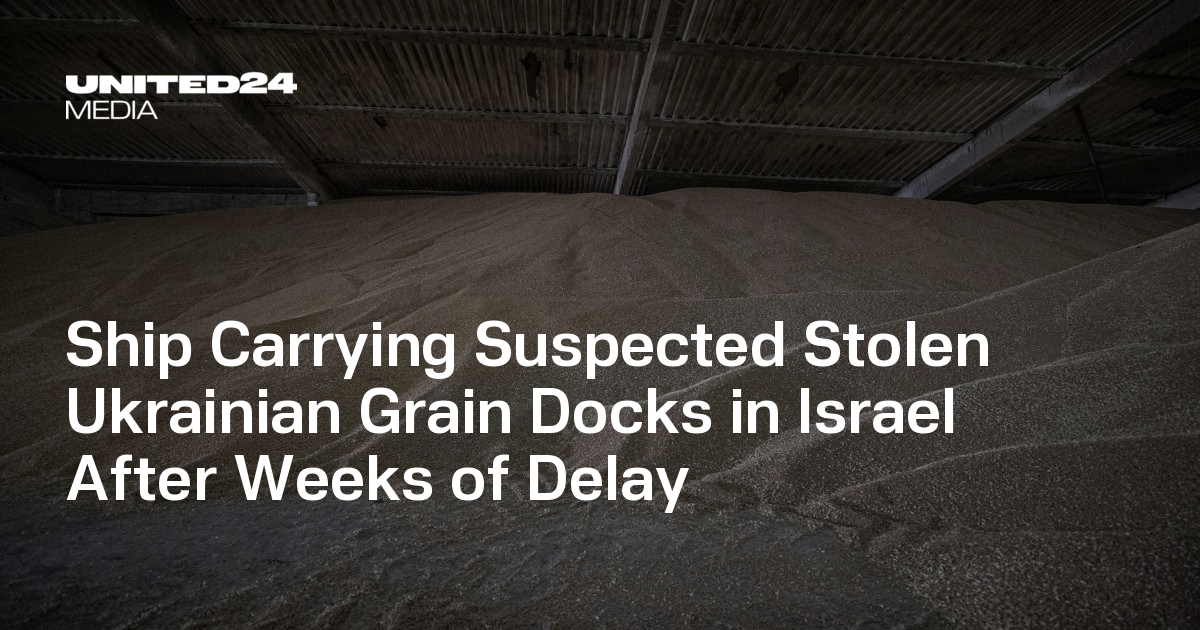
A Russian bulk carrier, ABINSK, docked in Haifa on April 12 carrying 43,765.18 tonnes of wheat reportedly taken from occupied Ukrainian territories after waiting more than three weeks for clearance. Ukrainian officials said Russia has stolen about 2 million metric tons of grain over the past year and exported it across multiple regions, with roughly 40% sent to Egypt. The report underscores escalating wartime disruption to Black Sea grain flows and ongoing scrutiny of trade linked to occupied areas.
The key market signal is not the single vessel but the normalization of a gray-market grain channel into a legitimate port system. That raises friction for any buyers, insurers, and logistics providers touching Black Sea-origin cargoes: even if some sovereigns keep buying, the compliance burden rises, which should widen basis differentials between clean-origin wheat and cargoes linked to occupied territories. The second-order beneficiary is not Russian agribusiness; it is intermediaries with verified origin chains, because buyers will pay up for documentation that reduces seizure, reputational, and customs risk. For Ukraine, this is less about lost tonnage than about persistence of maritime disruption risk. Repeated strikes on port assets and continued theft create a compounding effect: even modest physical damage can trigger outsized insurance repricing, delay vessel turnaround, and force importers to diversify away from the region for several quarters. That is a slow-burn positive for alternative exporters in the US, EU, and Australia, especially into MENA markets where procurement teams will prioritize delivery certainty over marginal price savings. The contrarian angle is that the market may be overestimating the immediate ability of governments to police destination markets. If major importers conclude enforcement is episodic, the stolen-grain channel can persist as a discount supply source, capping near-term wheat upside. The bigger risk is a policy shock: one high-profile seizure, sanctions package, or port denial event could abruptly rerate freight, insurance, and trading desks’ willingness to touch the trade within days, while the underlying supply-chain rerouting would take months to unwind.
AI-powered research, real-time alerts, and portfolio analytics for institutional investors.
Overall Sentiment
moderately negative
Sentiment Score
-0.35
