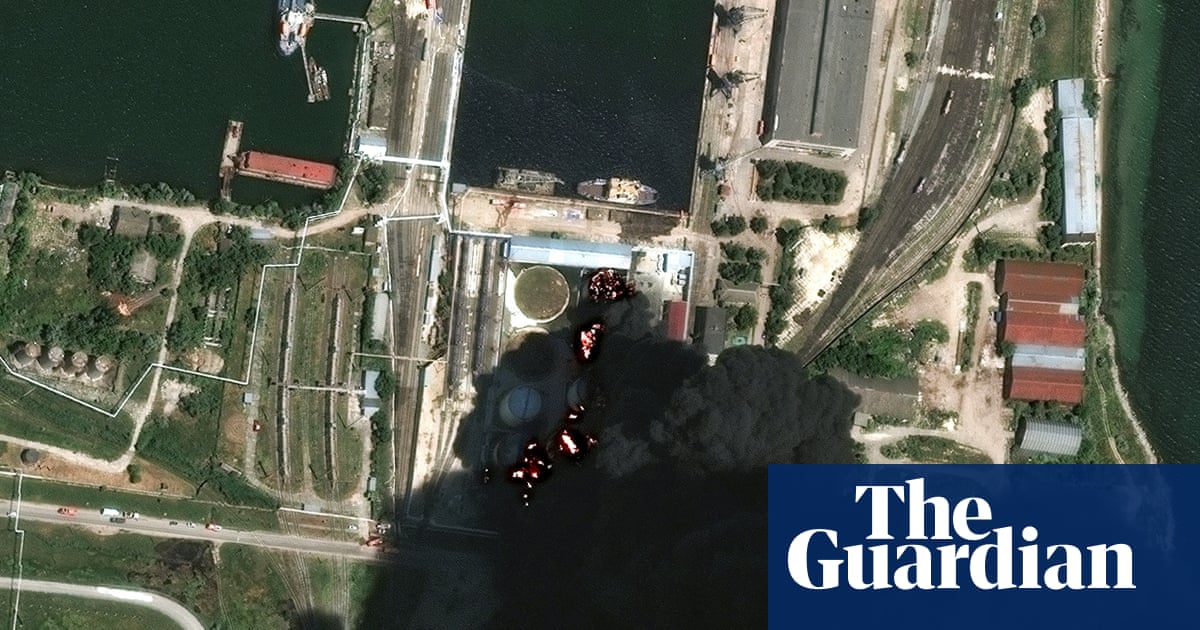
Ukraine has intensified strikes on Crimea, forcing Russian-installed authorities to suspend civilian fuel sales, cancel public events, and shut parts of the peninsula without street lighting. The attacks are disrupting fuel and transport links through the Kerch crossing and Novorossiya highway, with reports of ferry hits and severe damage to tourism demand: about 80% of June bookings and roughly half of July-August reservations were cancelled. The escalation raises the risk of further disruption to Russia-occupied infrastructure and supply chains.
This is less a one-off battlefield headline than a logistics denial campaign aimed at converting geography into economic attrition. The near-term market signal is not about Russian oil output; it is about localized scarcity, higher internal transfer costs, and a widening gap between headline energy resilience and last-mile distribution fragility. That matters because transport chokepoints tend to create second-order stress in adjacent sectors first: tourism, regional retail, fuel distribution, and insured asset risk.
The most immediate losers are any businesses exposed to Crimea’s seasonal demand stack, especially hospitality, ferry-linked services, and local transport operators. A sustained disruption into the next 4-8 weeks would likely force discounting, inventory write-downs, and cash-flow pressure on vendors that rely on summer traffic; the bigger macro effect is reputational, as consumer behavior will likely normalize faster than infrastructure can be repaired. For Russia more broadly, repeated strikes increase the probability of forced rerouting and military priority allocation, which typically raises logistics costs even outside the direct target zone.
The underappreciated risk is escalation around the bridge and surrounding air defenses: as the operating envelope narrows, the probability of a high-visibility disruption rises nonlinearly. That creates a tail-risk premium for any assets tied to Black Sea mobility, insurance, and regional freight, but the trade is less about direction in broad Russia-linked markets and more about volatility around headline-sensitive names. If Ukraine sustains tempo through the next 2-6 weeks, the market should start pricing a longer-duration constraint rather than a temporary inconvenience.
The contrarian angle: this may be more damaging to sentiment than to aggregate Russian supply. Russia can absorb localized pain by rerouting scarce fuel to priority users, but the tourism and consumer-spending hit in Crimea is immediate and visible, which can amplify perceived instability well beyond the economic arithmetic. In other words, the larger tradeable effect may be confidence erosion and operational friction, not a meaningful change in global energy balances.
AI-powered research, real-time alerts, and portfolio analytics for institutional investors.
Request DemoOverall Sentiment
strongly negative
Sentiment Score
-0.65
