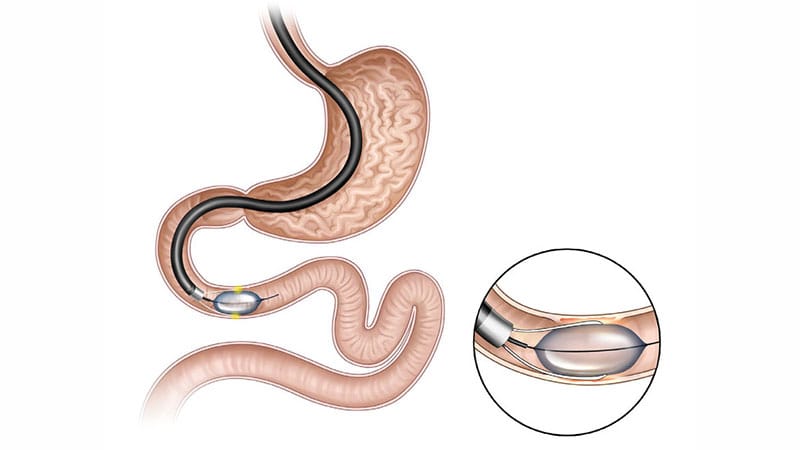
In the 6-month midpoint results from the REMAIN-1 trial, patients who underwent duodenal mucosal resurfacing after stopping tirzepatide regained about 7 lbs and had a 40% lower total body weight change than the sham group (4.5% vs 7.5%; P = .07). No serious complications were reported, and patients with more tissue resurfaced maintained over 80% of their pre-discontinuation weight loss. The findings are early and not yet statistically definitive, but they support a potentially meaningful post-GLP-1 maintenance therapy.
This reads less like a single-product clinical update and more like an early signal that the GLP-1 market may bifurcate into “chronic drug users” and “drug-plus-durability” users. If the durability signal holds, the economic prize shifts away from pure obesity pharma toward procedural platforms that can monetize the high discontinuation cohort after pharmacologic weight loss plateaus. The second-order winner is the company with the device, IP, and workflow moat to become the default maintenance layer; the loser is any GLP-1 incumbent whose long-term revenue model assumes indefinite retention.
The key market nuance is that even a modest reduction in regain can have outsized commercial value because payers don’t need perfect weight maintenance to justify intervention—they need a better curve than rapid rebound after treatment cessation. That creates a new reimbursement narrative: one-time or episodic procedural spend versus recurring drug spend, which can be compelling for self-insured employers and obesity centers if safety remains clean. The durability question is the entire trade: if benefit decays after 12–24 months, the procedure becomes a bridge product; if it meaningfully persists beyond that, it becomes a platform that could expand into MASH/prediabetes and materially widen the addressable market.
Contrarian risk: the market may over-interpret a small midpoint dataset as evidence of a scalable commercial category. The procedure’s adoption hinges on anesthesia capacity, physician training, and willingness to treat an asymptomatic maintenance problem, which is a very different funnel than prescribing a pill or injection. Also, if next reads show only partial preservation rather than prevention of regain, payers may view it as insufficient versus simply restarting GLP-1 therapy, especially once drug pricing and access improve.
For the ticker set, the cleanest read-through is positive for GUTS only if later data confirm durability and procedural simplicity; otherwise the stock is vulnerable to a classic biotech “data-to-commerce gap.” The broader competitive implication is that obesity care is moving toward combination pathways, and the true winners may be device-enabled GI platforms that can partner with GLP-1 distributors rather than compete head-on with them.
AI-powered research, real-time alerts, and portfolio analytics for institutional investors.
Request DemoOverall Sentiment
mildly positive
Sentiment Score
0.35
Ticker Sentiment
