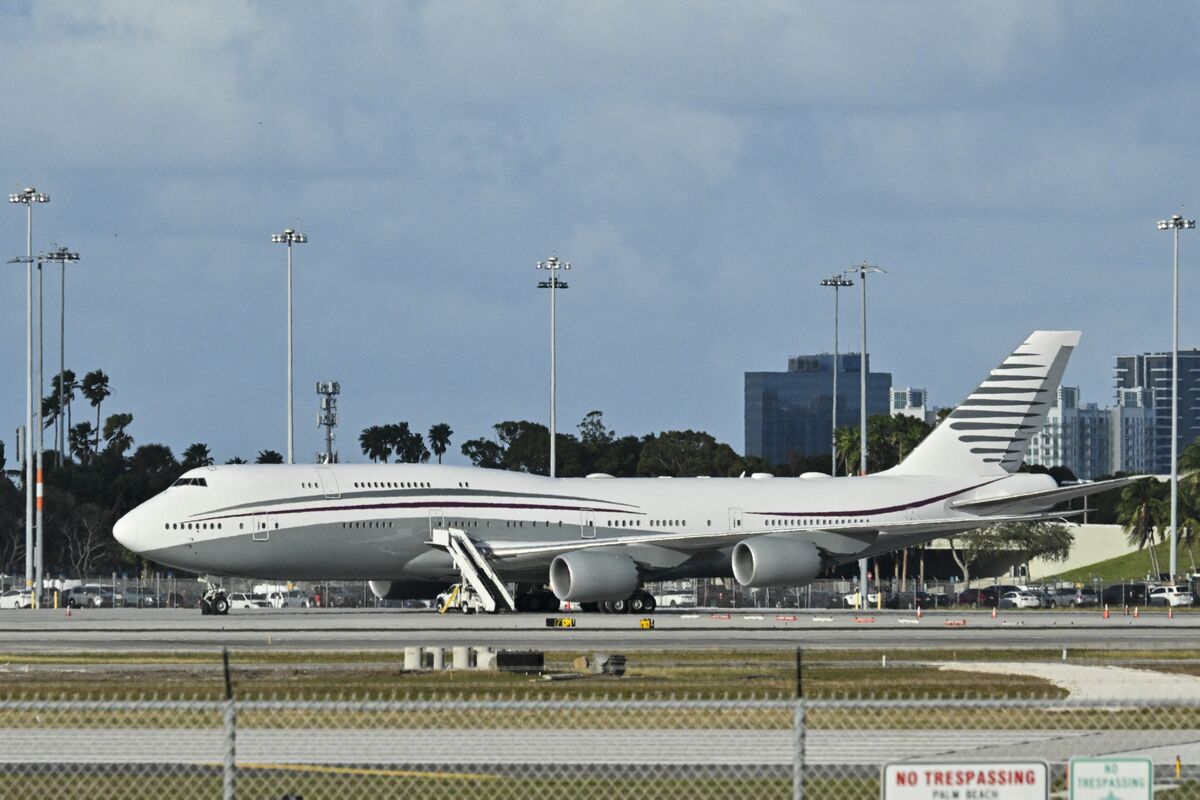
The Air Force affirmed that retrofitting the Qatar-donated aircraft for interim presidential use will cost about $400 million. The estimate underscores a material taxpayer expense, but the article contains no indication of policy change, procurement disruption, or broader market implications. William Bailey, the acting assistant secretary for acquisition, provided the figure in House testimony and declined to discuss capabilities.
The immediate market implication is not the retrofit bill itself, but the signal that political optics are now colliding with procurement discipline. A $400M conversion for an interim platform implies a highly customized, low-repeatability engineering package that is likely to pull budget, labor, and certification capacity away from other Air Force modernization priorities. That creates a subtle winner/loser split: prime defense integrators with presidential transport, secure communications, and avionics expertise can see incremental task orders, while broader USAF procurement programs may face schedule slippage if this becomes a recurring headline item.
The bigger second-order effect is fiscal. In a constrained appropriations environment, a single high-visibility aviation spend can harden congressional scrutiny around “waste” across the broader defense budget, increasing the odds of offset demands or delayed awards in adjacent programs. That matters most for contractors with large exposure to Air Force discretionary modernization, because the risk is not cancellation but timing: awards can slip by 1-2 quarters, which is enough to pressure near-term growth assumptions and multiple expansion.
Contrarian angle: the market may underappreciate how non-economic this spend is, which reduces direct earnings relevance but raises policy volatility. If the retrofit is portrayed as a one-off bridge, the risk fades in weeks; if it becomes a proxy battle over defense spending governance, the issue can persist for months and spill into other procurement lines. In that scenario, the trade is less about the aircraft and more about sentiment compression across defense primes with the highest government exposure and the least diversified backlog.
AI-powered research, real-time alerts, and portfolio analytics for institutional investors.
Request DemoOverall Sentiment
neutral
Sentiment Score
-0.05
