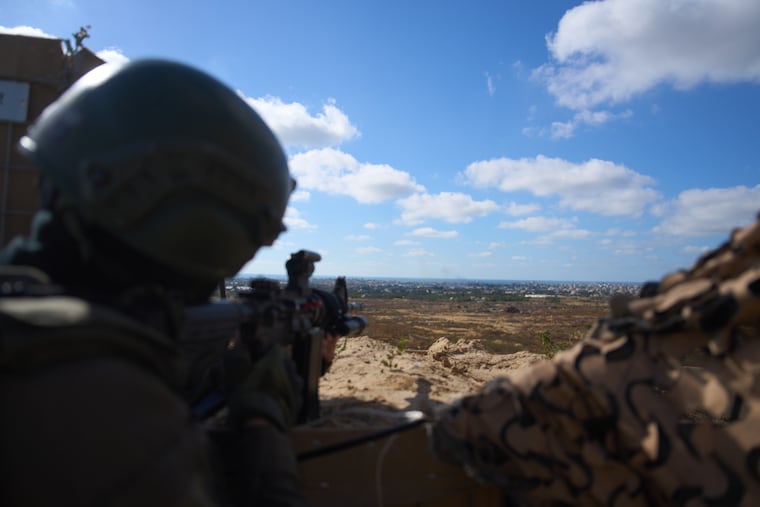
Israeli soldiers described a fragile Gaza ceasefire as effectively nonfunctional, saying troops have been instructed to shoot anyone crossing or nearing the yellow line that divides Israeli-controlled and Palestinian areas. AP reported more than 900 deaths in Gaza since the ceasefire took effect, with dozens near the line and the dead including unarmed men and children. The account underscores persistent escalation risk and a stalled diplomatic process over Hamas disarmament and Israeli withdrawals.
The market-relevant issue is not the morality headline; it is that the truce is behaving like a managed escalation regime. That shifts the base case from a one-off de-escalation to a rolling conflict with intermittent flare-ups, which tends to sustain defense procurement, ISR demand, and munitions consumption longer than a clean ceasefire would. The second-order effect is political: each civilian casualty near the line makes a broader diplomatic settlement less likely, extending the timeline for any reconstruction cycle and keeping regional risk premia sticky.
The most exposed beneficiaries are defense primes with exposure to precision munitions, air defense, sensors, and unmanned systems. The more important opportunity is in suppliers with short-cycle replenishment and higher operating leverage to tempo rather than headline Pentagon budgets, because the operational pattern implied here favors persistent consumption over big new program awards. On the loser side, any Gaza reconstruction-linked contractors, EM risk-sensitive transport, and Israel-facing consumer/airline proxies remain hostage to a timeline that can slip from months into years.
The contrarian read is that the market may already be pricing a durable stalemate, but not a normalization of “low-intensity war” as the default state. If so, the upside surprise is not more violence per se, but that procurement cadence stays elevated even if the conflict stays geographically contained. The downside tail is a single high-profile incident that forces international pressure into a sudden policy change; that would hit defense names only briefly, but could sharply re-rate regional risk assets and humanitarian/reconstruction optionality.
Near term, the key catalyst is any change in U.S. pressure on Israel’s operating latitude and any credible progress on Hamas disarmament talks; absent that, the status quo can persist for quarters. Watch for incremental ammunition and drone replenishment commentary in earnings calls, because that will confirm whether the market underestimates sustainment demand. If casualty counts keep rising around the buffer zone, expect the political shelf life of the current arrangement to shorten rather than stabilize.
AI-powered research, real-time alerts, and portfolio analytics for institutional investors.
Request DemoOverall Sentiment
strongly negative
Sentiment Score
-0.80
