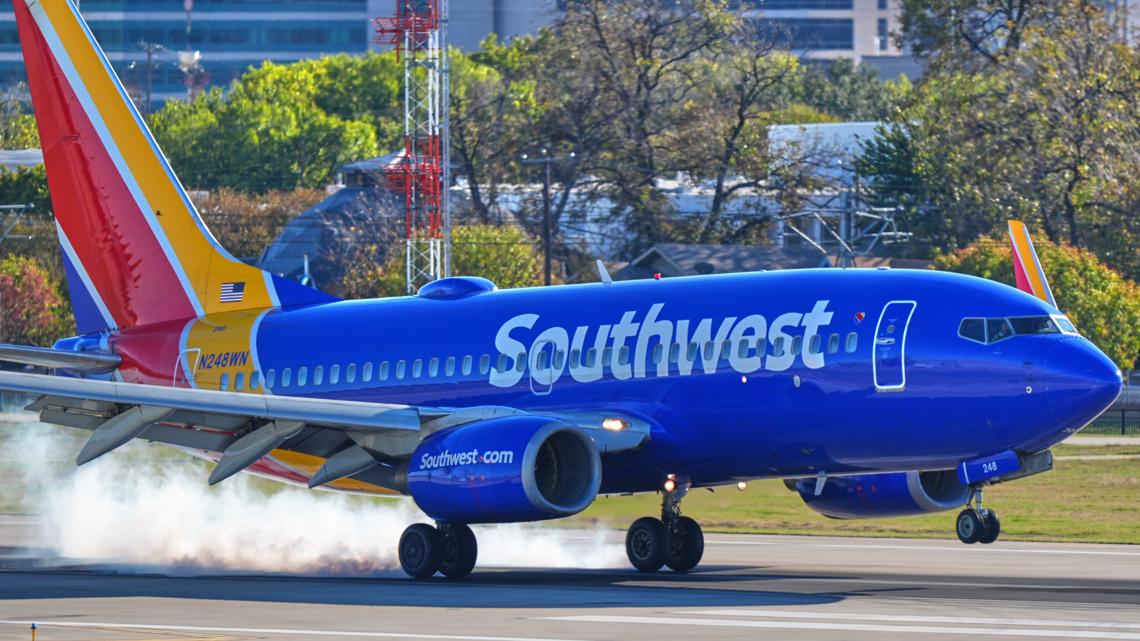
Southwest Airlines updated its plus-sized traveler policy to allow gate agents to provide an extra seat at no charge when adjacent seats are available, while rebooking passengers if no seat is open. The carrier said the change is meant to create a more consistent and seamless experience, after tightening refund rules in January. The update is operational rather than financially material and is unlikely to have a meaningful near-term stock impact.
This is a margin-neutral to mildly negative policy signal for LUV because it increases operational complexity at the gate while leaving the pricing burden asymmetric: the airline absorbs the cost of misfit demand, but the resulting displacement risk is paid in customer dissatisfaction and irregular ops, not just foregone seat revenue. The bigger issue is not the incremental seat itself; it is the precedent that frontline discretion can override a tighter published policy, which raises process variance across stations and makes load-factor management less predictable.
Competitively, Southwest is likely protecting brand goodwill in a segment where friction can spill into social media and local press, but that goodwill defense may be less valuable than it appears. When a carrier makes accommodation more discretionary, it increases the chance that adjacent passengers feel the service burden directly, which can weaken repeat propensity among higher-yield travelers and push marginal leisure demand toward carriers with more rigid booking enforcement. The second-order winner is not necessarily another airline; it is any competitor with better seat-product segmentation and stronger ancillary monetization, because Southwest is implicitly admitting its product architecture is still too blunt for heterogeneous demand.
Catalyst-wise, the market impact should be limited over days, but the risk sits over months: if the policy creates even modest boarding disruptions or customer-service incidents, it can become a narrative around operational slippage and “softening discipline” under new management. Conversely, if complaint volumes fall and rebooking rates stay contained, this becomes a nonevent and the stock likely reverts to macro-driven trading. The contrarian view is that this may actually reduce reputational damage from hard refusals and support load factors at the margin; the market may be too quick to read any customer-accommodating step as pure cost inflation when the real variable is execution quality.
AI-powered research, real-time alerts, and portfolio analytics for institutional investors.
Request DemoOverall Sentiment
neutral
Sentiment Score
0.05
Ticker Sentiment
