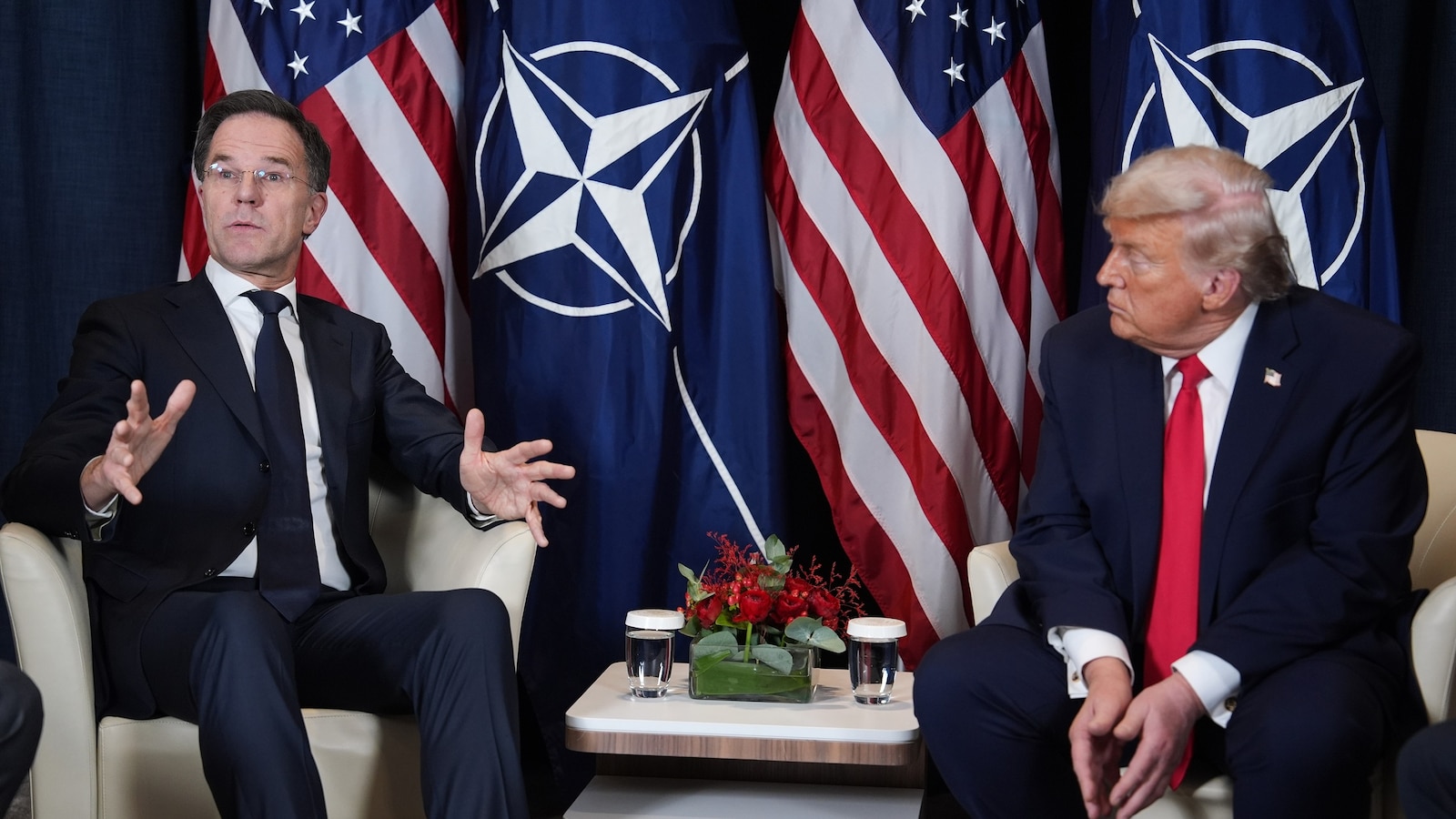
President Trump said a 'framework' has been reached to give the U.S. broad, potentially perpetual access to parts of Greenland—covering expanded basing rights and potential access to rare-earth minerals—yet no agreement has been signed and Danish officials report no talks on ceding sovereignty. NATO, Denmark, Greenland and U.S. delegations are negotiating operational and security details (with Dutch NATO leadership aiming for plans by early 2026); the vagueness and lack of pen-to-paper mean immediate market reaction is likely limited, though defense contractors and critical-minerals supply-chain participants could be impacted if concrete commitments emerge.
Market structure: The announcement disproportionately benefits US defense contractors (LMT, NOC, RTX) and strategic-minerals plays (MP, REMX) because potential perpetual basing and resource access create multi-decade demand for Arctic logistics and rare-earth supply diversification. Pricing power for REEs could rise near-term as governments accelerate stockpiles—expect a 10–30% price shock within 6–12 months if procurement programs are funded; longer term new Greenland supply could pressure margins only after 5–10 years of capex and commissioning. Cross-asset: expect commodity and materials volatility, modest positive skew for USD (safe-haven + geopolitical leverage), slight upward pressure on US nominal yields if defense capex is funded via borrowing, and elevated implied vol in defense and mining equities for 1–3 months around treaty news.
Risk assessment: Tail risks include diplomatic failure (Denmark/Greenland veto), large environmental litigation, or Russian/Chinese strategic countermeasures that could trigger sanctions or supply disruptions; each has >5% probability but >$1bn economic impact for projects. Time horizons matter: immediate (days) = headlines-driven equity swings ±5–12%; short-term (weeks–months) = negotiation outcomes and budget moves; long-term (years) = mine development, infrastructure build, and sustained supply shifts. Hidden dependencies: Greenland’s permitting, indigenous consent, Arctic shipping season and permafrost costs likely add 30–50% to capex and 12–36 month schedule risk. Key catalysts: formal treaty signature (30–90 days), Danish parliamentary sign-off, US defense appropriation line items, and permit approvals in Greenland.
Trade implications: Direct plays: overweight MP (MP) and REMX with 9–18 month horizon to capture strategic sourcing and stockpiling; overweight LMT/NOC/RTX for a 6–12 month tactical defense re-rate on base construction contracts. Use pair trades: long MP / short major Chinese refiner (e.g., 600392.SS or 0760.HK) to express de-risking of Chinese dominance; implement with 6–12 month expiries. Options: buy 9–15 month OTM calls on MP and LMT (20–30% OTM) to limit cash while capturing binary treaty upside; consider 3–6 month straddles around treaty-deadline windows to capture implied vol.
Contrarian angles: Consensus assumes deal passage and fast REE supply gains; that understates execution friction—expect 3–7 year development cycles and potential 30–50% capex overruns, so large allocations to Greenland juniors are premature. The market may overpay defense names on headlines; base construction is politically contentious and could be funded incrementally, limiting immediate revenue realization. Historical parallels: strategic base deals (Diego Garcia, Arctic Cold War builds) show long timelines and episodic contractor revenue rather than sustained instantaneous cashflow. Unintended consequences include Chinese retaliation in other commodity markets and accelerated global REE investment that could compress margins after year 5.
AI-powered research, real-time alerts, and portfolio analytics for institutional investors.
Request DemoOverall Sentiment
neutral
Sentiment Score
0.00
