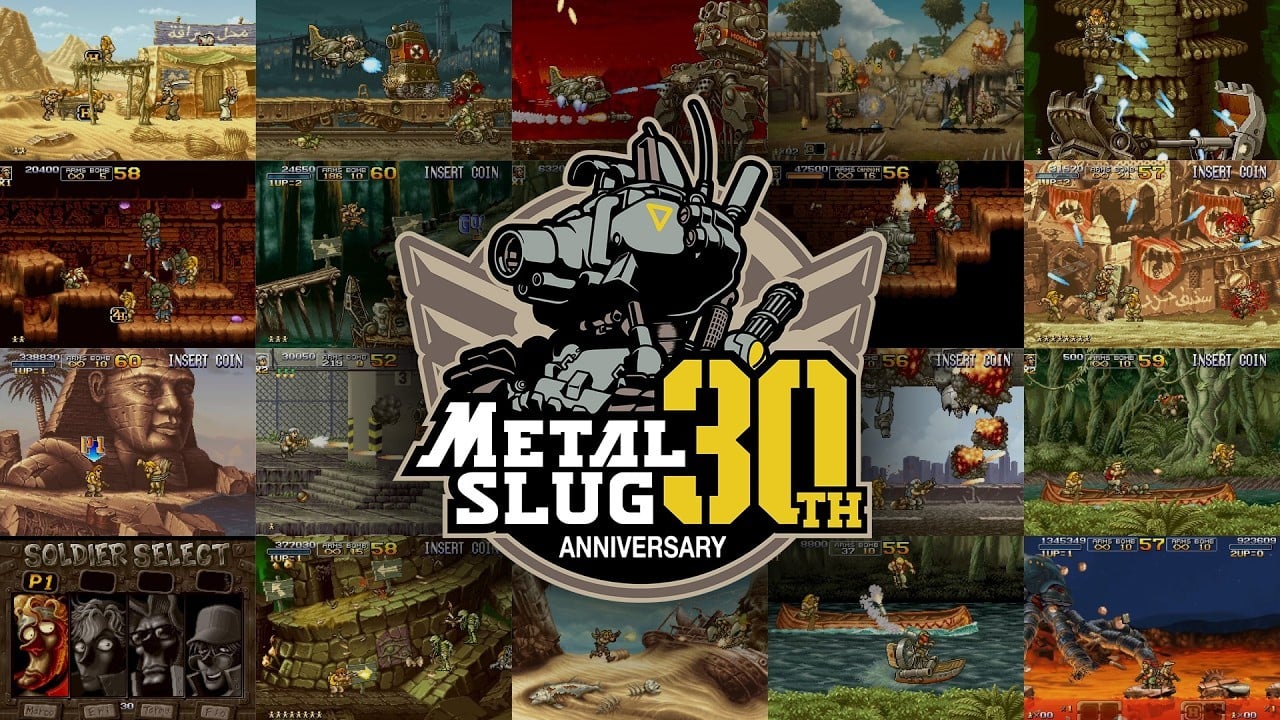
SNK is marking Metal Slug’s 30th anniversary with a retrospective video and a reboot campaign, teasing upcoming projects under the message "Mission Reboot" and "A New Mission Awaits." The company says it is reigniting the franchise with a wide range of initiatives, including new ventures in gaming. The announcement is positive for franchise engagement, but it is mainly a branding and teaser update with limited near-term market impact.
This reads less like a one-off nostalgia push and more like SNK testing whether Metal Slug can be re-licensed into a modern monetization stack. The asymmetric opportunity is not the IP itself but the downstream economics: if the reboot is built as a live-service, mobile, or premium remaster ecosystem, the margin profile could improve materially versus the original arcade-consoles model, where upside was capped by one-time sales. The market often underprices legacy IP revivals because it extrapolates the last release, not the bundle of adjacent revenue streams that a successful reboot can unlock.
The second-order effect is competitive: a credible reboot would pressure other dormant action franchises to re-enter production, which can reprice the whole retro-IP basket. It also benefits specialized porting/emulation/outsourcing partners more than the headline publisher if SNK chooses to accelerate multiple SKUs quickly; that tends to shift value capture toward content service providers, QA/localization, and platform distribution rather than pure development. If the project is multi-platform, the larger winner may be the digital storefronts that monetize long-tail catalog engagement with almost no incremental inventory risk.
The key risk is that “reboot” language is cheap and execution is hard. Investors should separate teaser-driven sentiment pop from actual product timing: a reveal can drive a short-term uplift over days, but meaningful fundamental impact likely needs 6-18 months and evidence of genre-fit, user acquisition efficiency, and review quality. A weak mobile or gacha angle would likely be punished quickly because this audience is nostalgic but not forgiving; that creates a sharp left-tail if SNK over-monetizes the IP.
Contrarian take: the consensus will likely overestimate the size of the franchise and underestimate the optionality. Even a modestly successful reboot can be valuable because it reactivates dormant brand awareness at low acquisition cost, but the bigger trade is a binary one on whether SNK uses the relaunch to prove it can extend old IP into recurring revenue. If that happens, the multiple re-rate could matter more than near-term sales, especially for any public comps with similar legacy IP libraries.
AI-powered research, real-time alerts, and portfolio analytics for institutional investors.
Request DemoOverall Sentiment
mildly positive
Sentiment Score
0.25
